
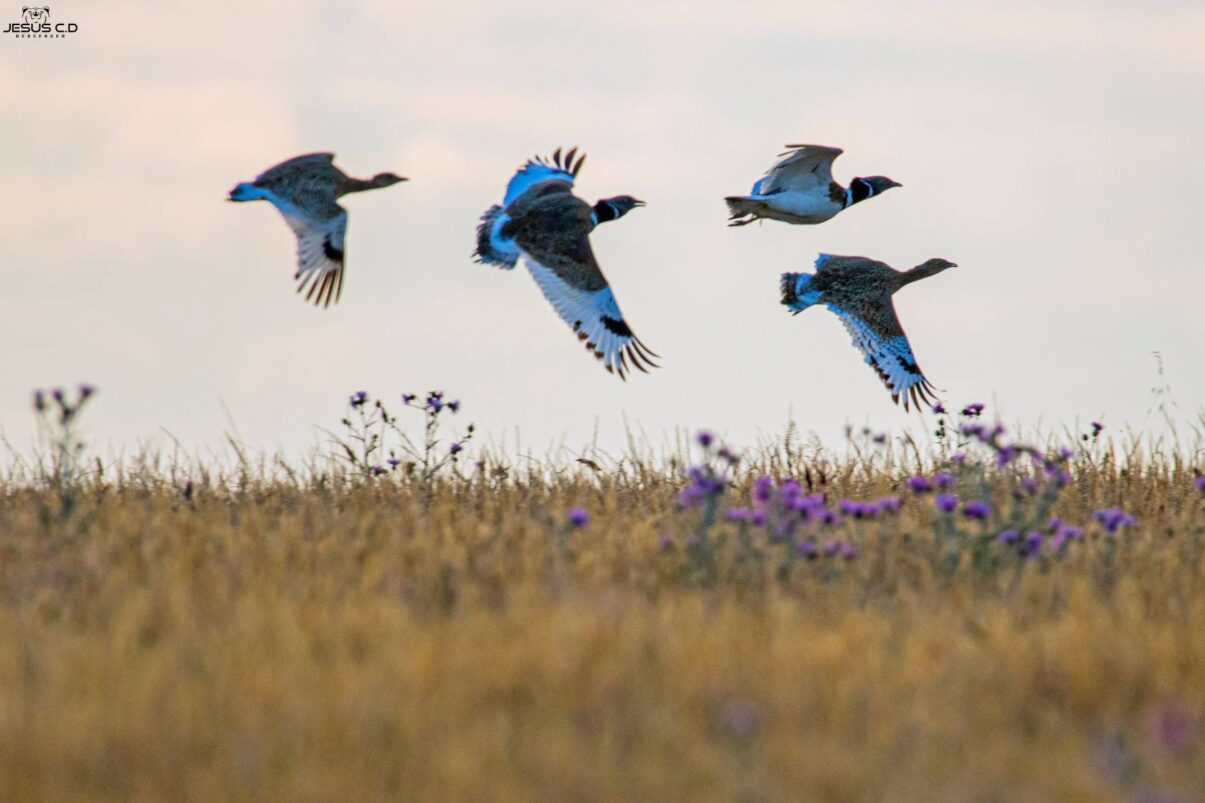
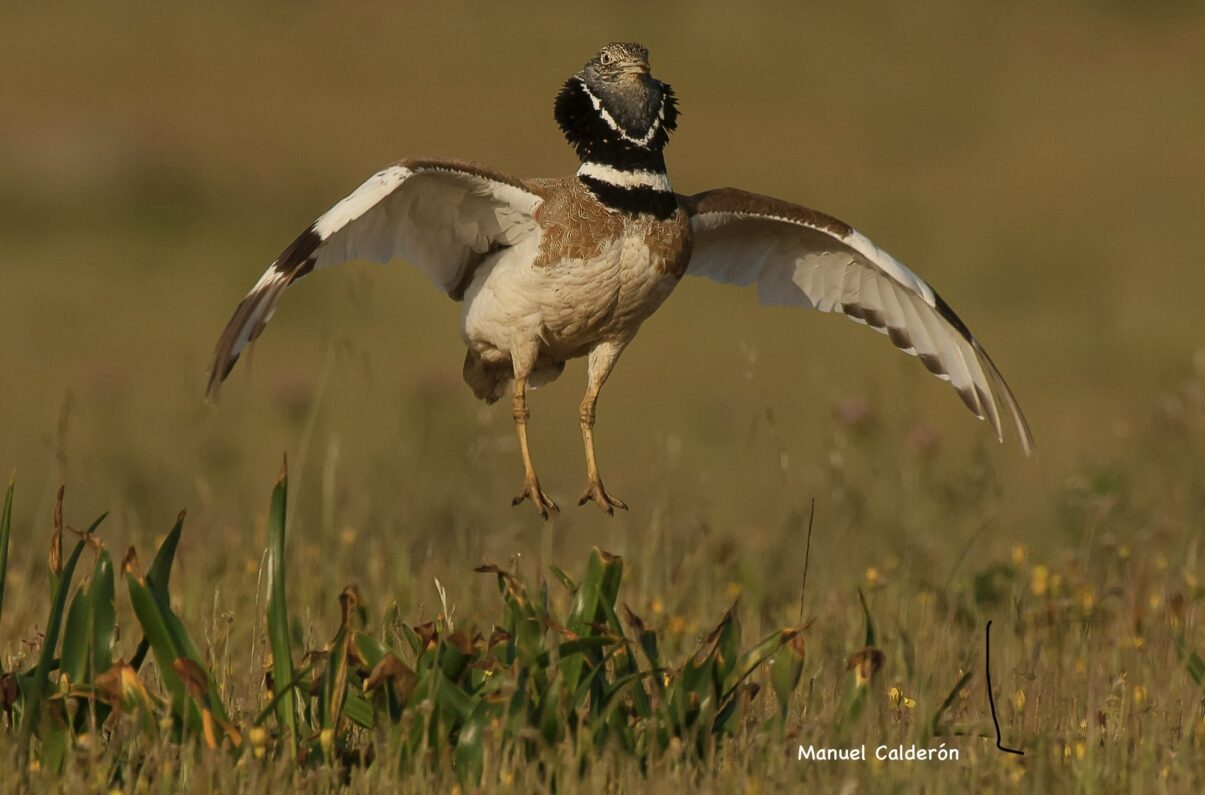
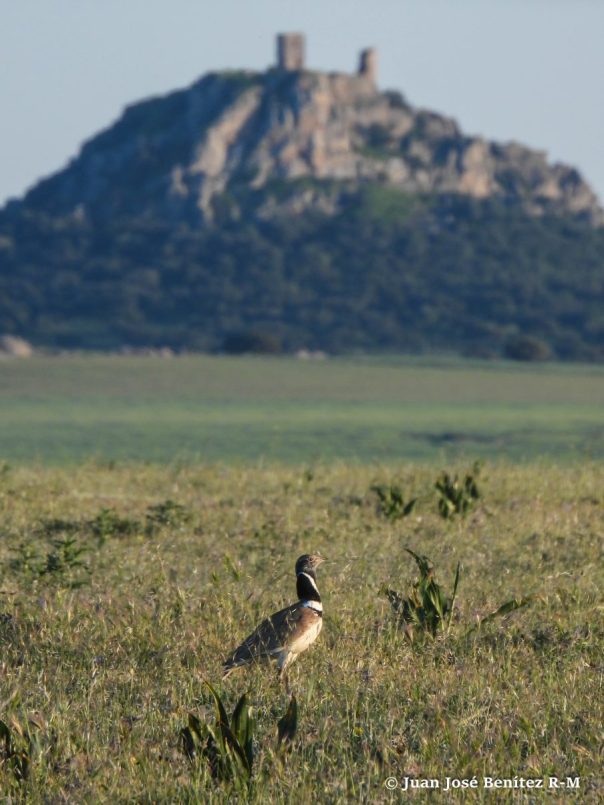
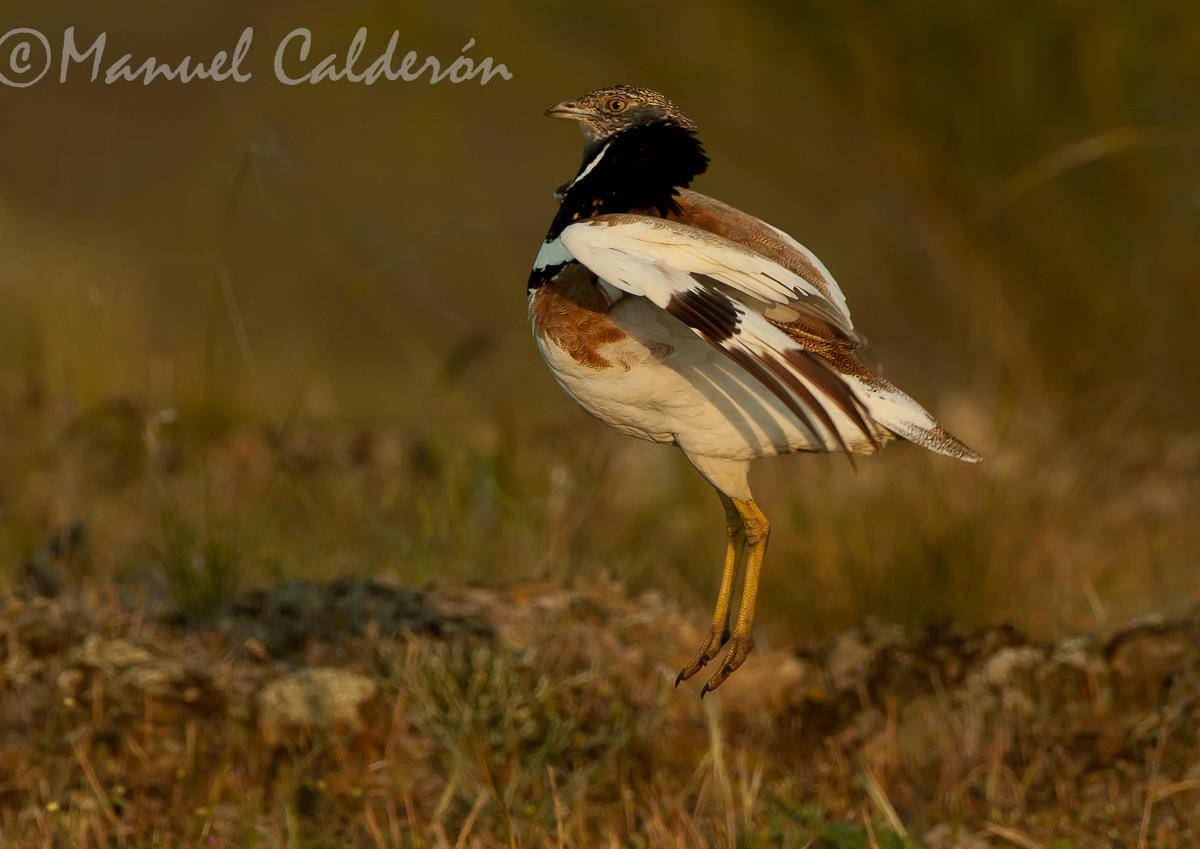
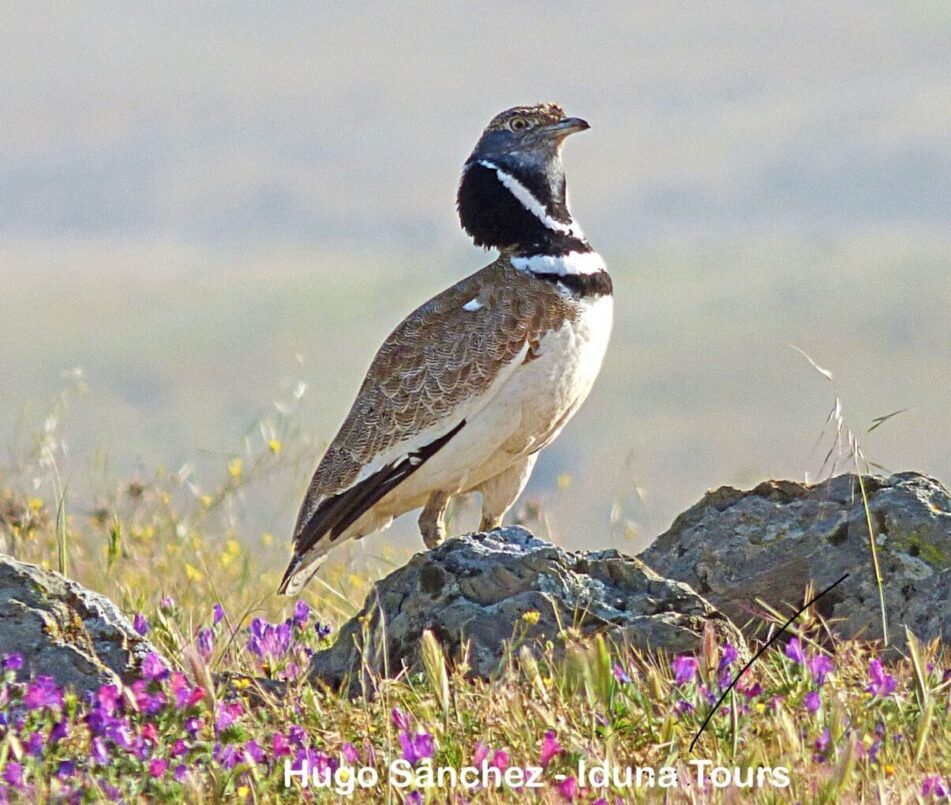
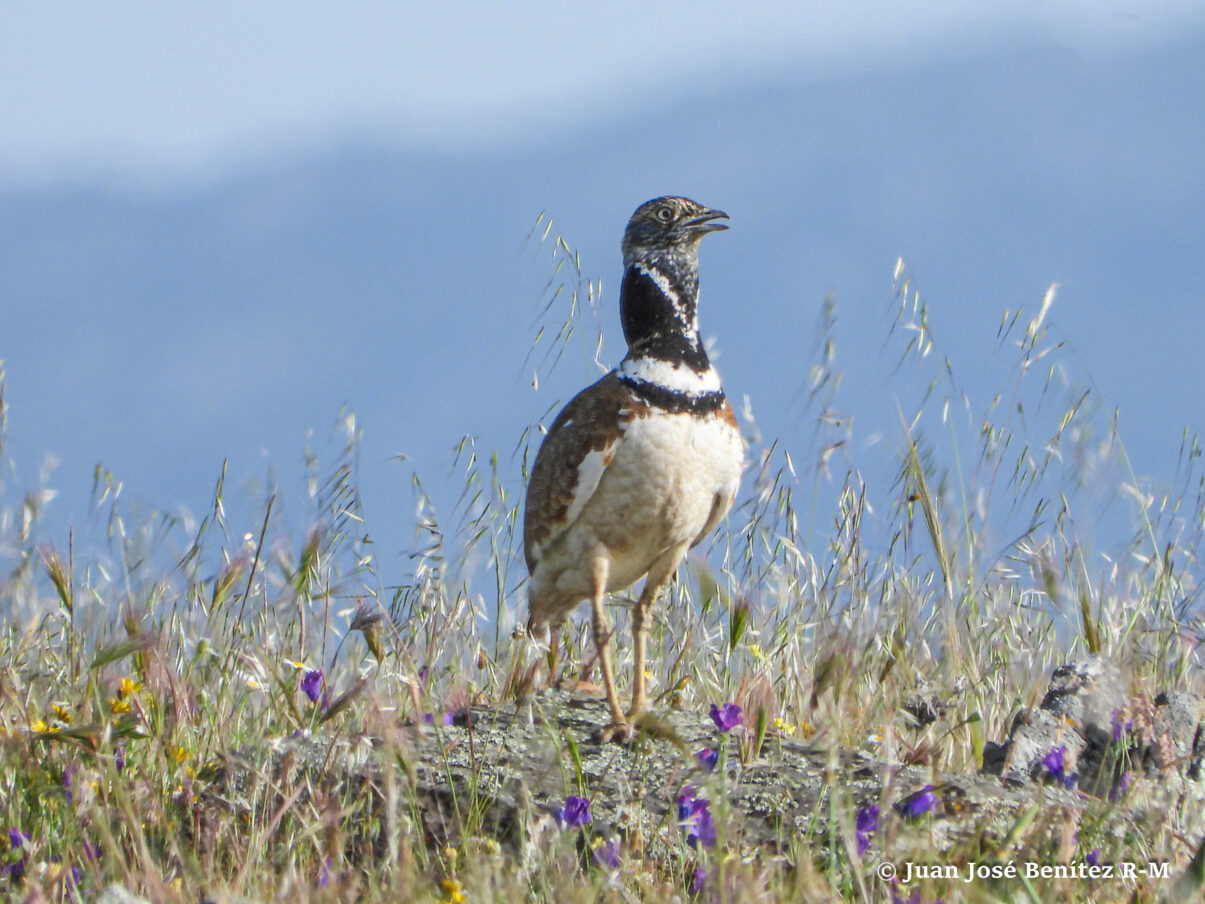
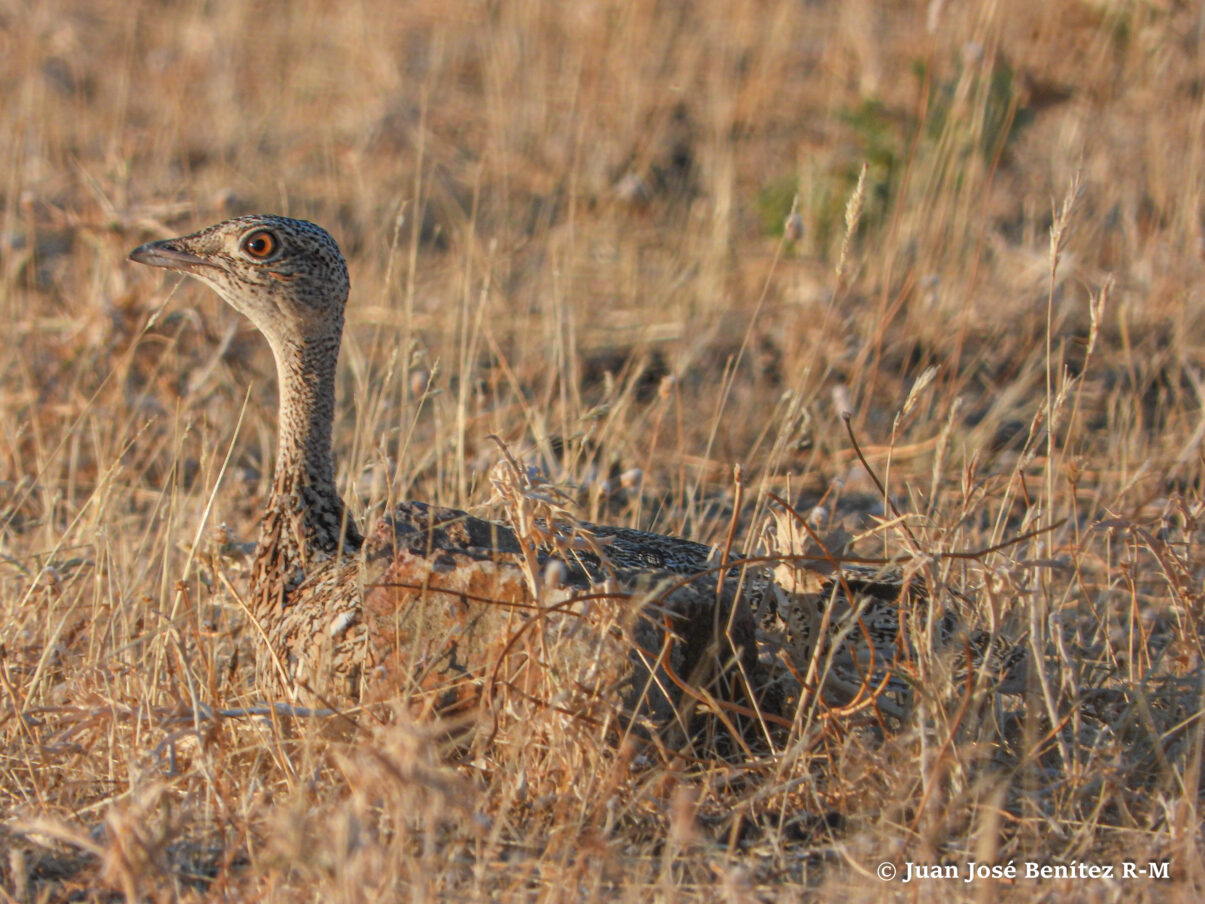
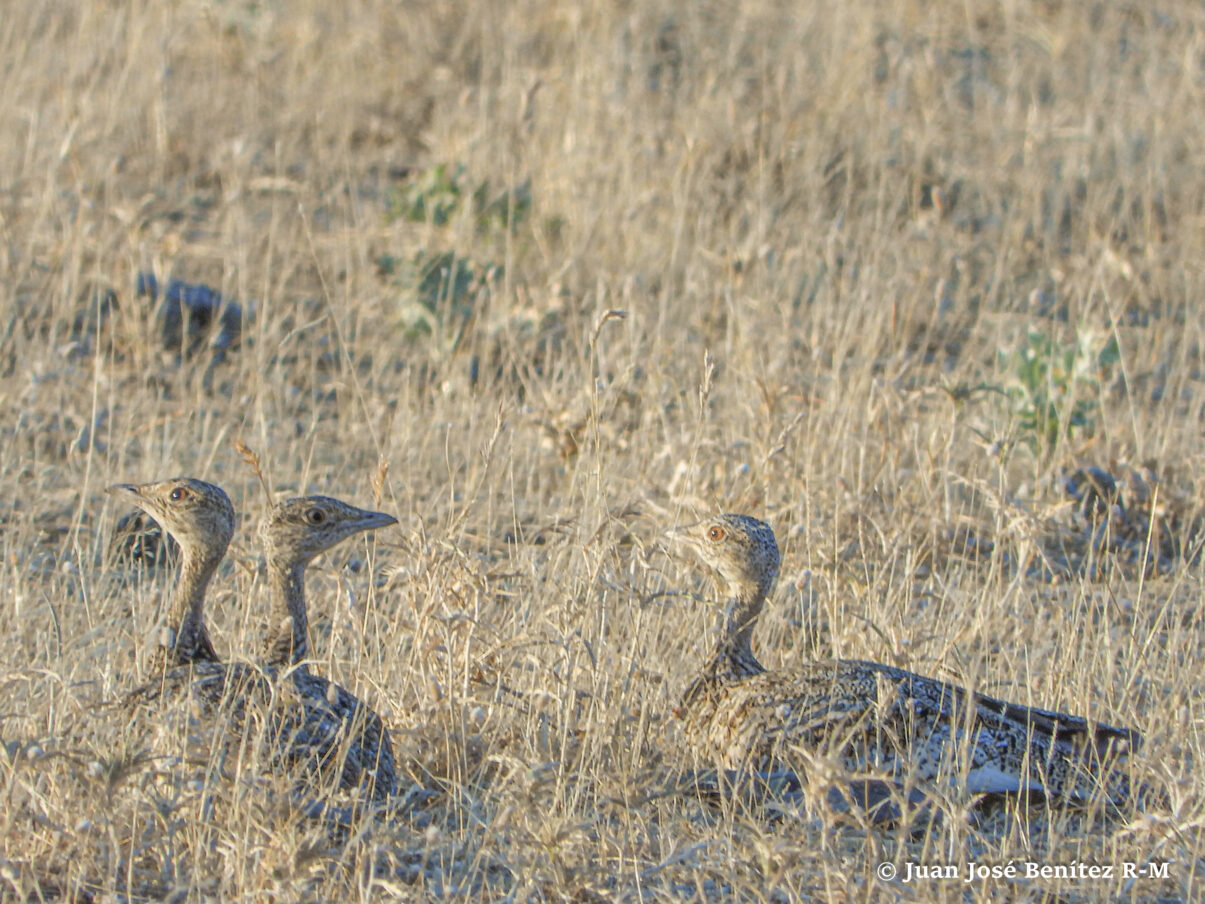
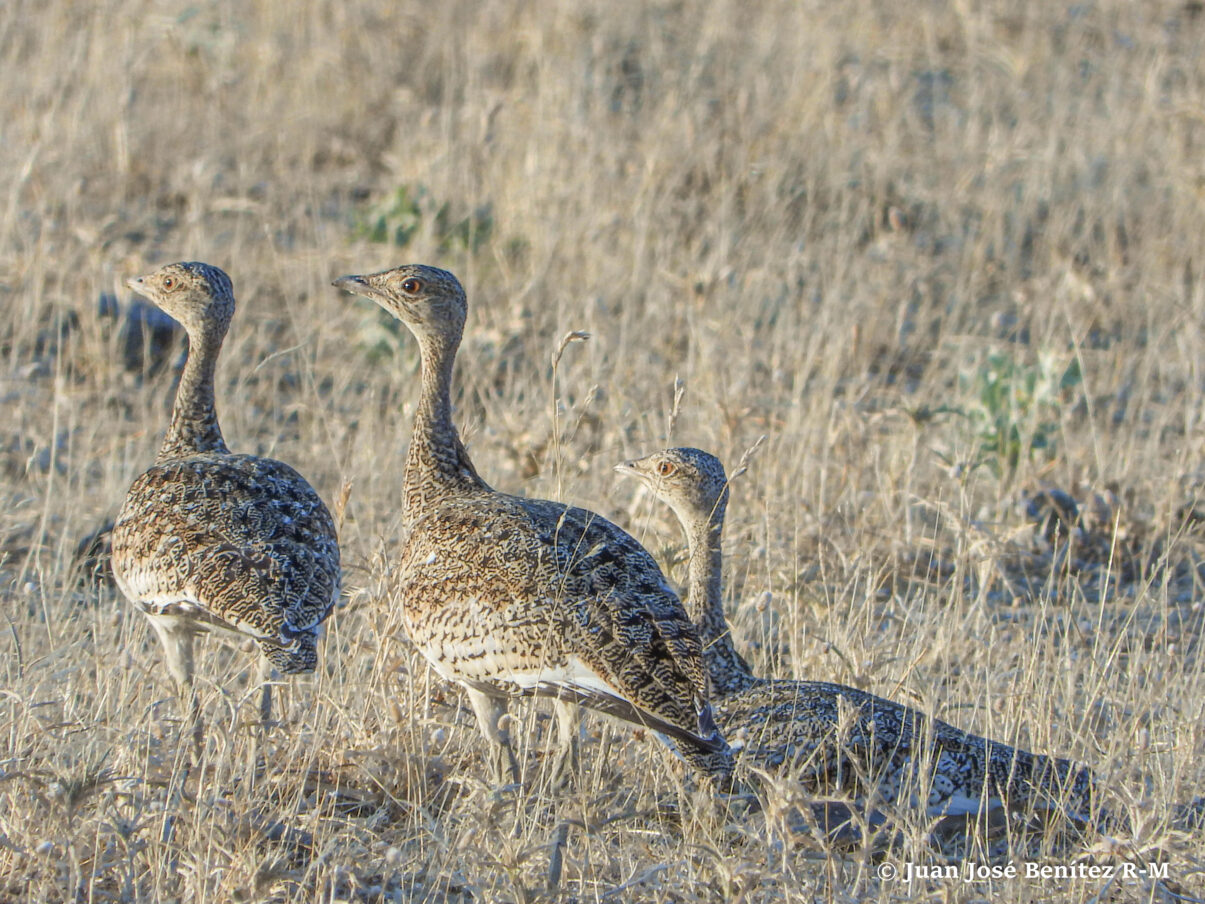
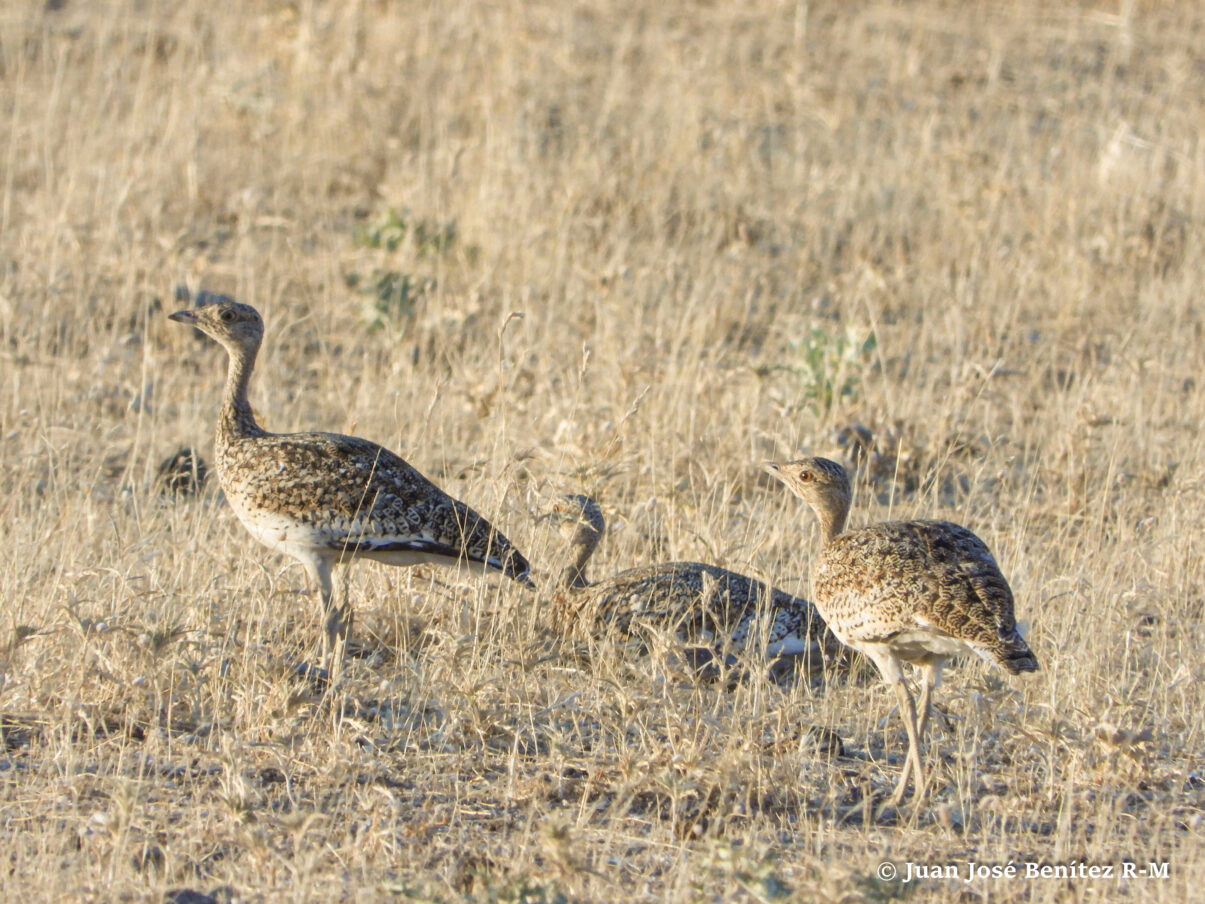
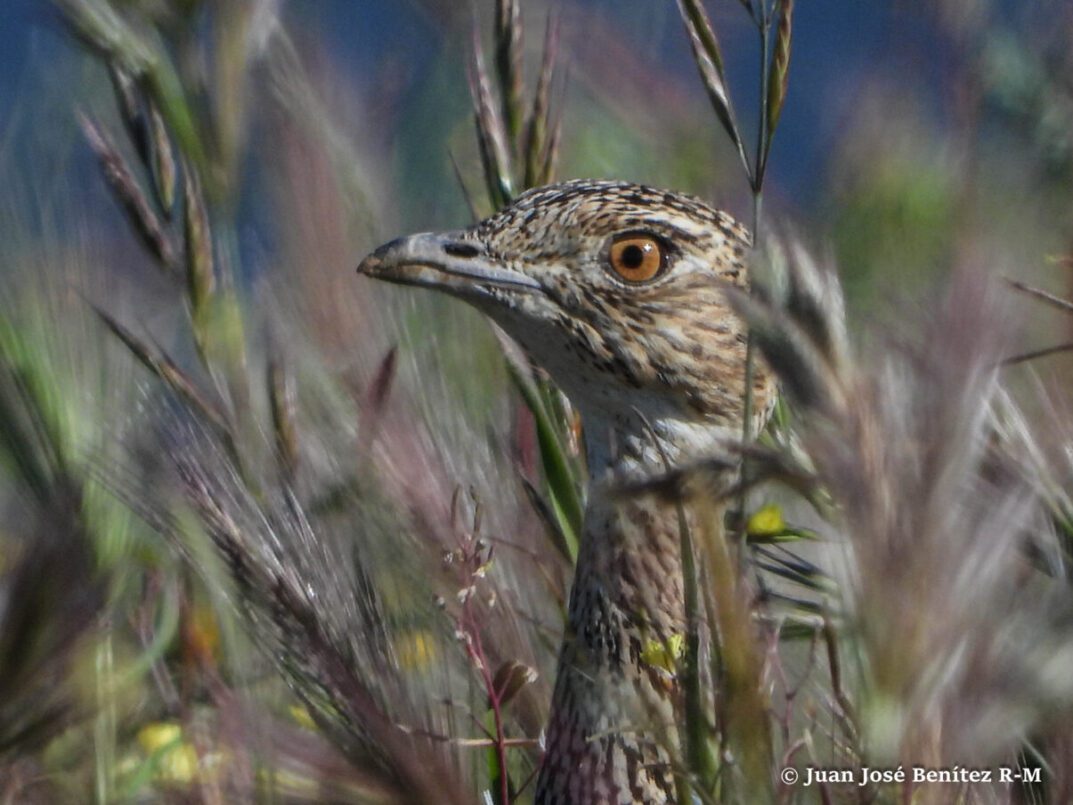
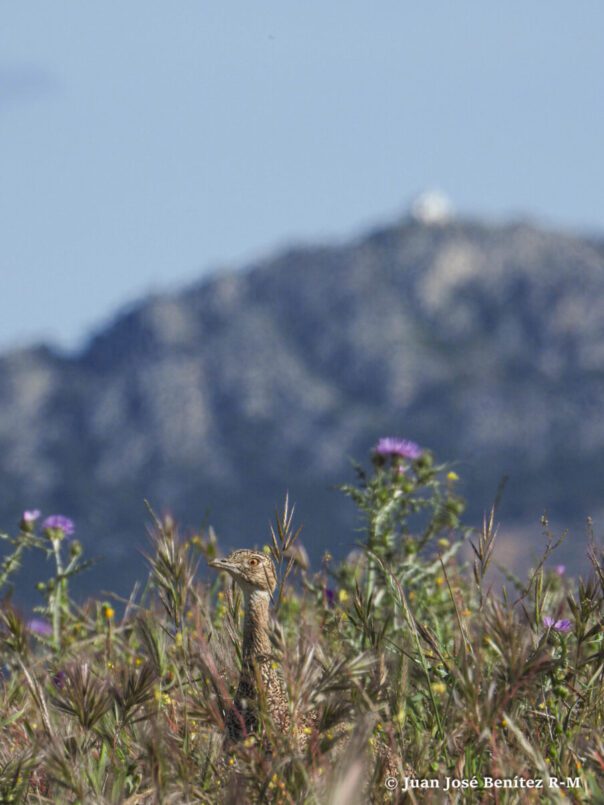
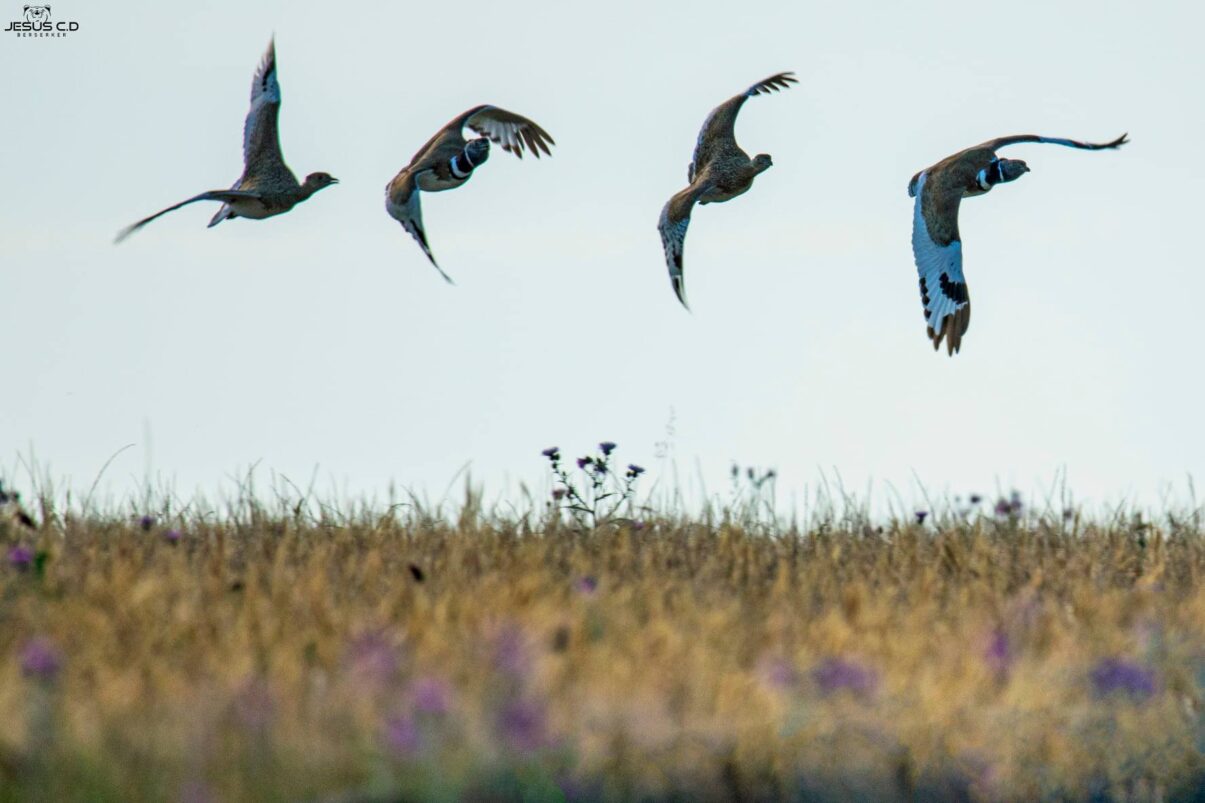
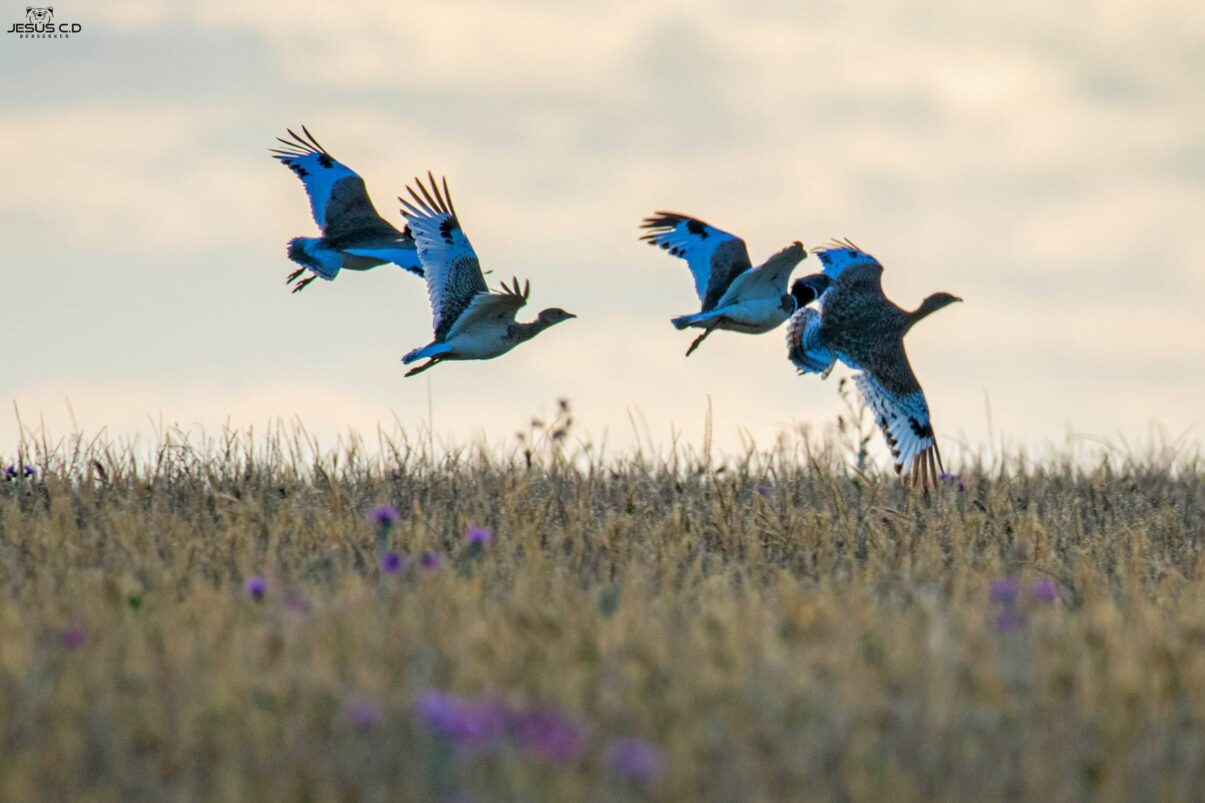
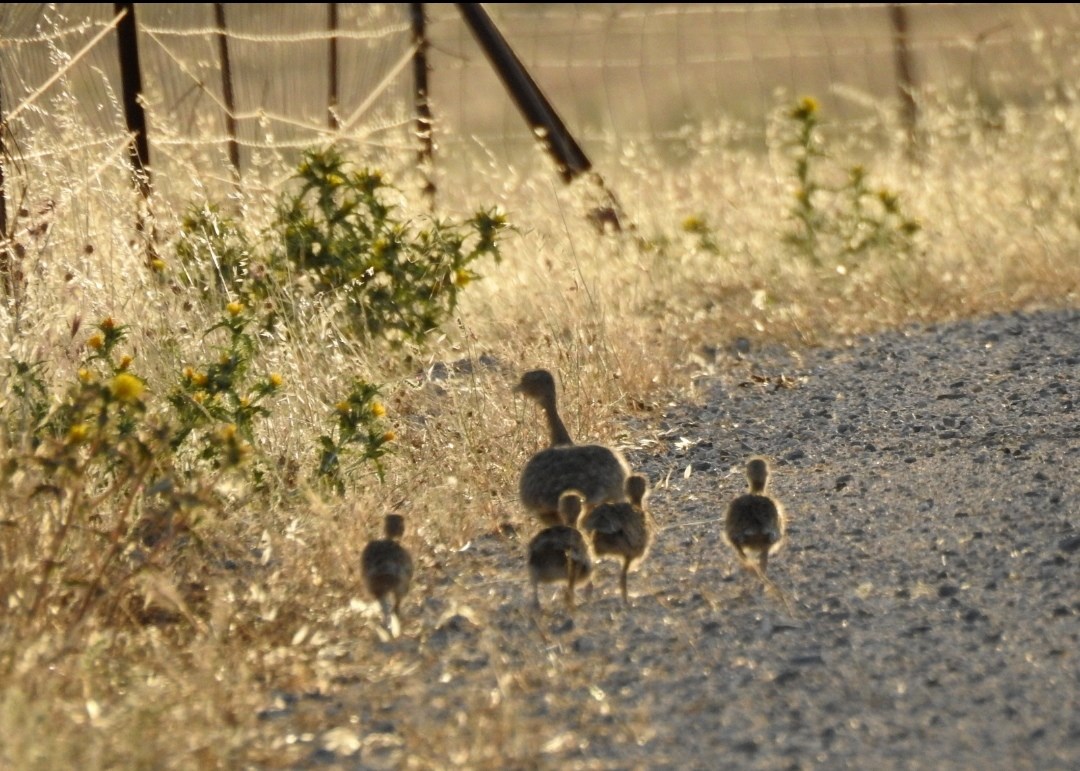
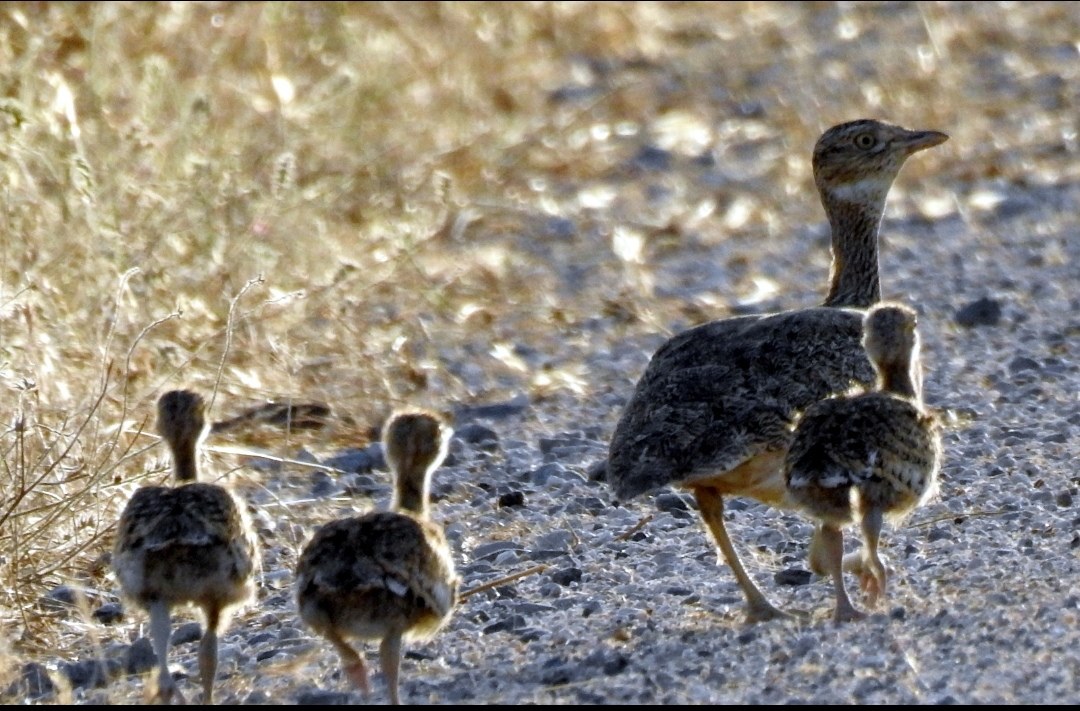
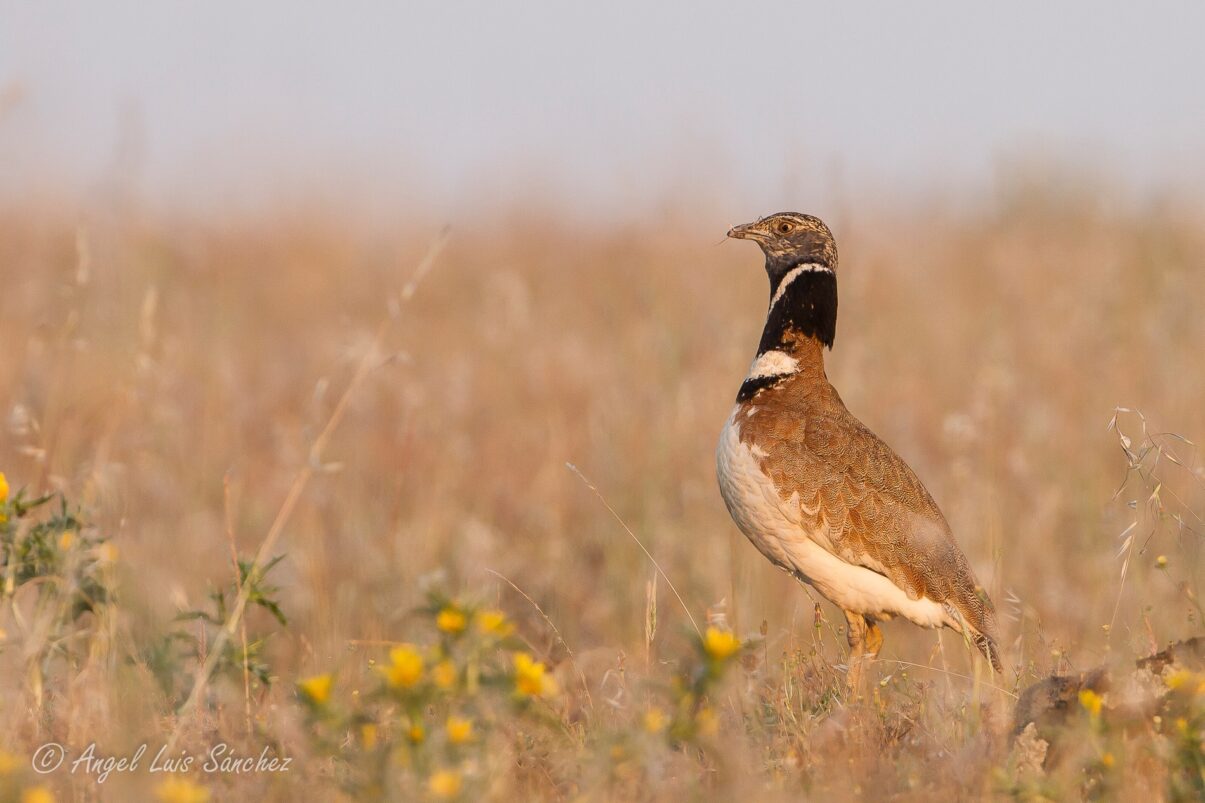
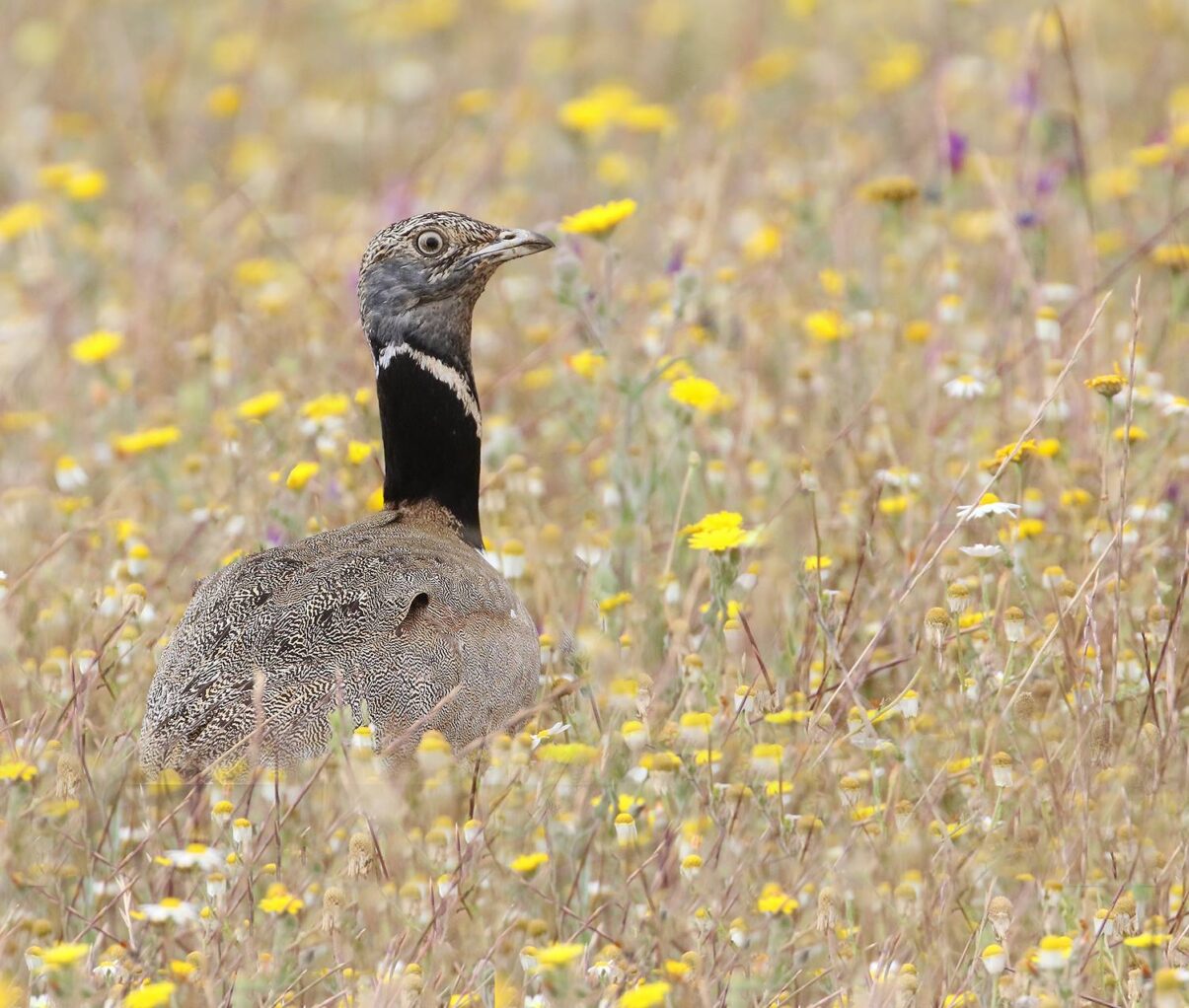
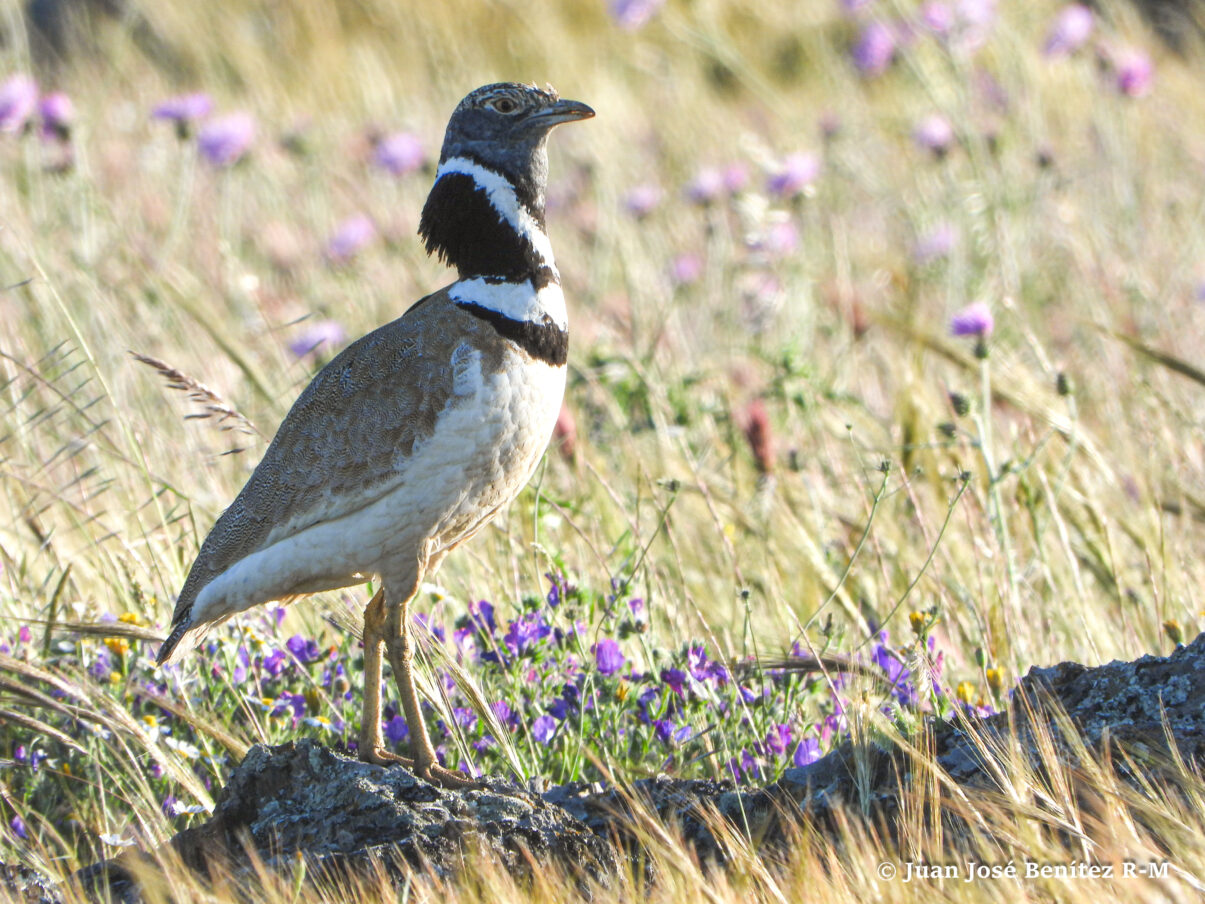
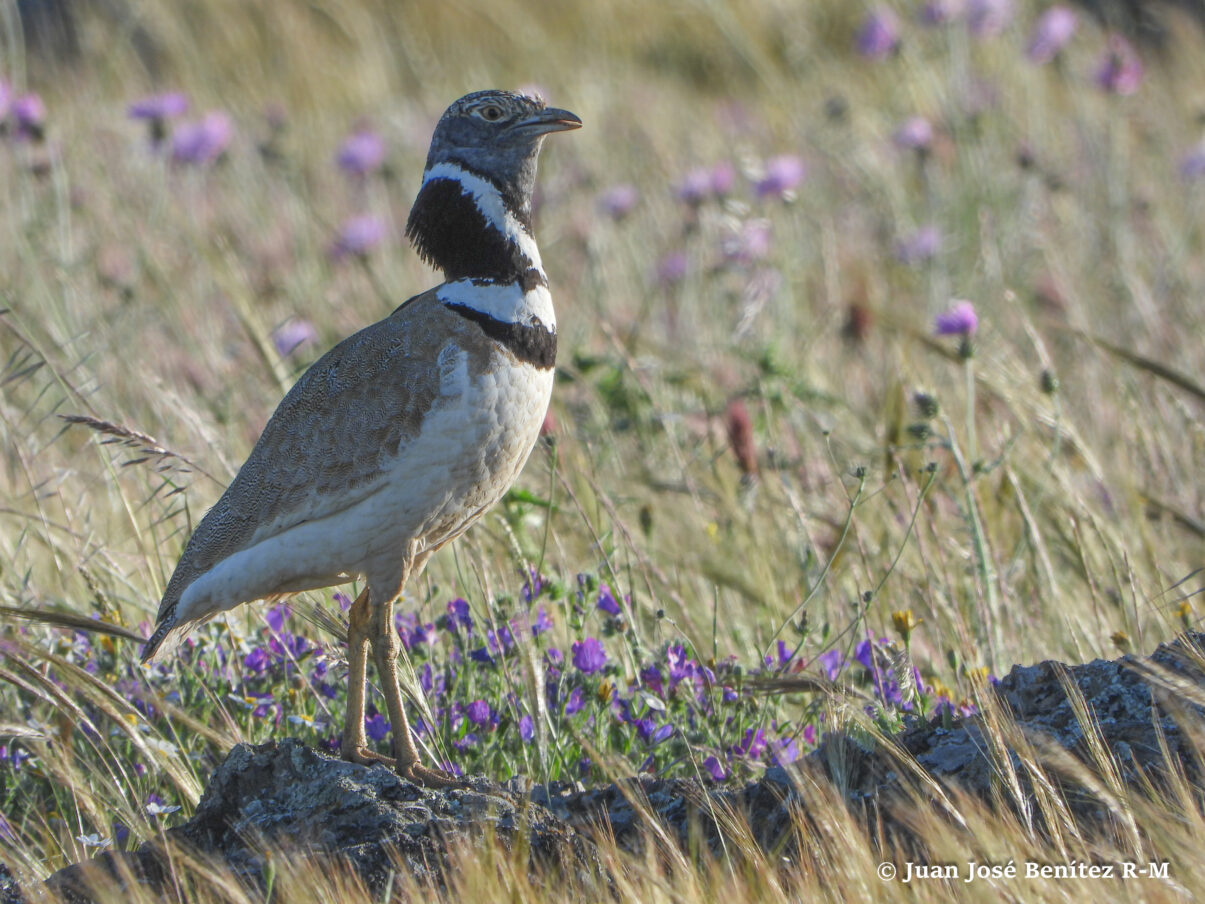
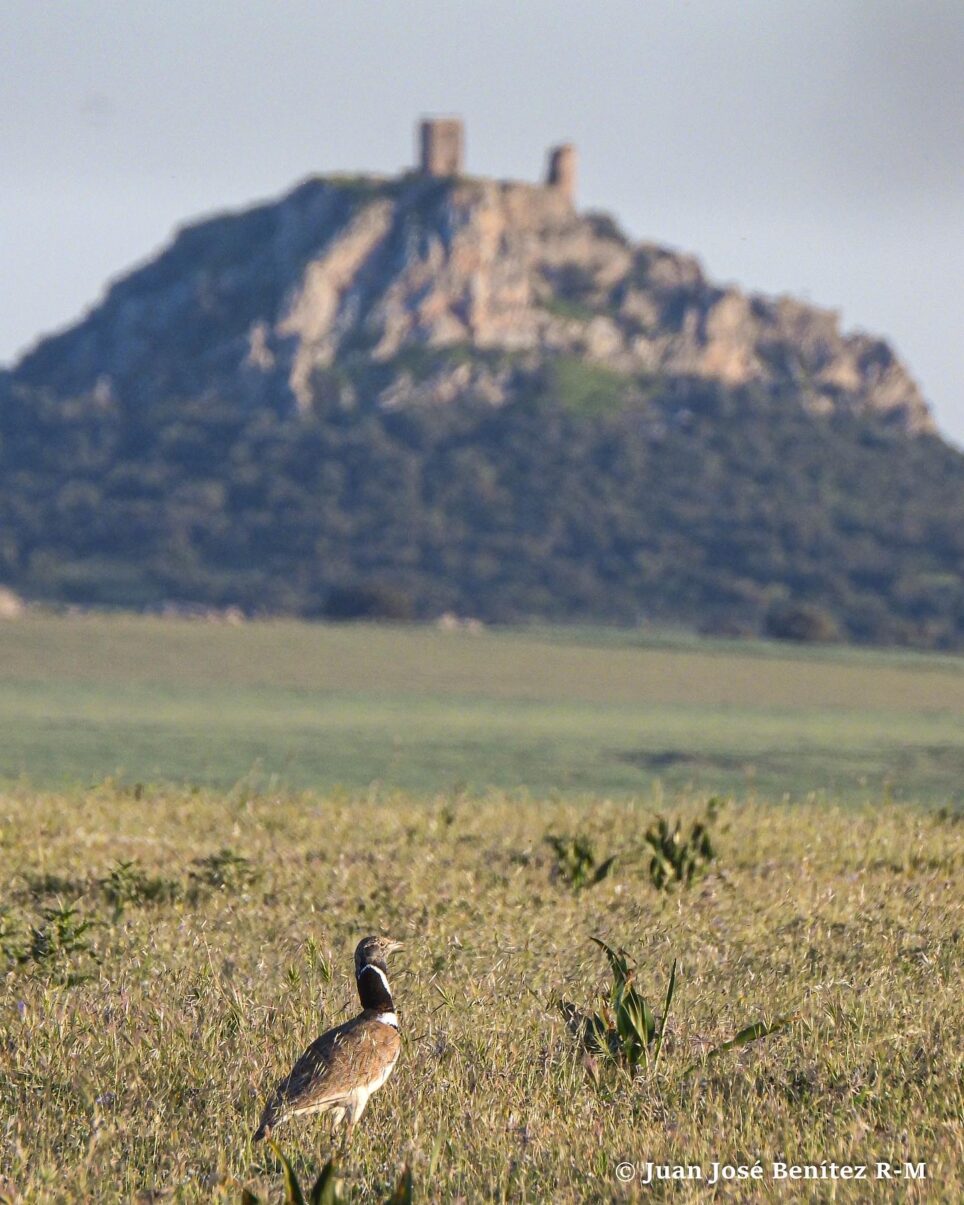
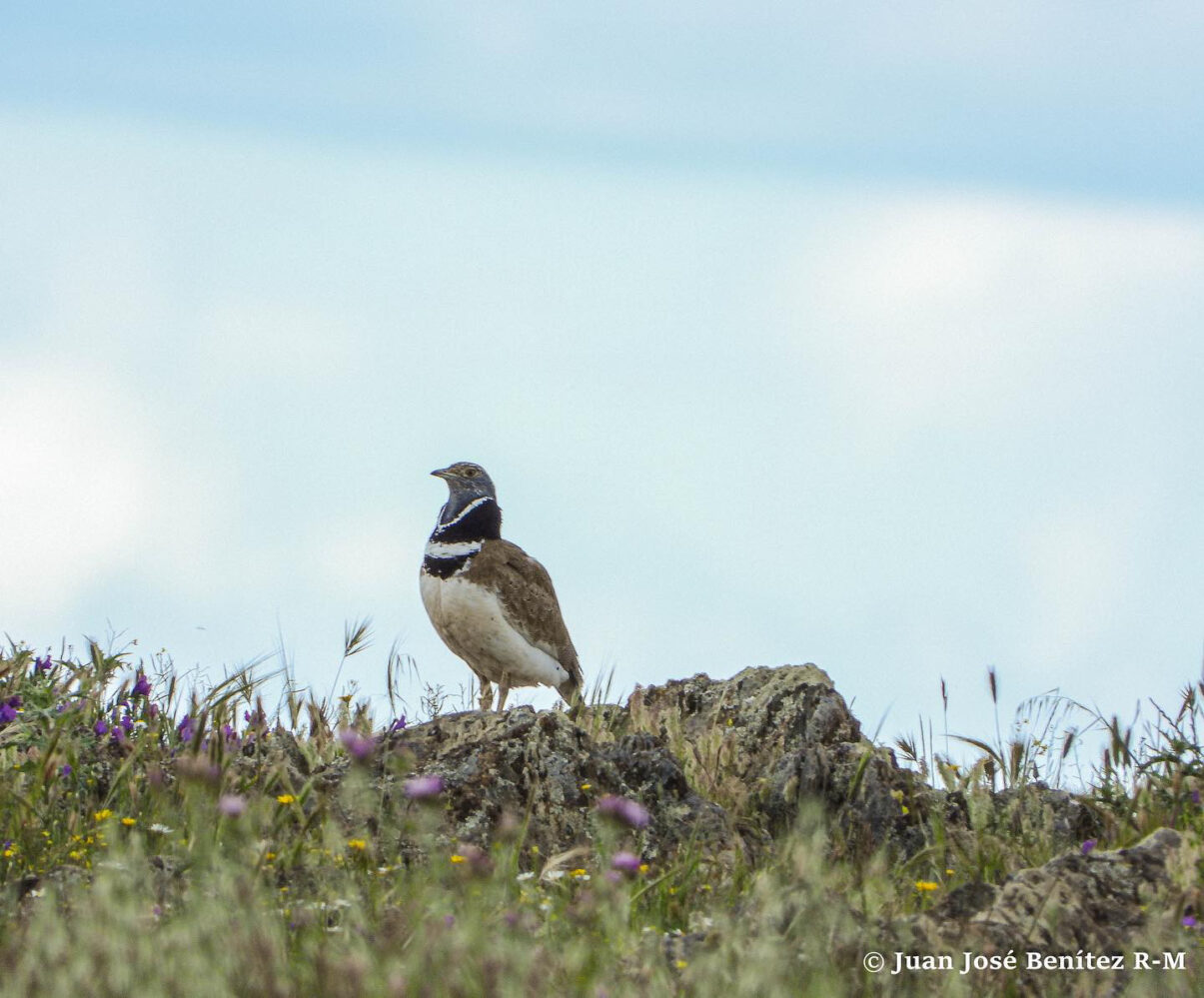
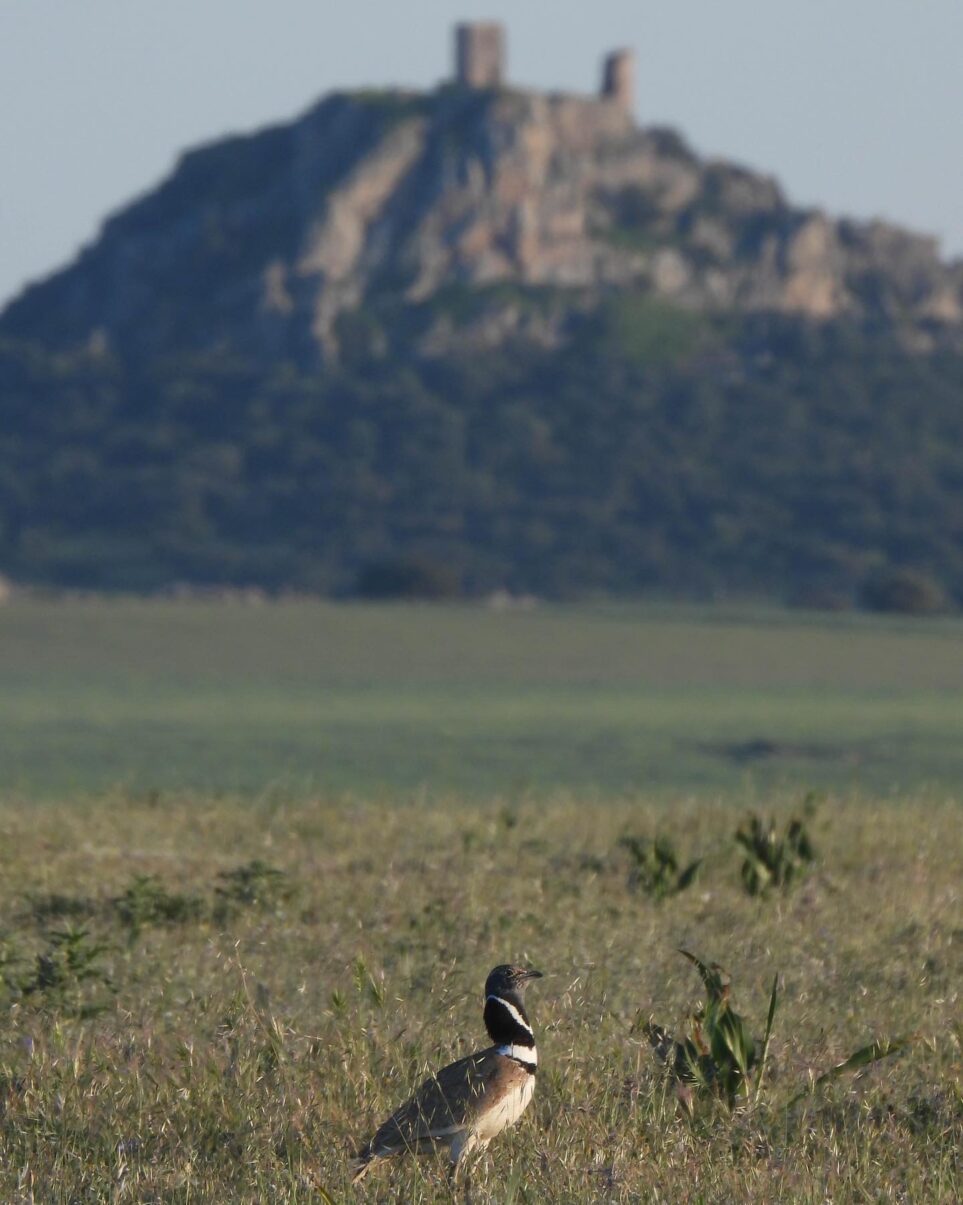
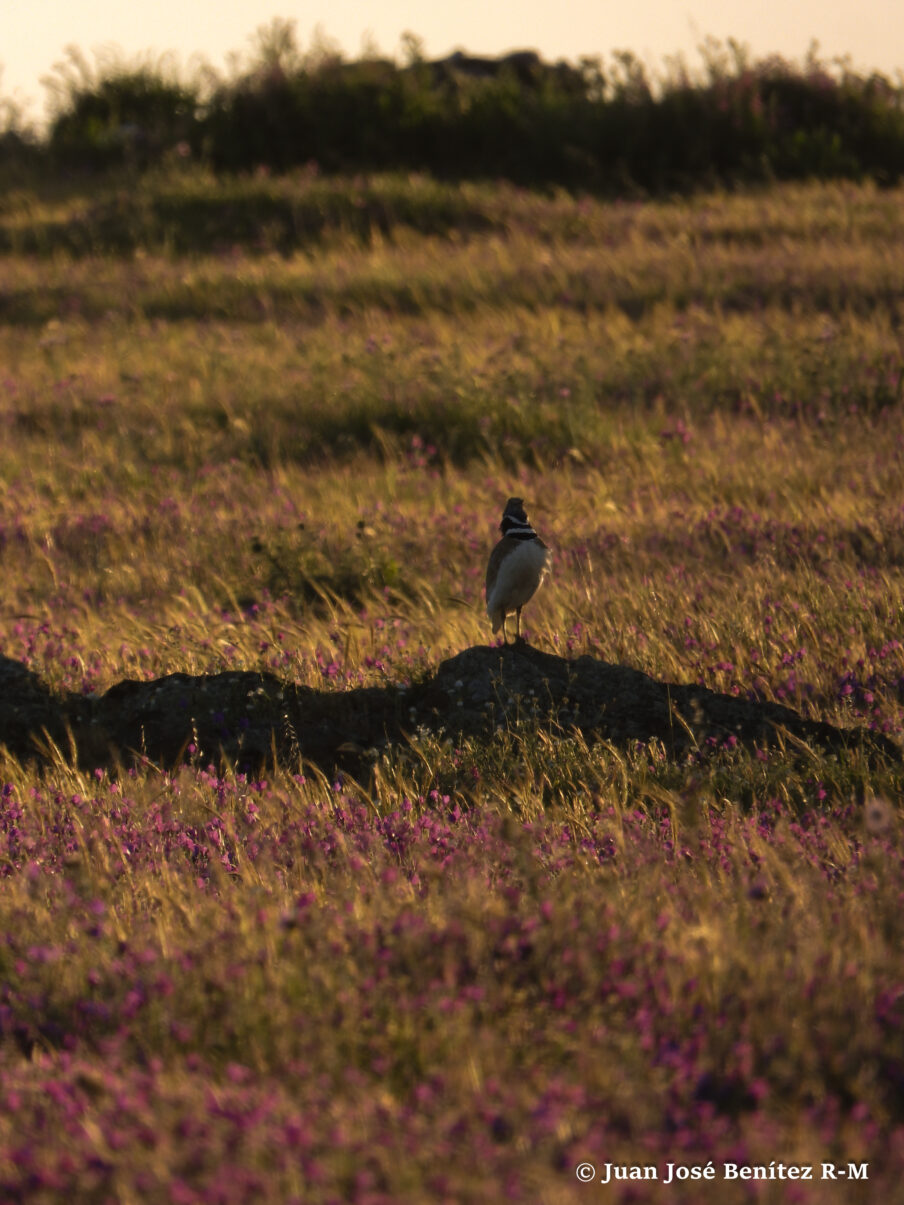
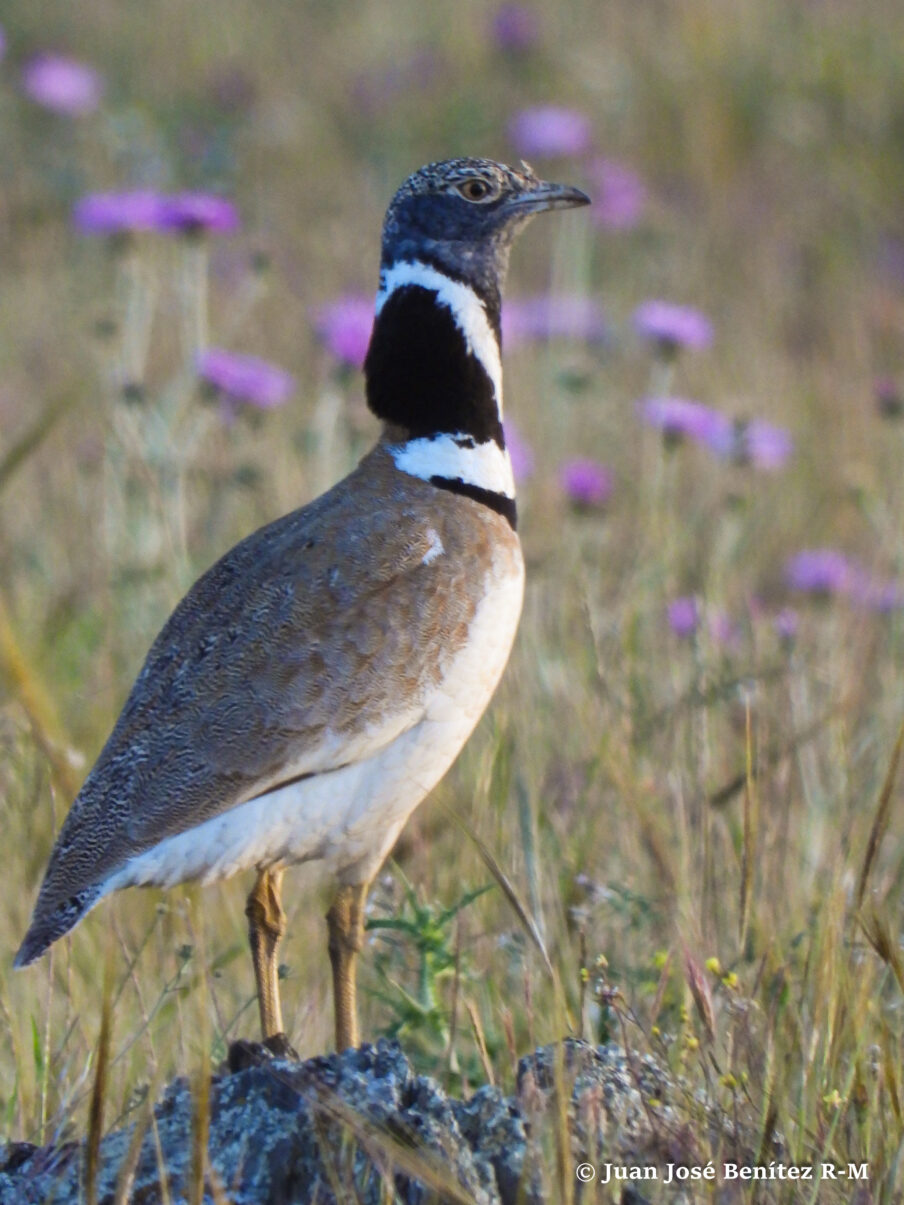
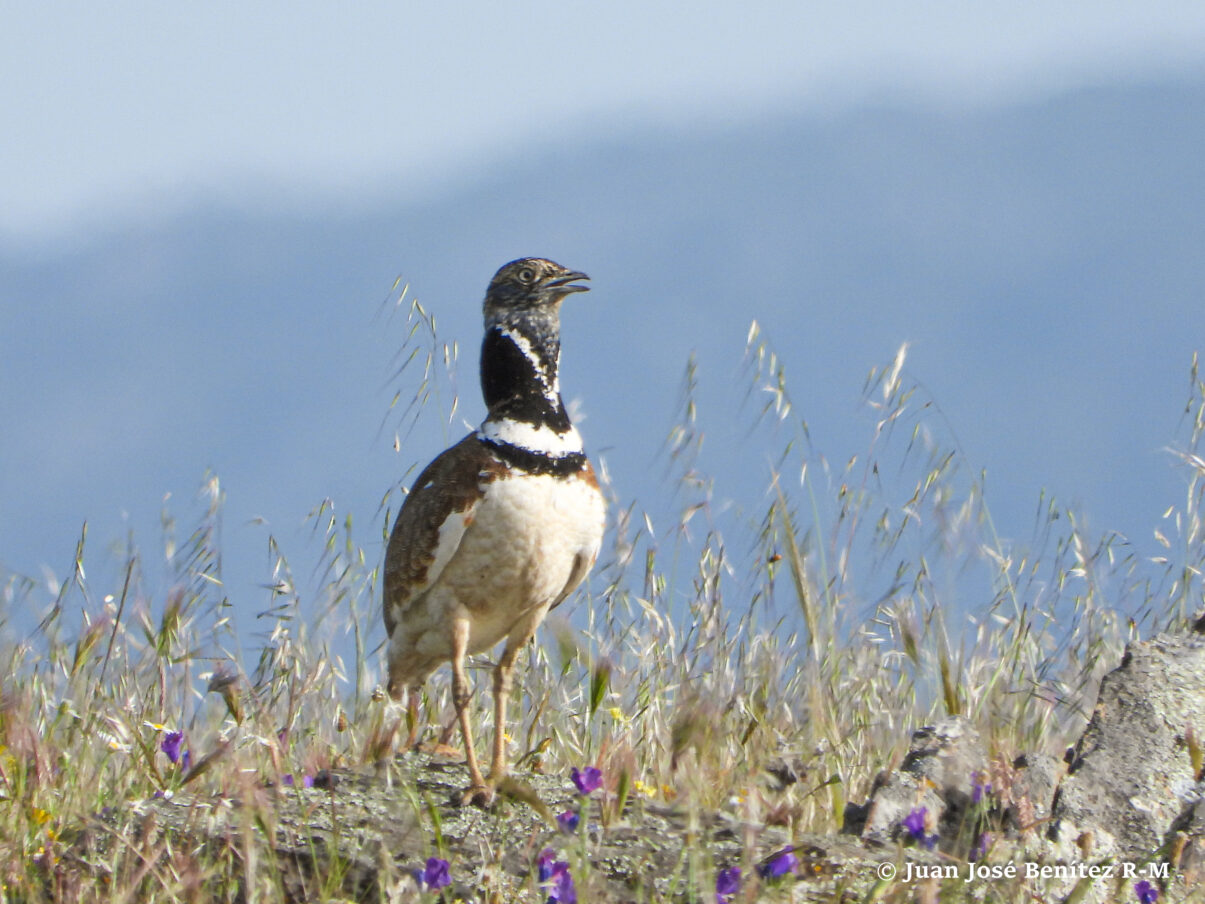
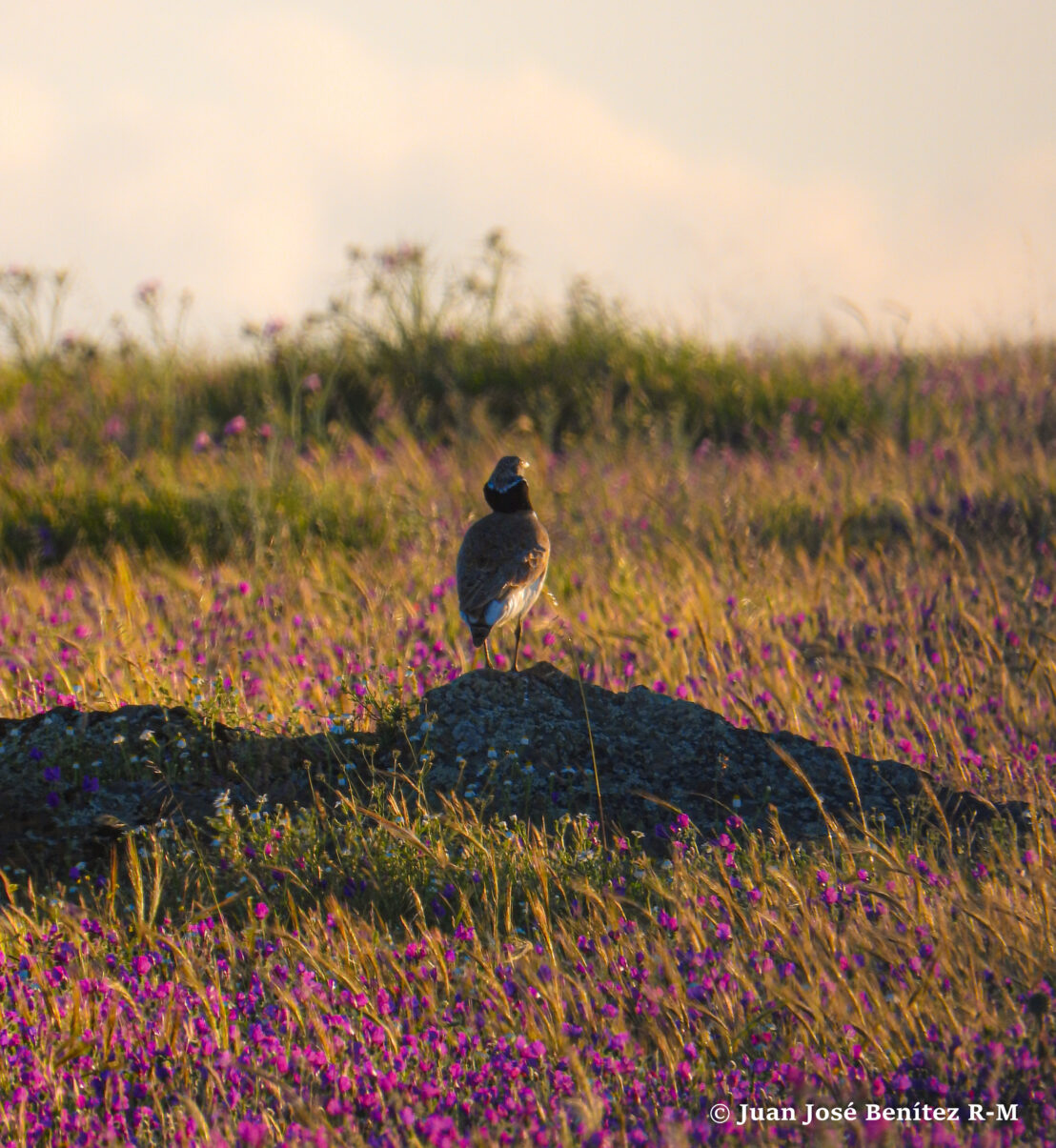
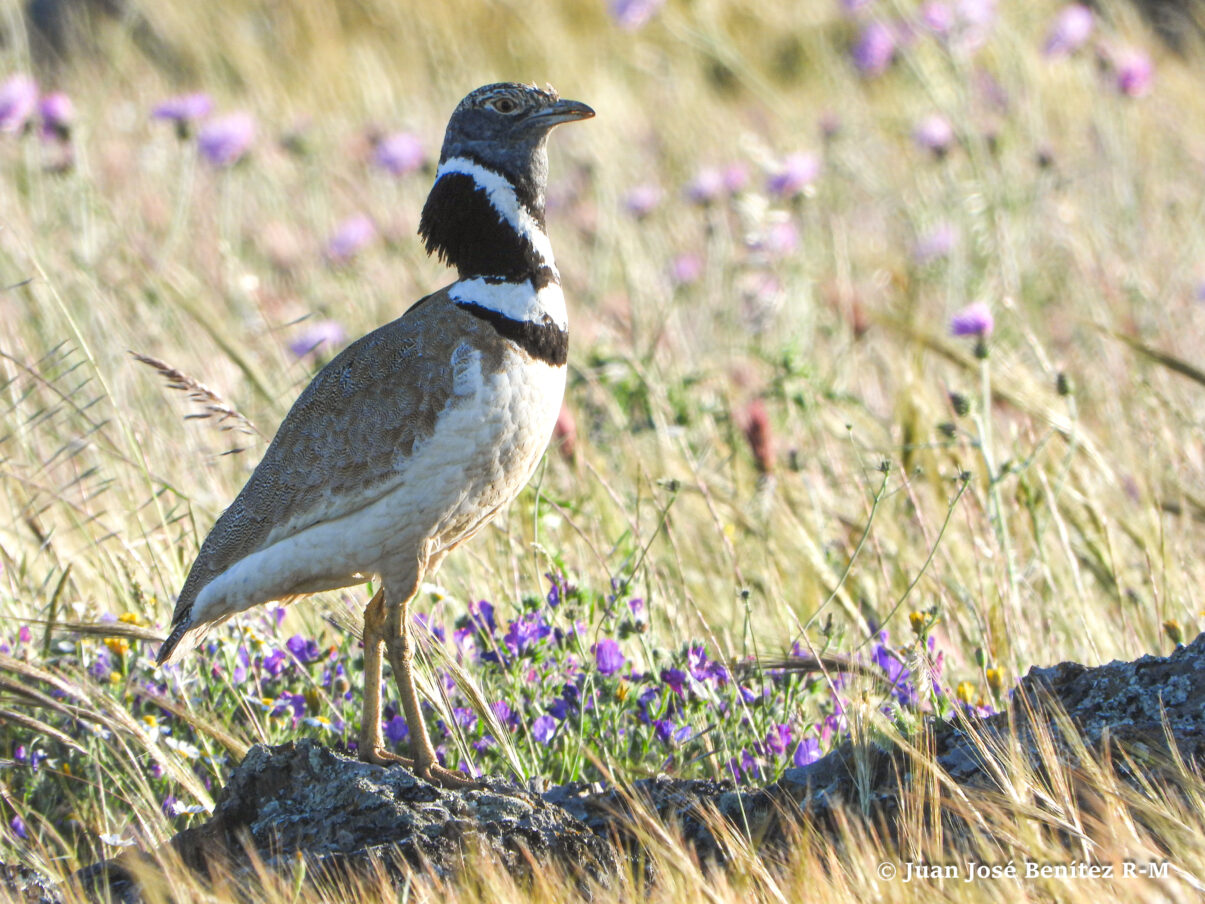
If there is one bird that stands out in Cabeza del Buey, it is the little bustard. This bird linked to steppe ecosystems is in frantic decline, being catalogued as an endangered species in 2023. Little Bustards find in Cabeza del Buey a true paradise, with one of the largest populations in the world. During the wintering season, flocks of 250-500 individuals can be observed, being a sad and last memory of the flocks of yesteryear. In spring, due to the rutting season, they disperse across the steppe, while in summer only the breeding females and chicks of the year remain, since the males make small migrations to the north or irrigated areas. It is common that some birds in Spain have an onomatopoeic name, and are known by the sound they make. The Little Bustard(Tetrax tetrax) is one of these birds, baptized since ancient times with a name that associates it with the curious whistling (hissing) sound it produces when flying. This is due to the fact that it has one of the primary remiges of each wing shorter than the others and extremely low-cut, so that it lets air pass through when flying and produces the characteristic si-si-si-si-si-si-si, which would serve to warn its congeners of its presence. The flapping of its wings also has another peculiarity, which consists of revealing white wing-spots that once perched remain hidden. In our opinion, another name that is quite appropriate (in spite of its simplicity) is the one it receives in English: Little Bustard (which could be translated as Little Bustard, to distinguish it from the other species designated as Great Bustard). And indeed, both by kinship, morphology, habits and habitat type, we can consider the Little Bustard as the little brother of the Great Bustard. However, unlike the Bustard, the sexual dimorphism of the Little Bustard is only noticeable during courtship, because once the male’s feathers are finished, they take on the same shades as the female’s, and during the winter it is not easy to distinguish them unless we have them very close or in our hands. Their smaller size than the Great Bustard has made them look for a different defense strategy, based mainly on a fast flight, associated with the aforementioned acoustic and visual communication systems, and also on a much more social character. The observation of Little Bustards in Cabeza is relatively easy in spring due to the density of males that choose our municipality to perform their courtship in the areas known as “cantaderos”. At this time they are located by the songs and are more confident to take pictures of them, although you should not get closer than 100 meters or get out of the car, as it is a very endangered species and in a sensitive period such as breeding and courtship. Each male selects an area in which he sings and goes through it quite assiduously. The function of this behavior is not only to attract females, but also to mark the territory for other males. Sometimes, if one male approaches the territory of another, real fights can take place, both on the ground and in aerial chases. These small territories of about 60 square meters, usually have a rock called dogtooth, on which the male bustard climbs to sing and make jumps and flapping with the aim of becoming more visible if the grass is high.
Once copulation has taken place, the female leaves this area in search of planting and grazing areas where she alone will carry out the work of breeding. Photographs of these birds in the extensive flowering meadows on their slate watchtowers are highly sought after by nature photographers around the world. Studies of these birds are currently underway at the European level, involving the University of Porto and Barcelona. Contains an excerpt from the book “Avutarda y Sisón, vigilantes del llano, by Manuel Calderón Carrasco.
Este sitio web utiliza cookies para mejorar su experiencia mientras navega por el sitio web. De estas, las cookies que se clasifican como necesarias se almacenan en su navegador, ya que son esenciales para el funcionamiento de las funcionalidades básicas del sitio web. También utilizamos cookies de terceros que nos ayudan a analizar y comprender cómo utiliza este sitio web. Estas cookies se almacenarán en su navegador solo con su consentimiento. También tiene la opción de rechazar estas cookies. Pero la exclusión voluntaria de algunas de estas cookies puede afectar su experiencia de navegación.| Cookie | Duration | Description |
|---|---|---|
| cookielawinfo-checkbox-analytics | 11 months | This cookie is set by GDPR Cookie Consent plugin. The cookie is used to store the user consent for the cookies in the category "Analytics". |
| cookielawinfo-checkbox-functional | 11 months | The cookie is set by GDPR cookie consent to record the user consent for the cookies in the category "Functional". |
| cookielawinfo-checkbox-necessary | 11 months | This cookie is set by GDPR Cookie Consent plugin. The cookies is used to store the user consent for the cookies in the category "Necessary". |
| cookielawinfo-checkbox-others | 11 months | This cookie is set by GDPR Cookie Consent plugin. The cookie is used to store the user consent for the cookies in the category "Other. |
| cookielawinfo-checkbox-performance | 11 months | This cookie is set by GDPR Cookie Consent plugin. The cookie is used to store the user consent for the cookies in the category "Performance". |
| viewed_cookie_policy | 11 months | The cookie is set by the GDPR Cookie Consent plugin and is used to store whether or not user has consented to the use of cookies. It does not store any personal data. |