-
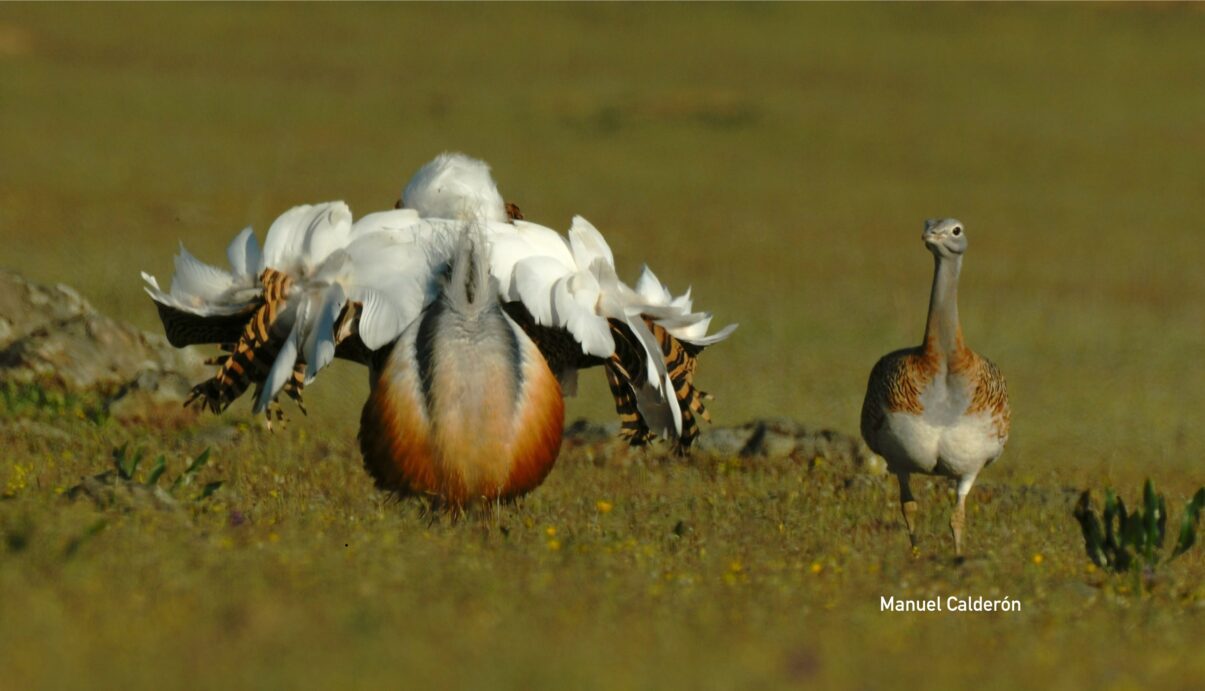
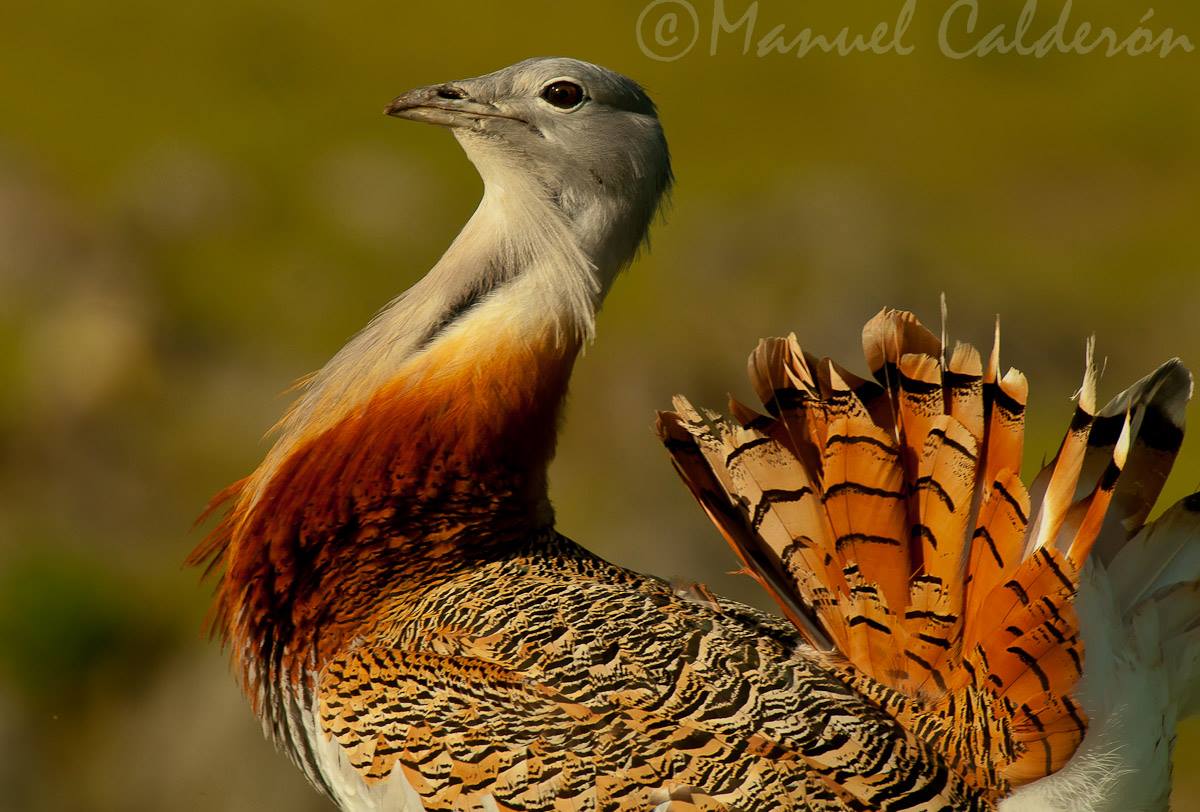
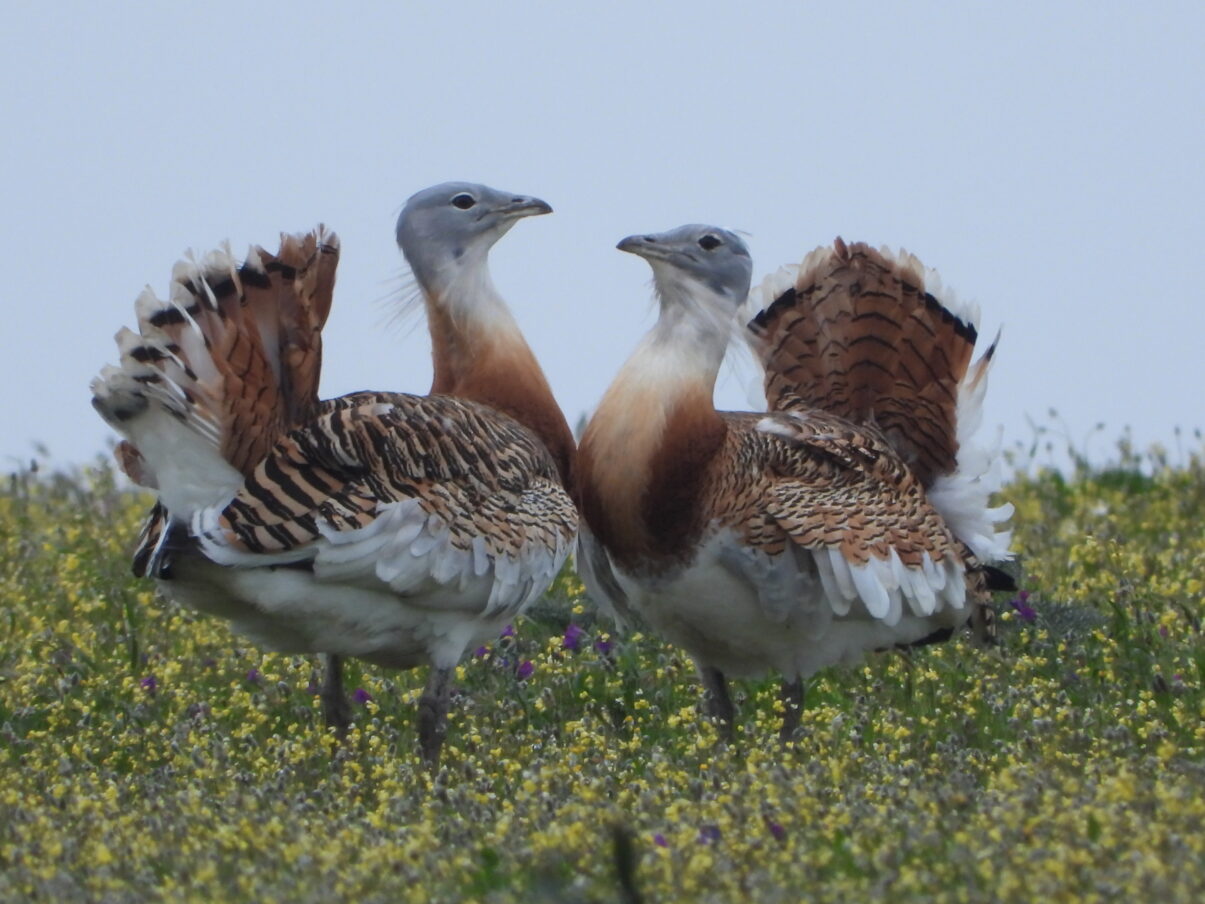
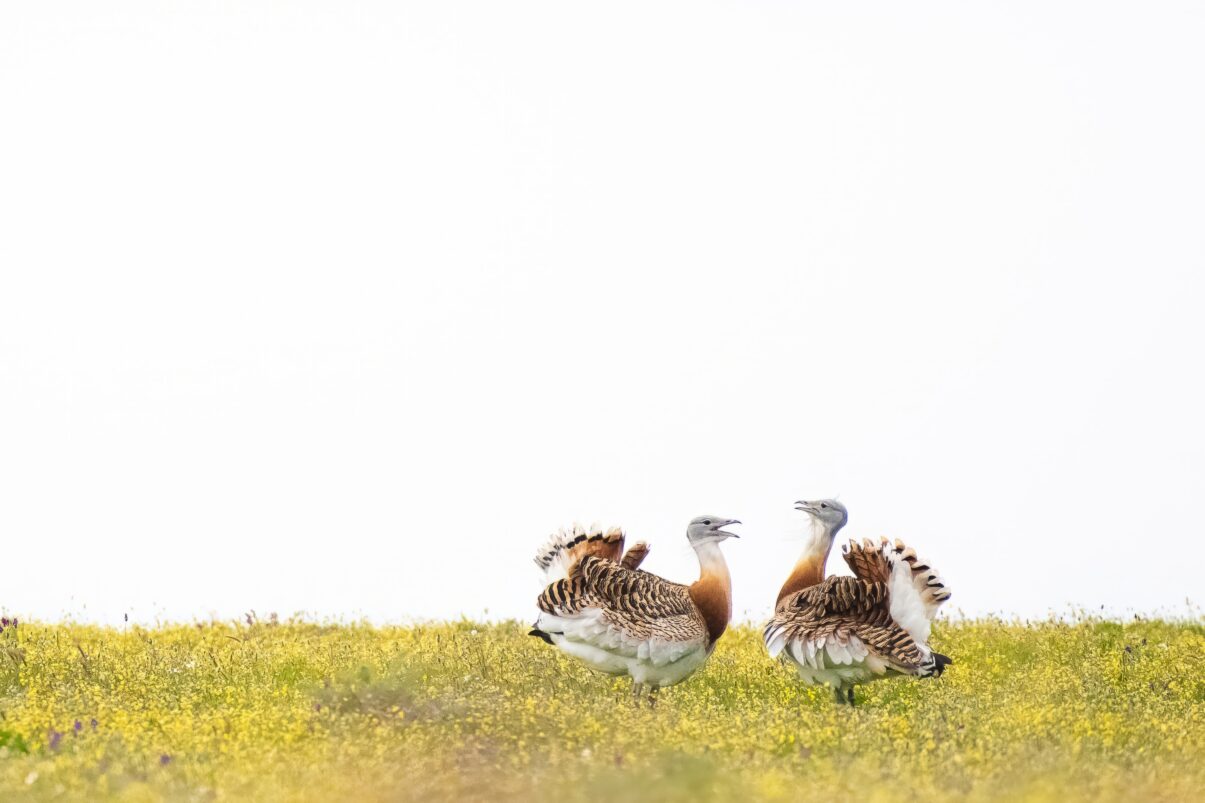
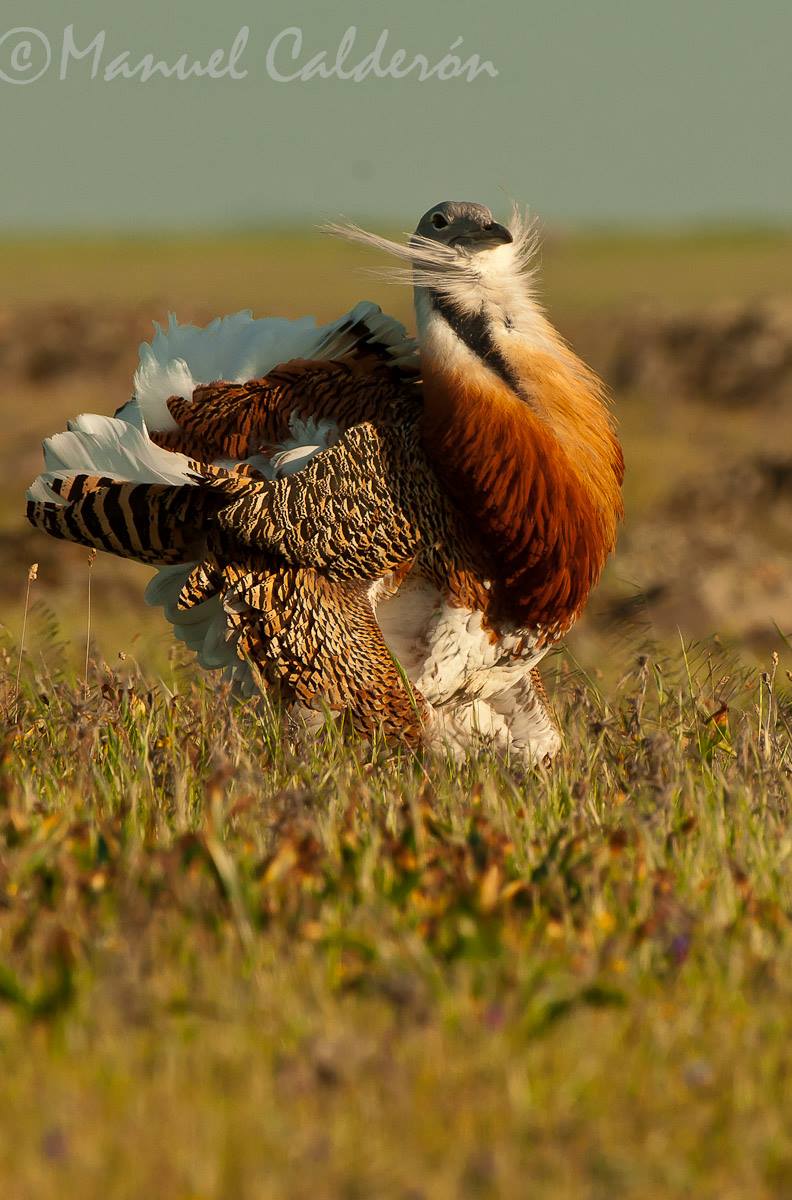
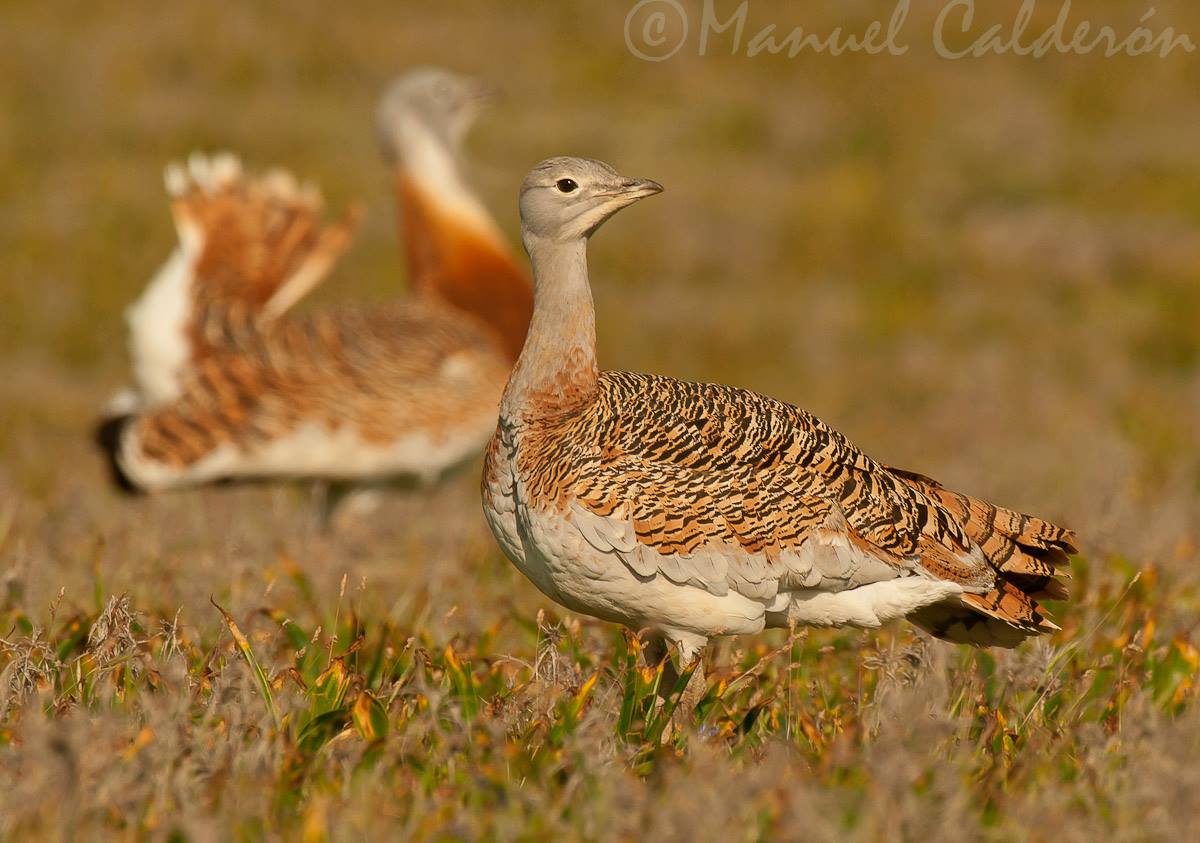
- Macho y hembra de avutarda en cortejo. Foto de Manuel Calderón Carrasco.

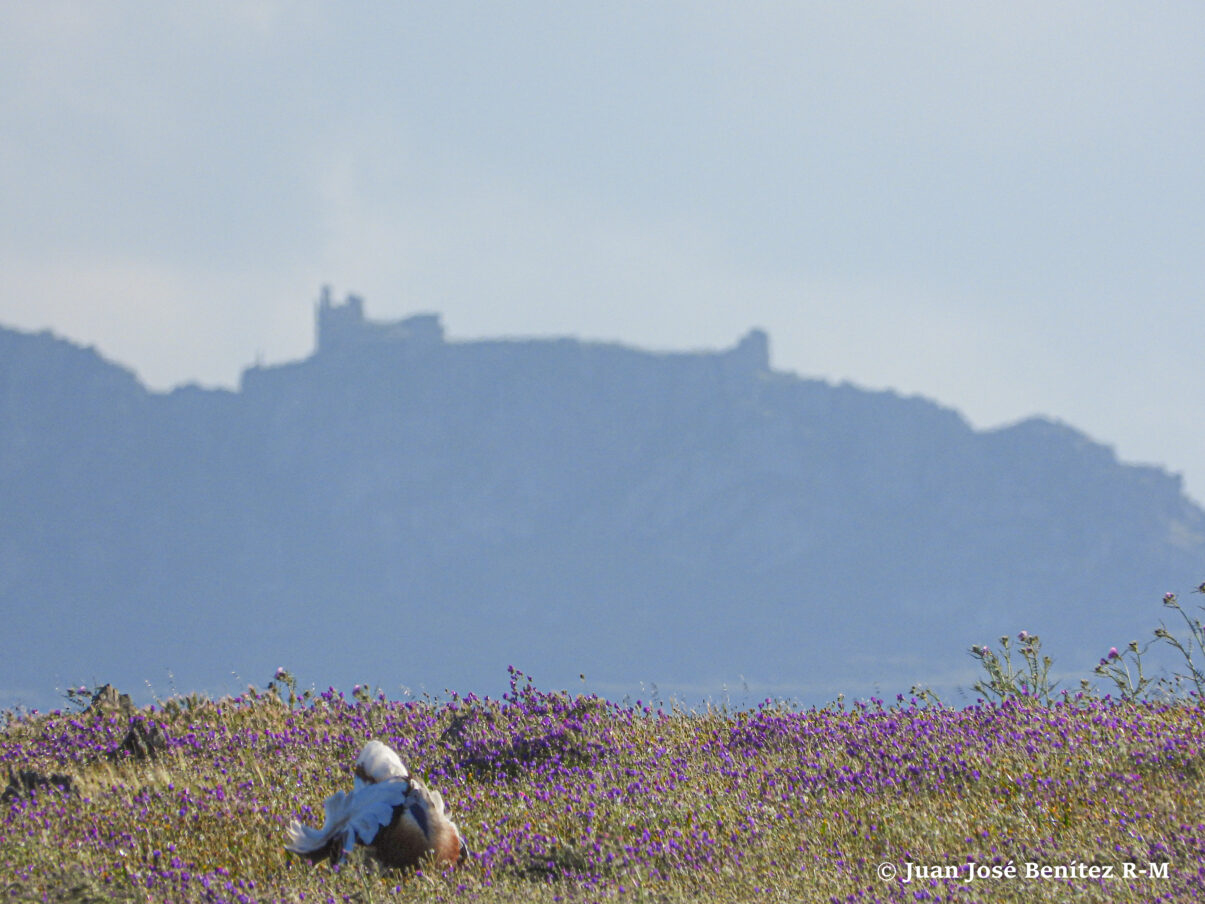
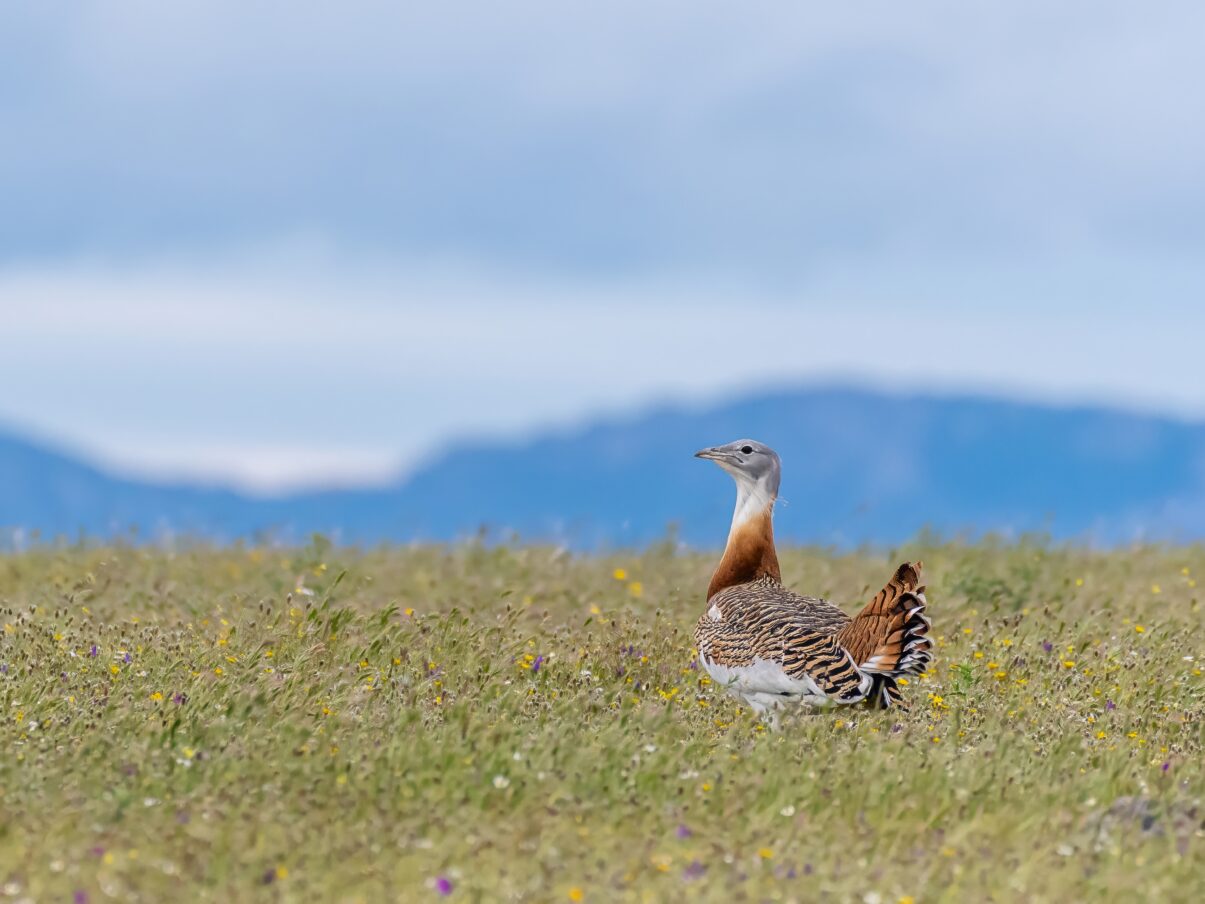
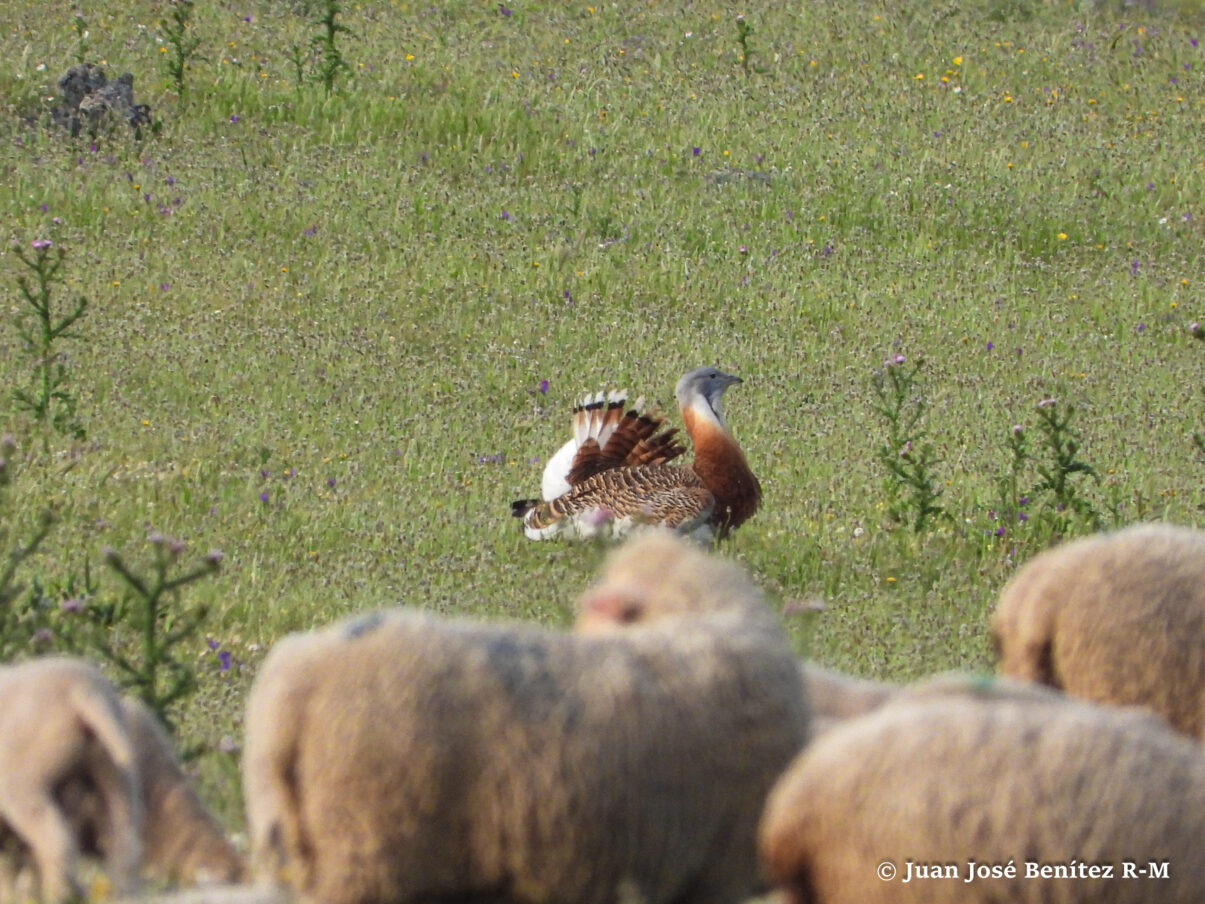
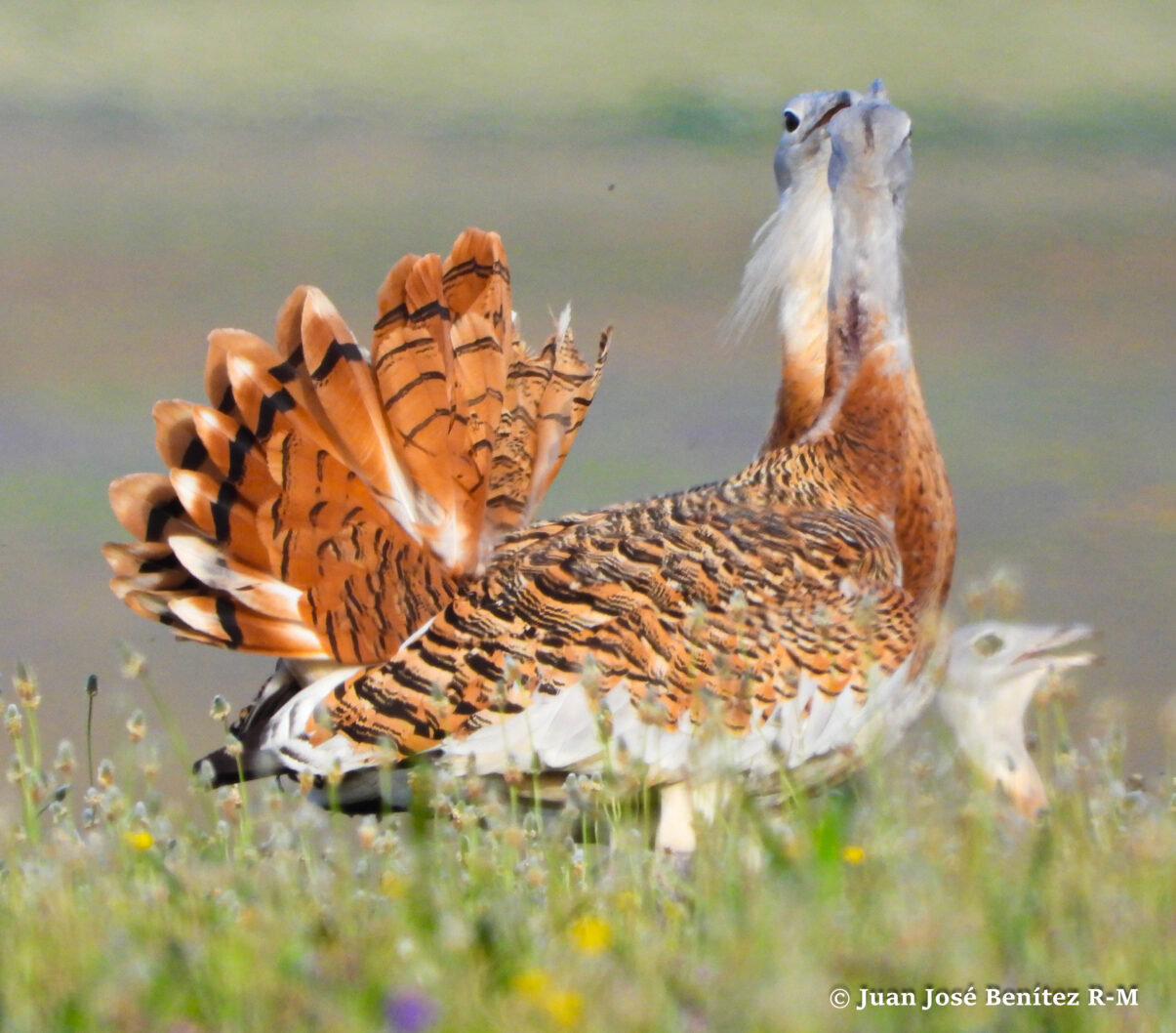
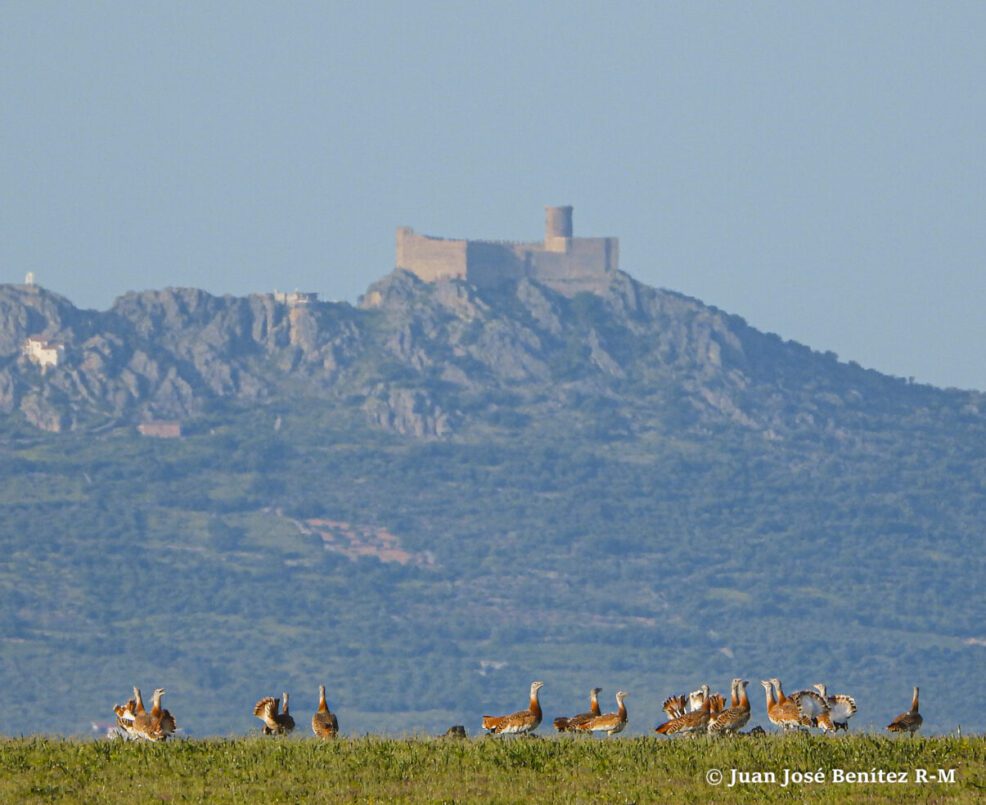
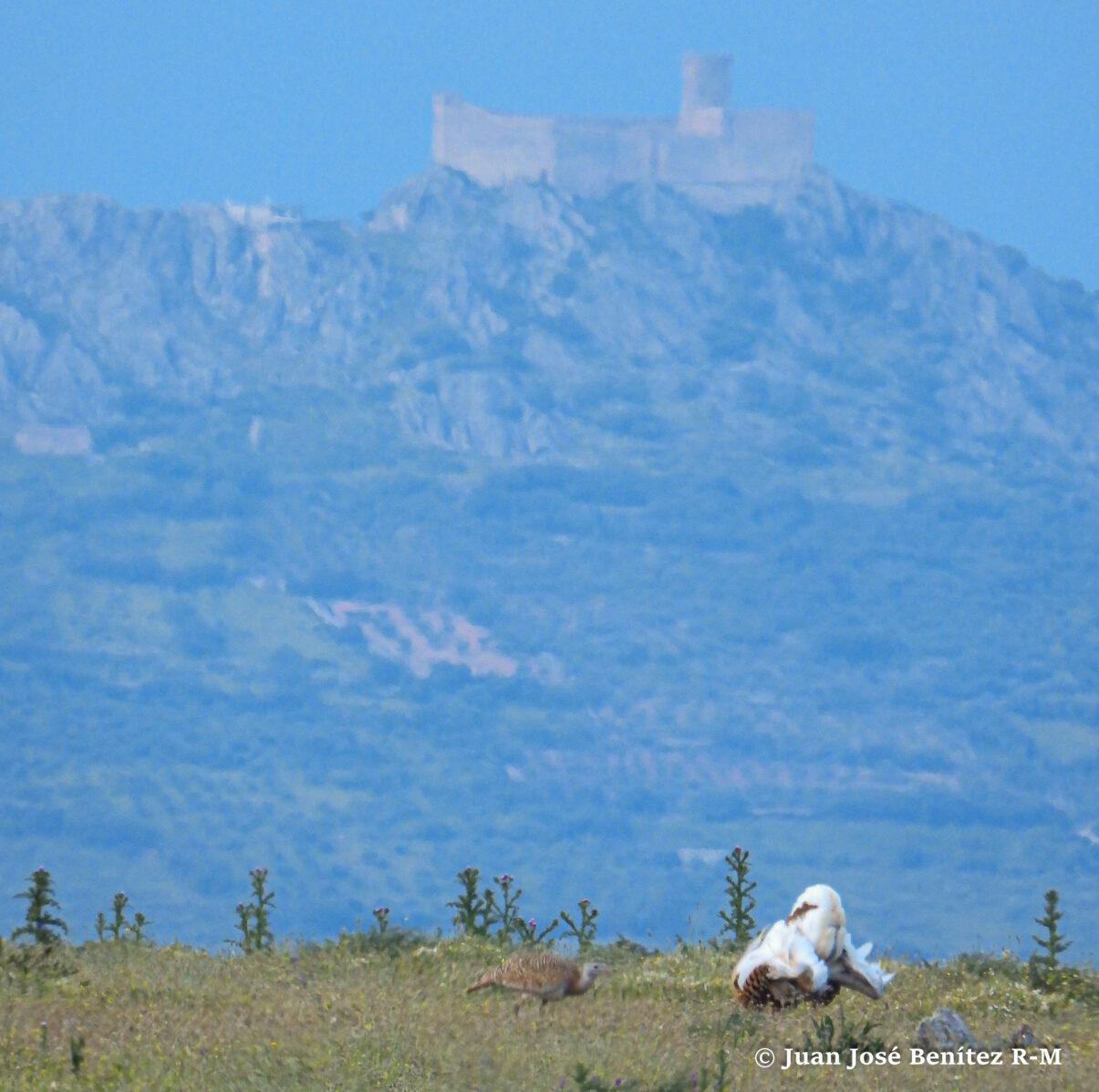
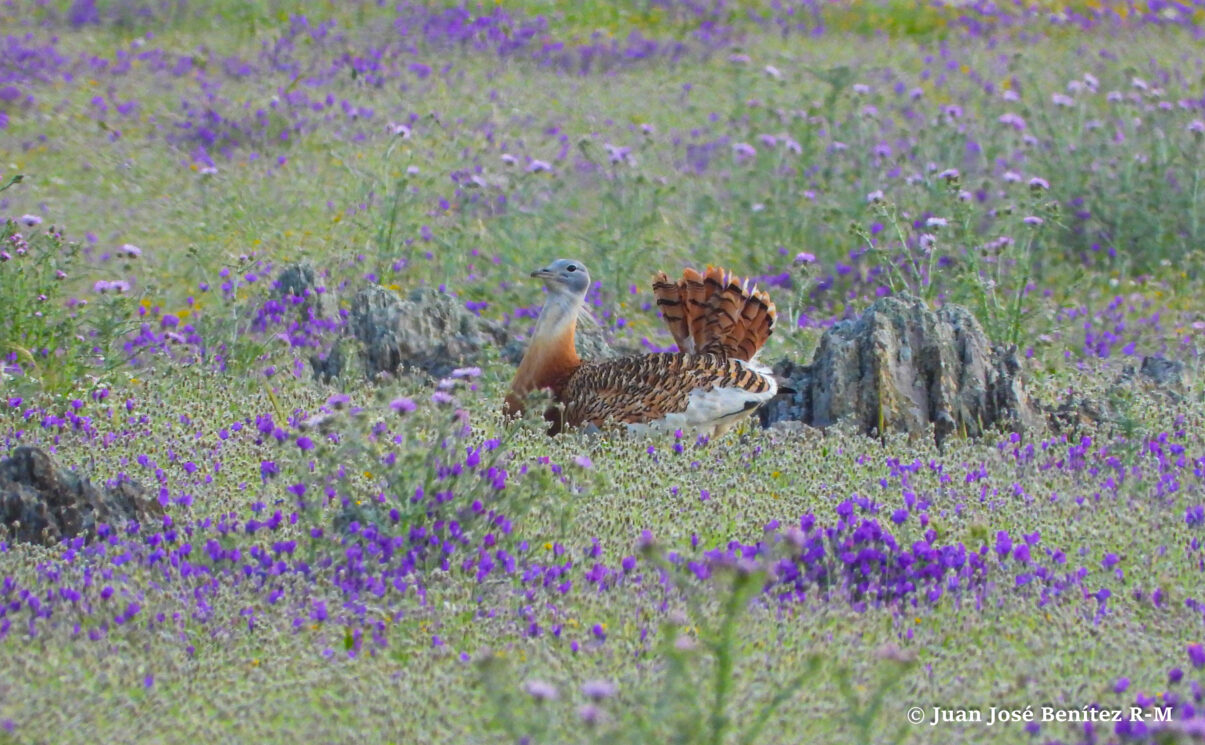
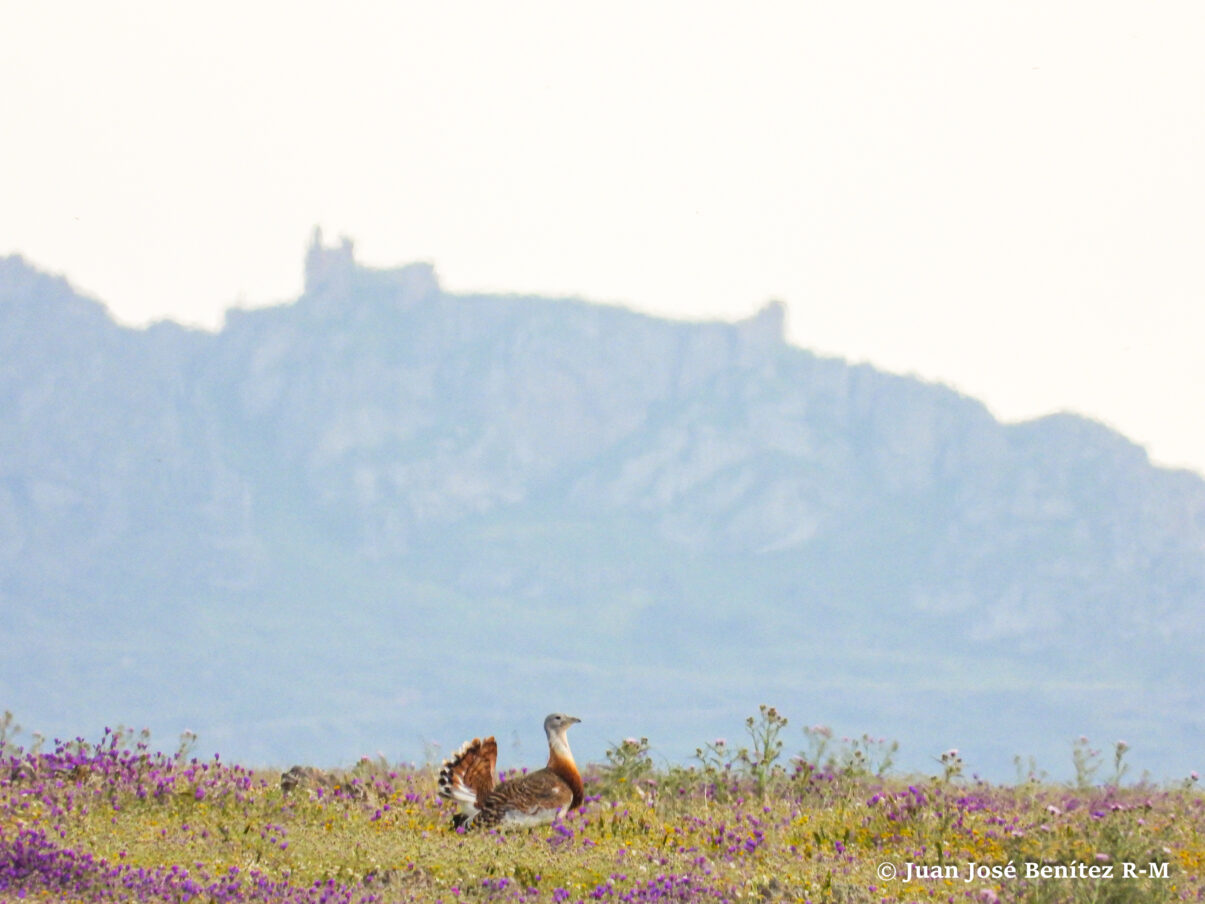
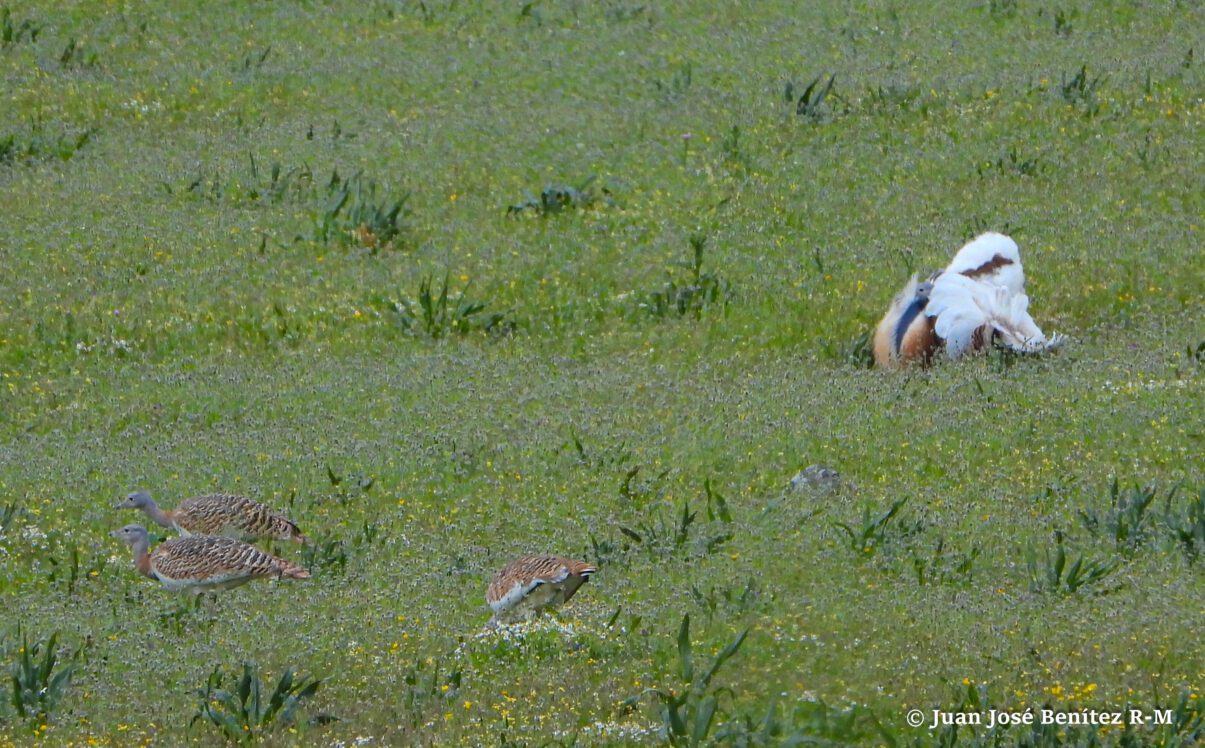
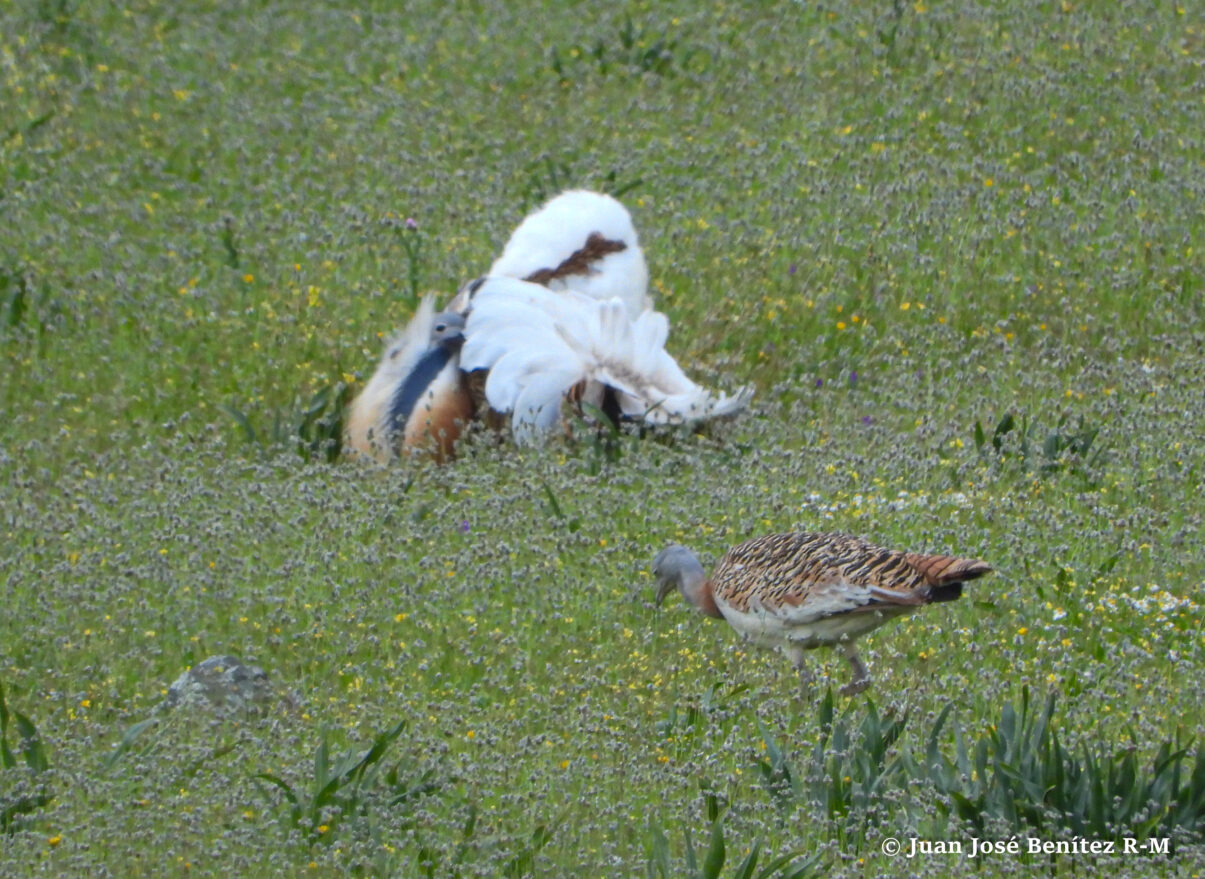
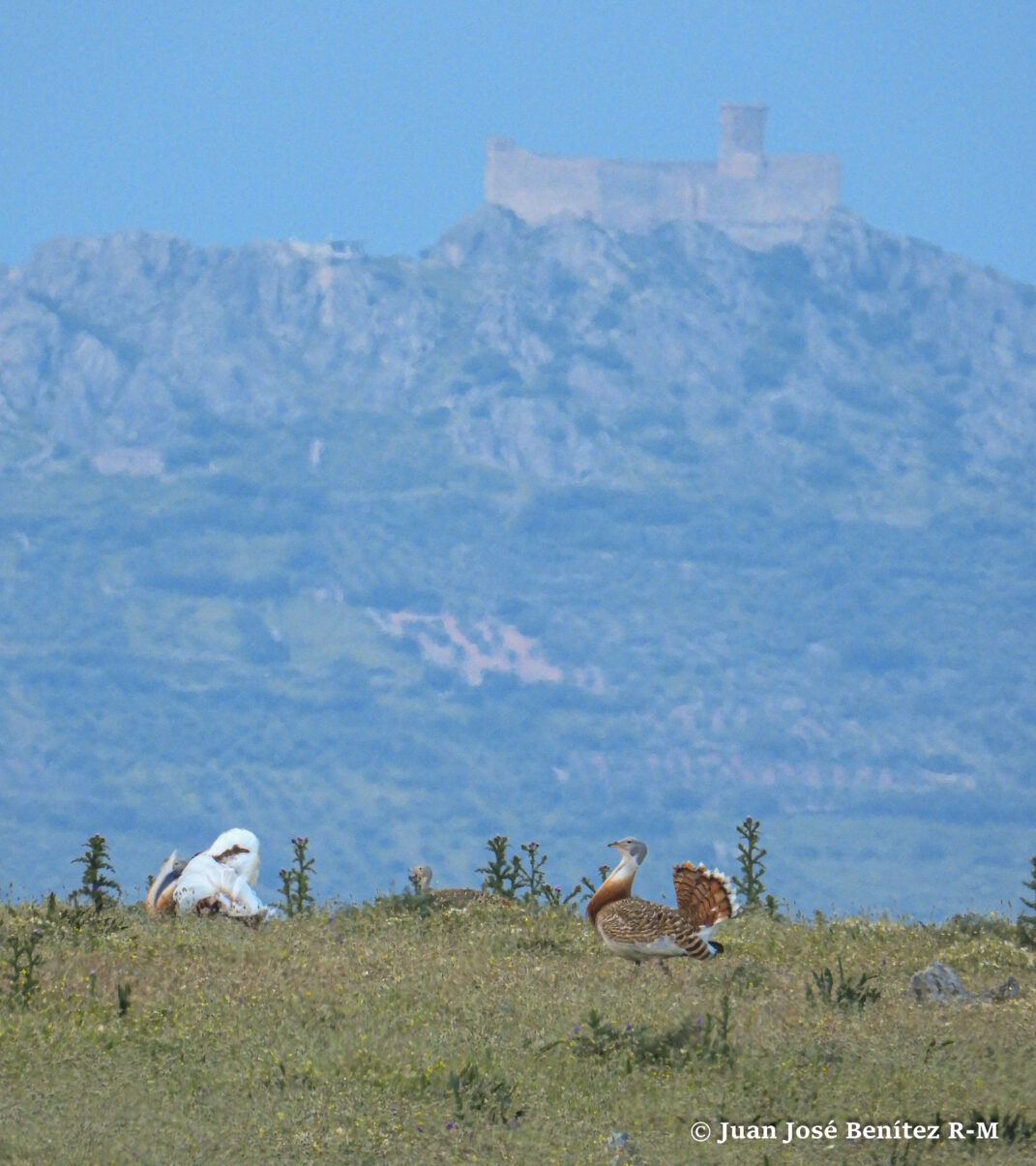
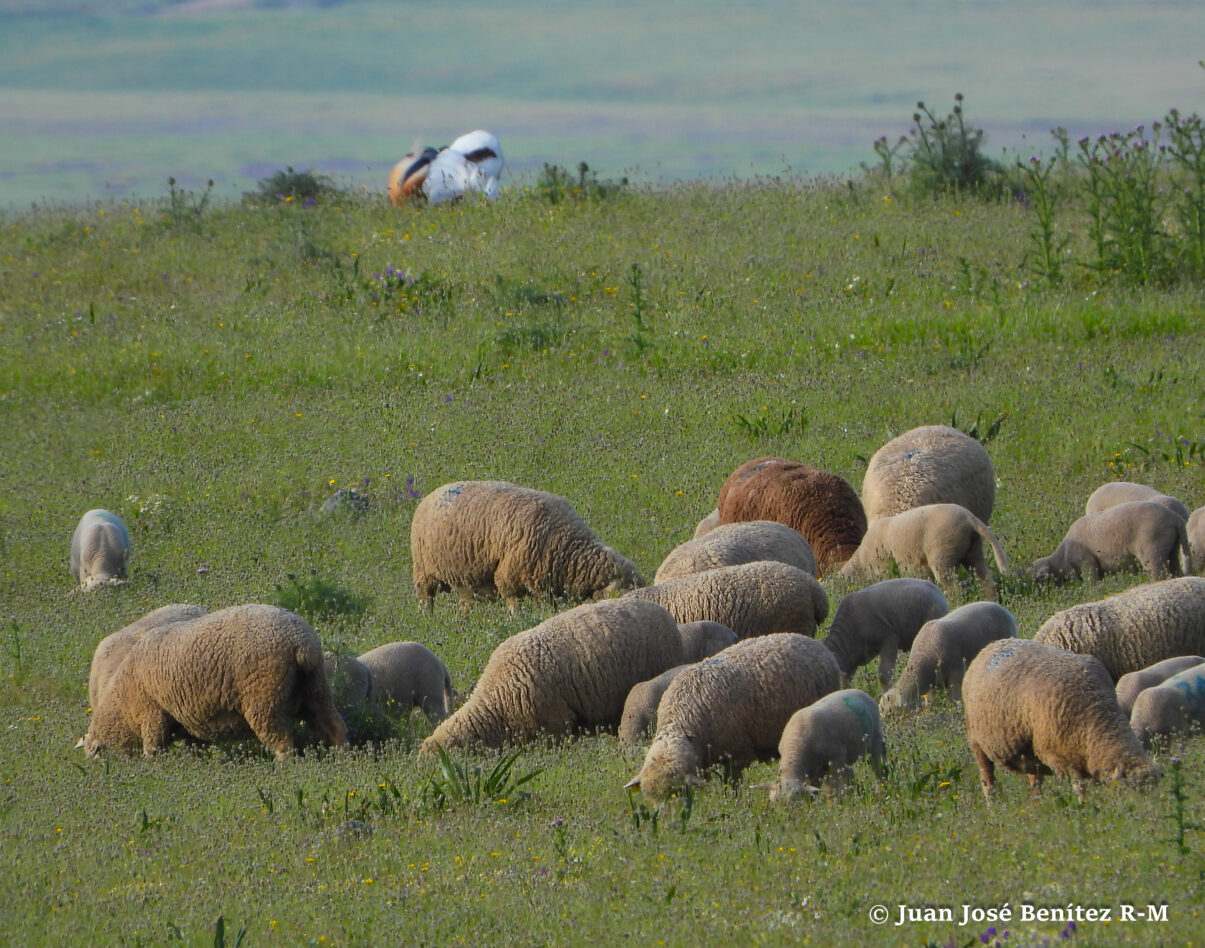
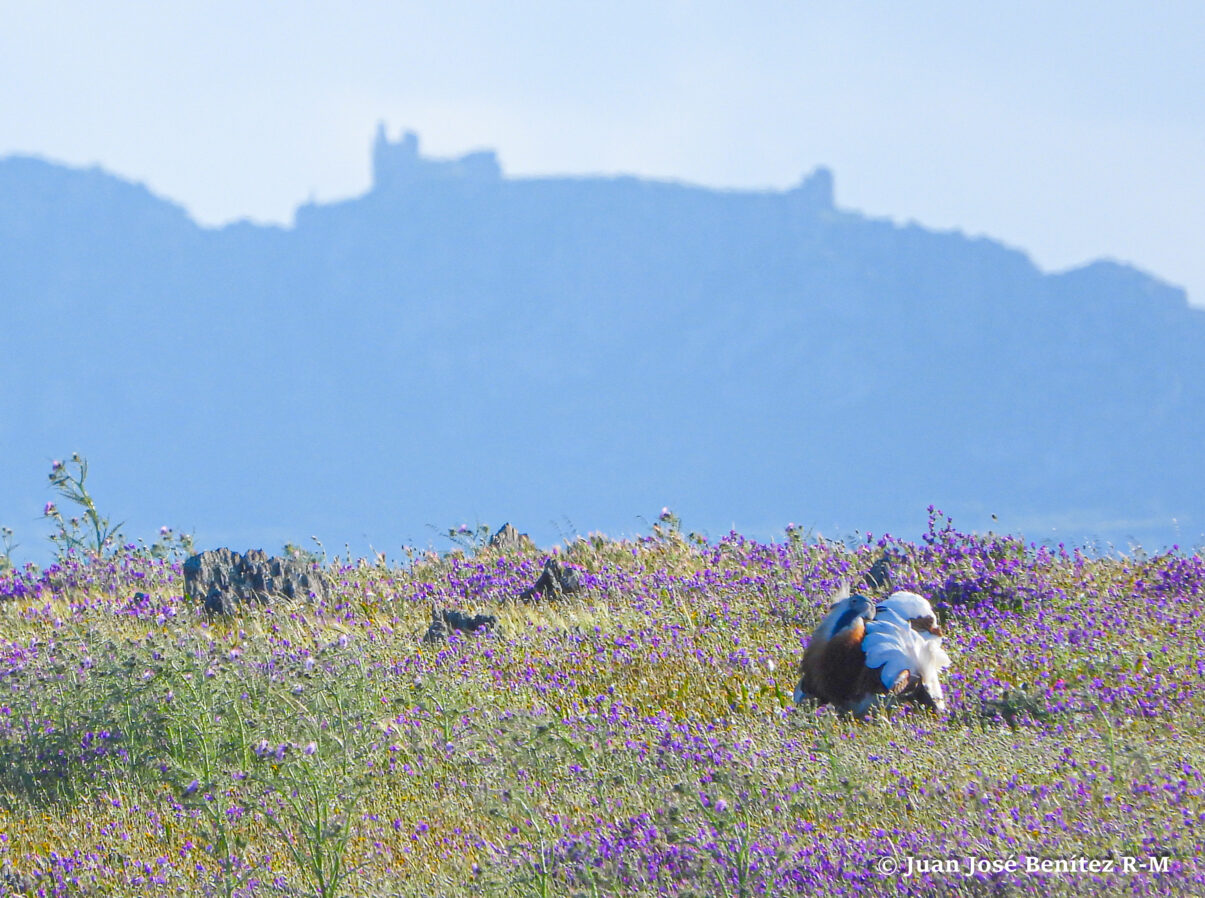
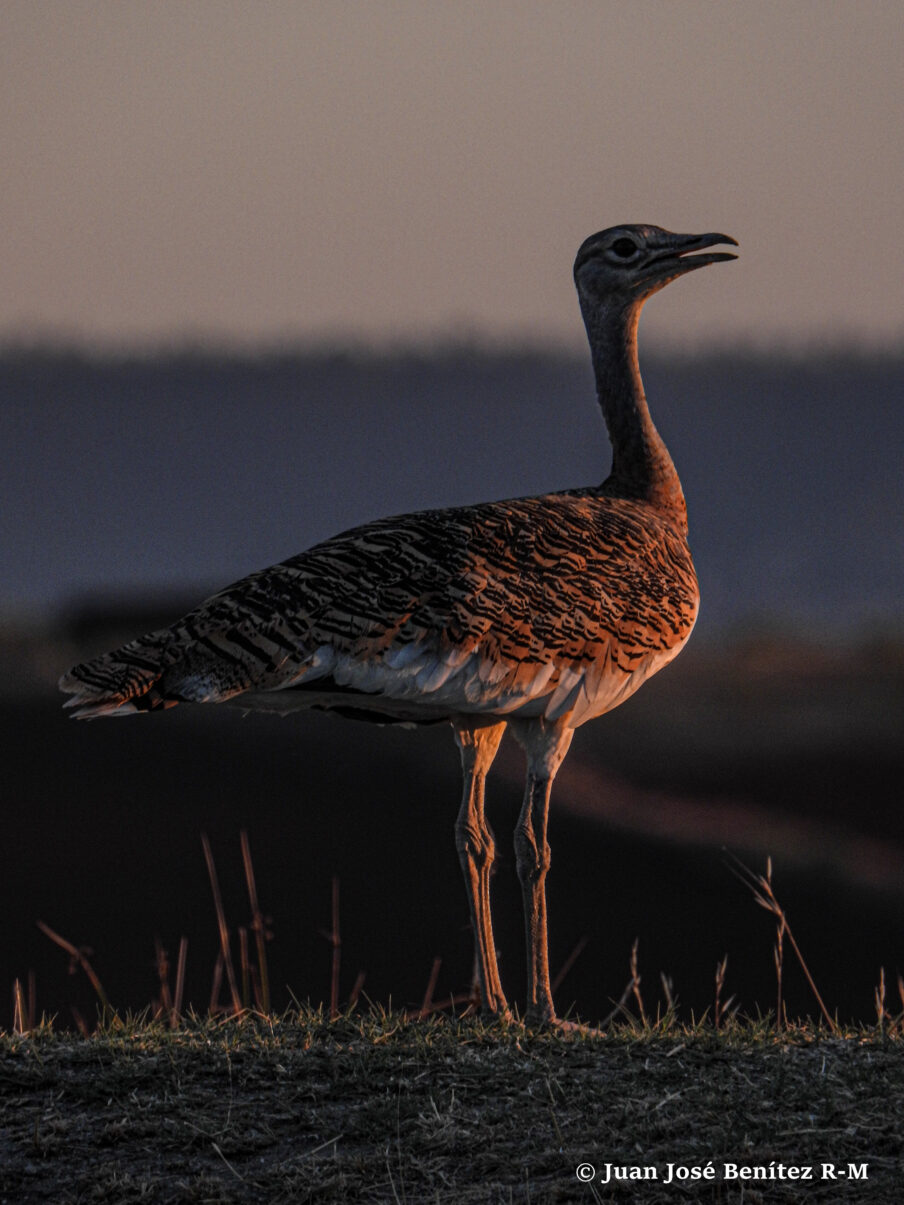
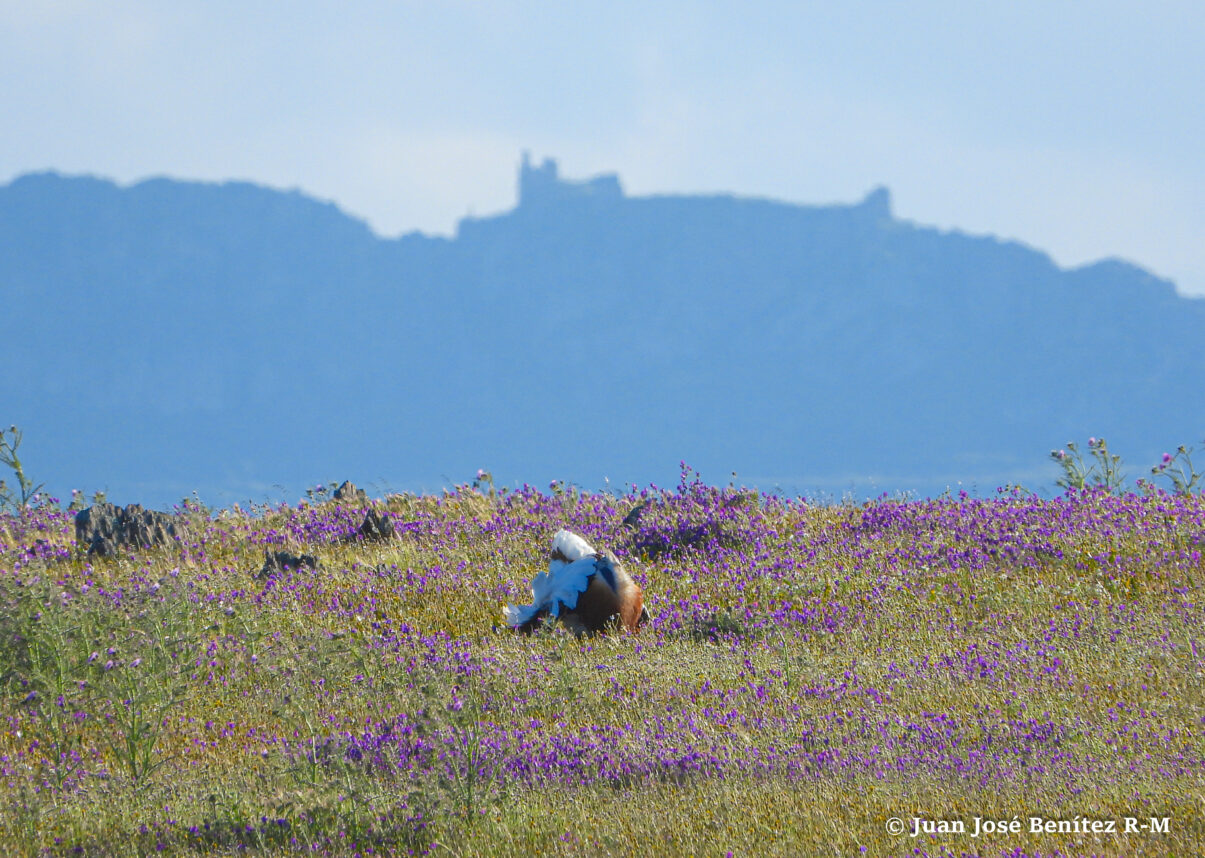
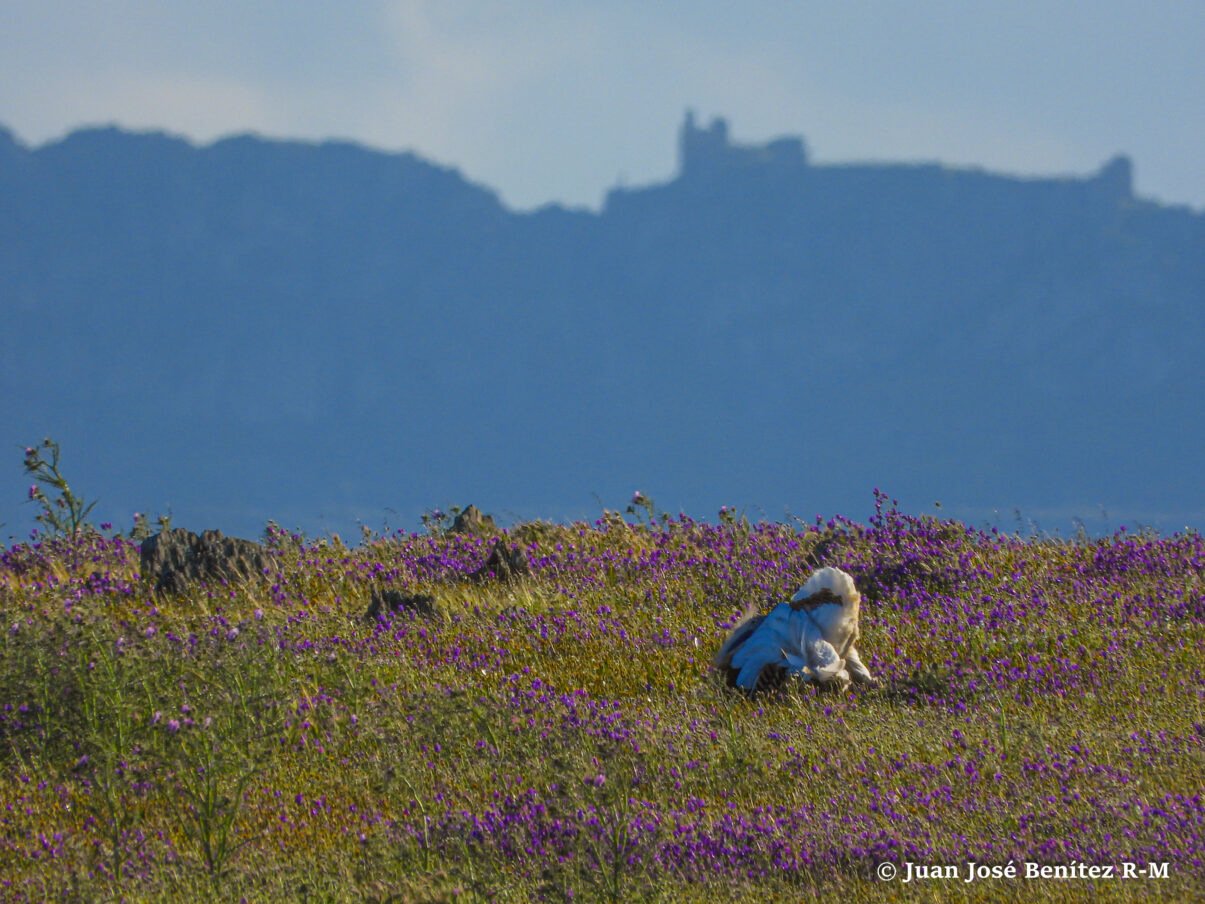
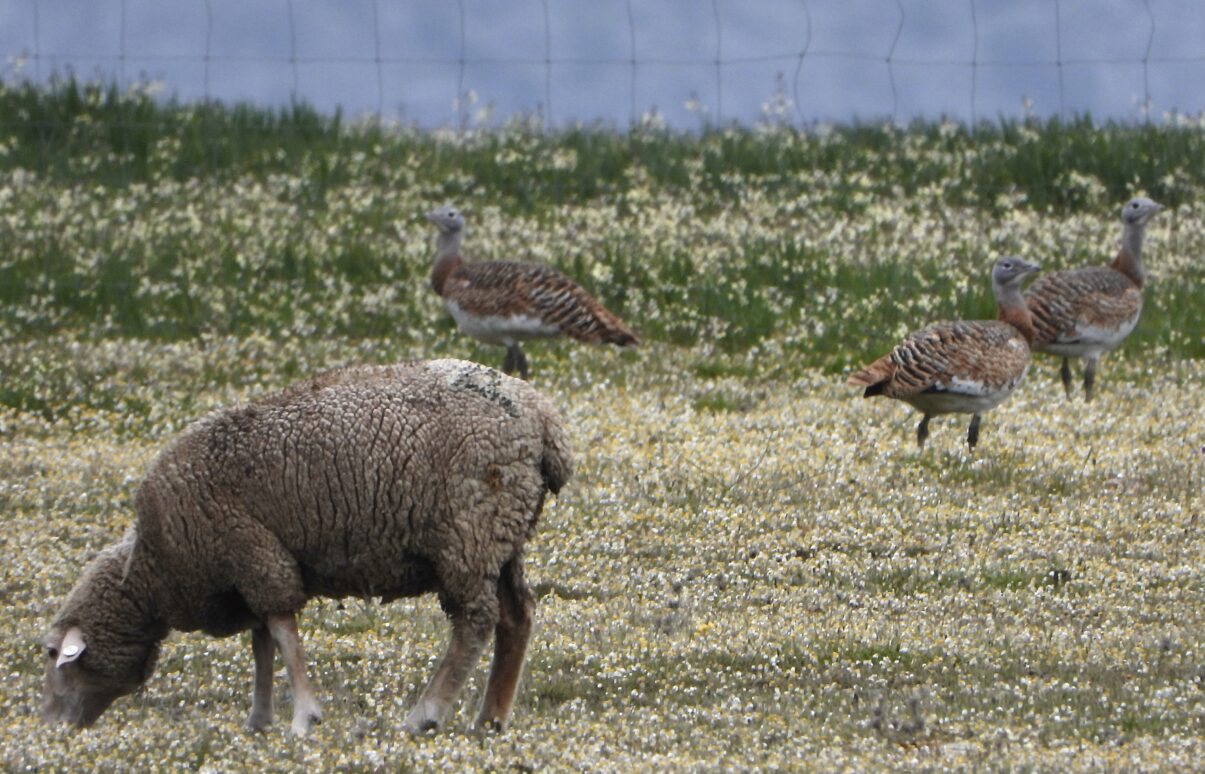
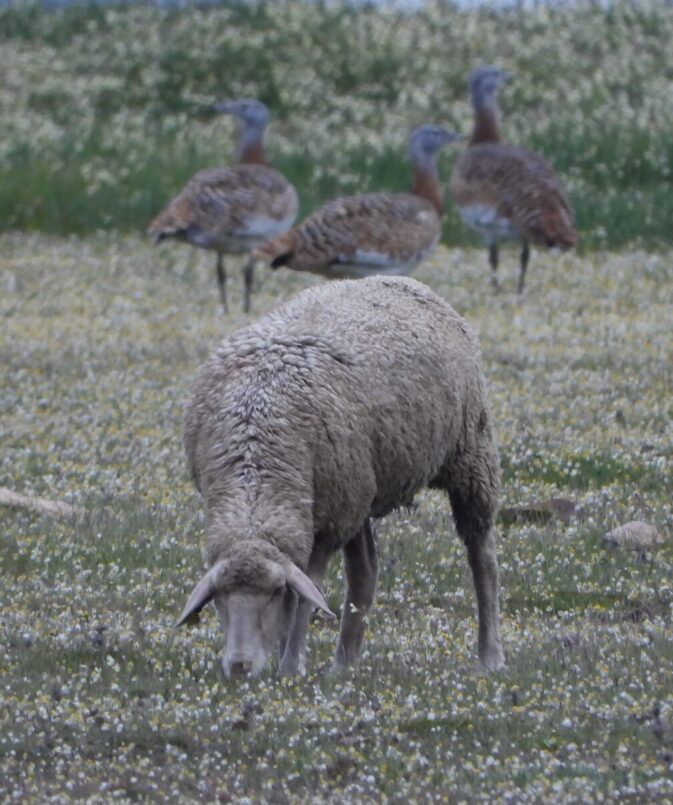
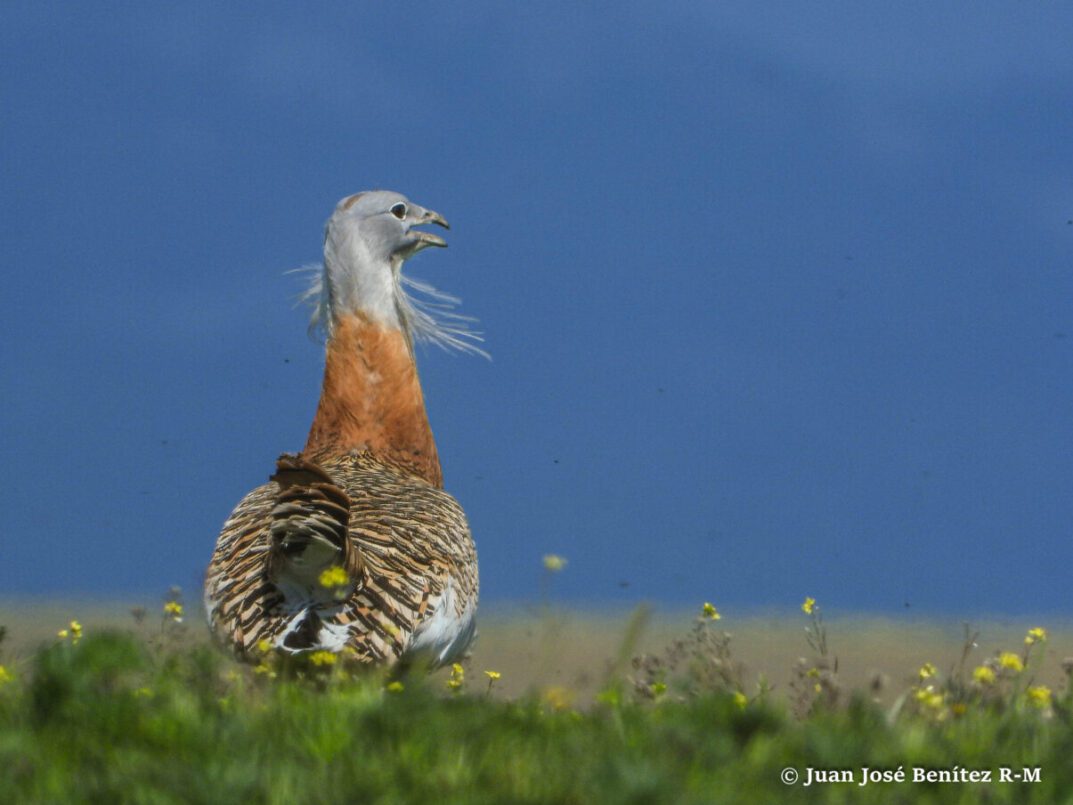
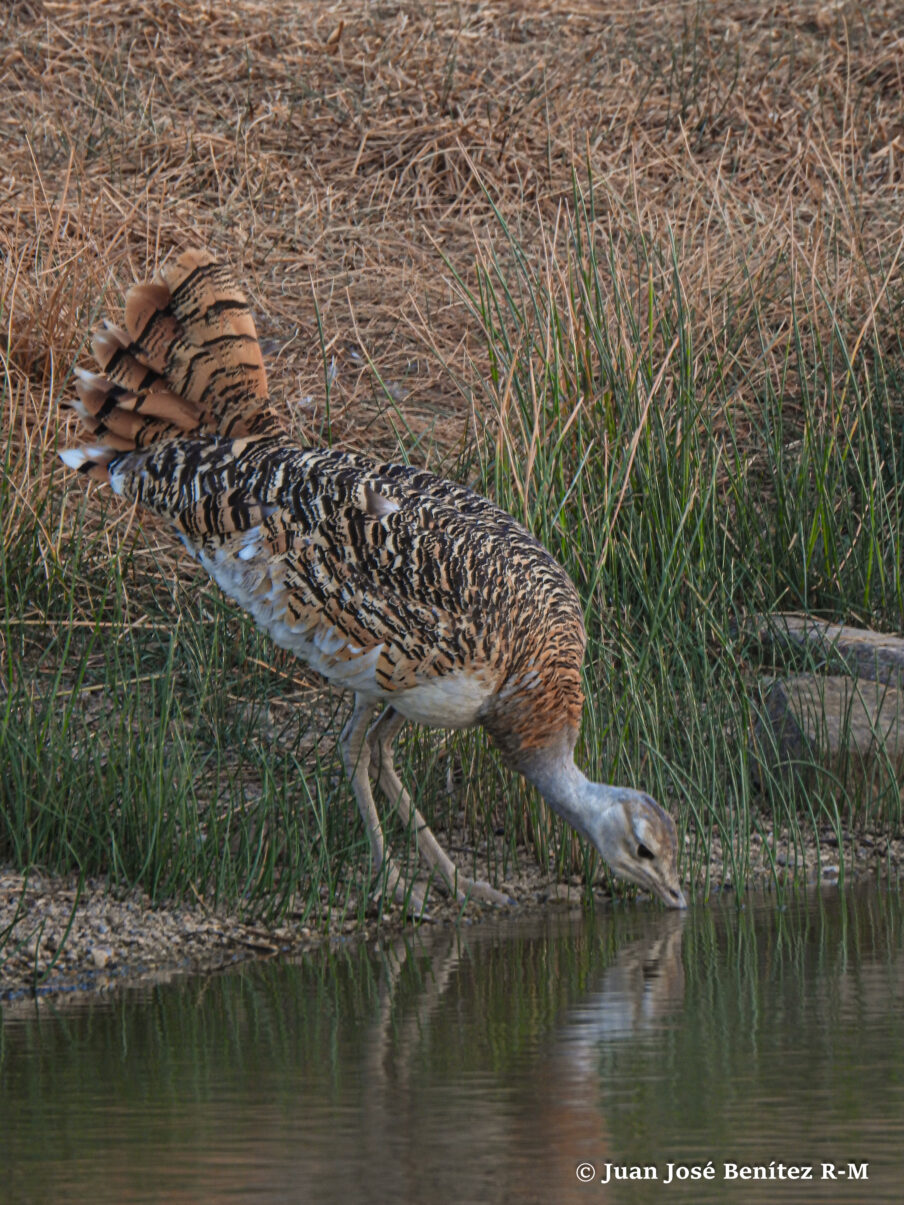
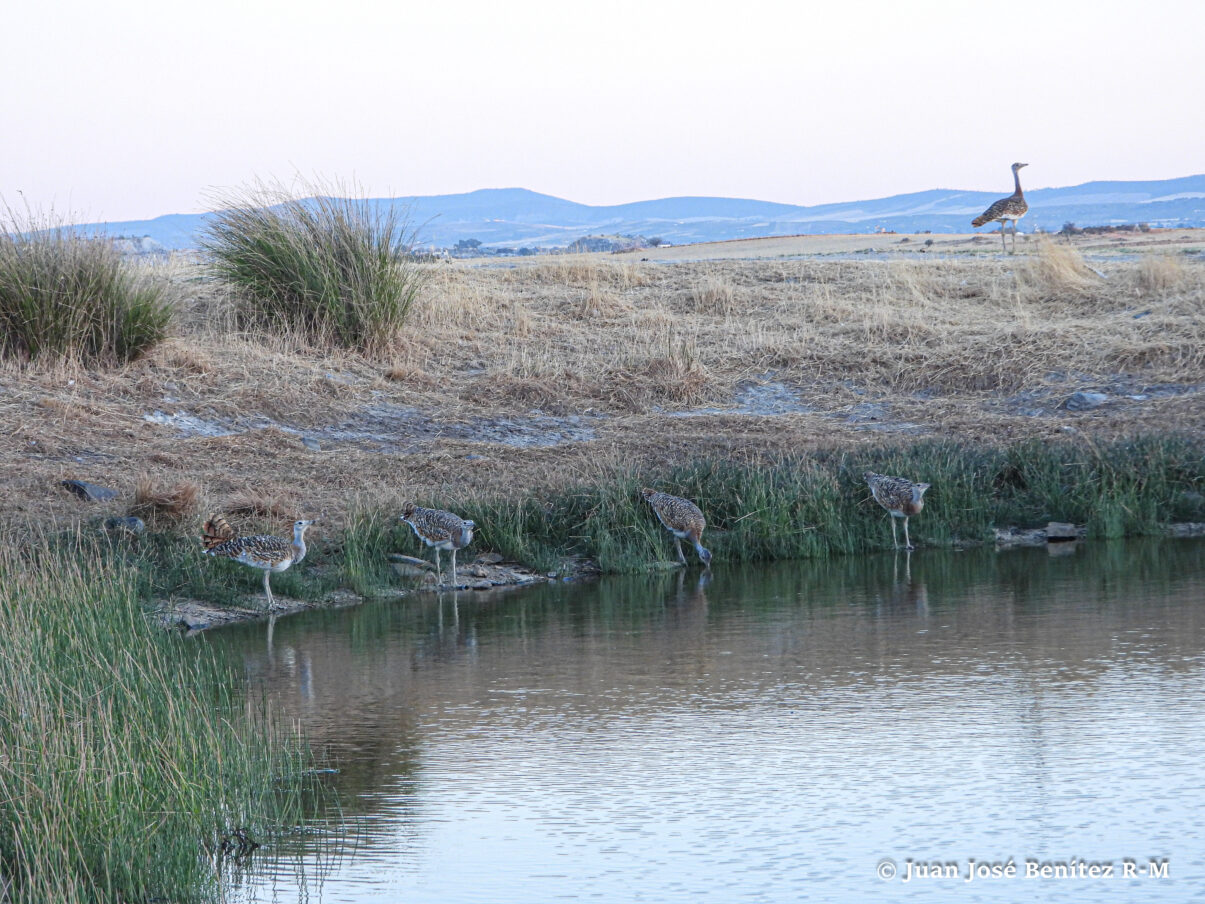
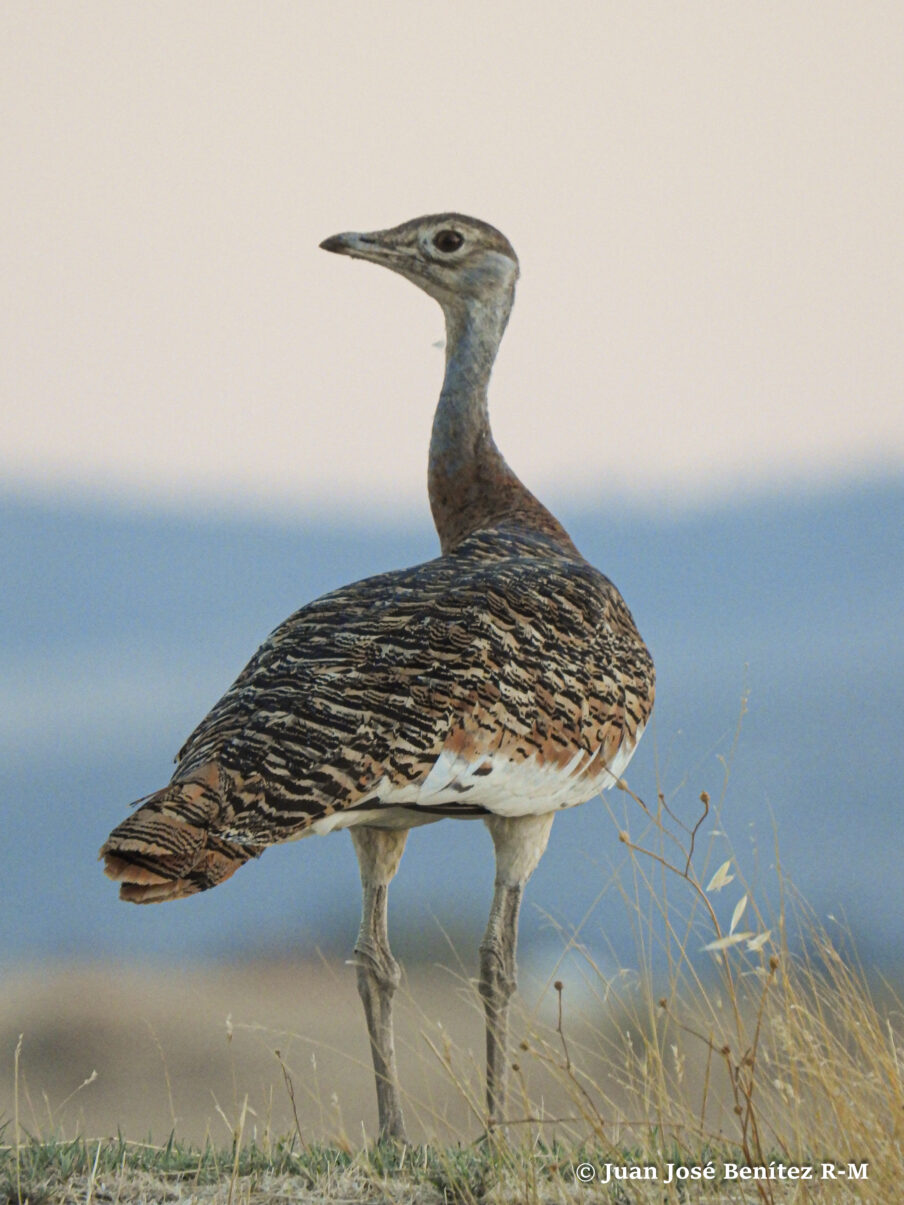
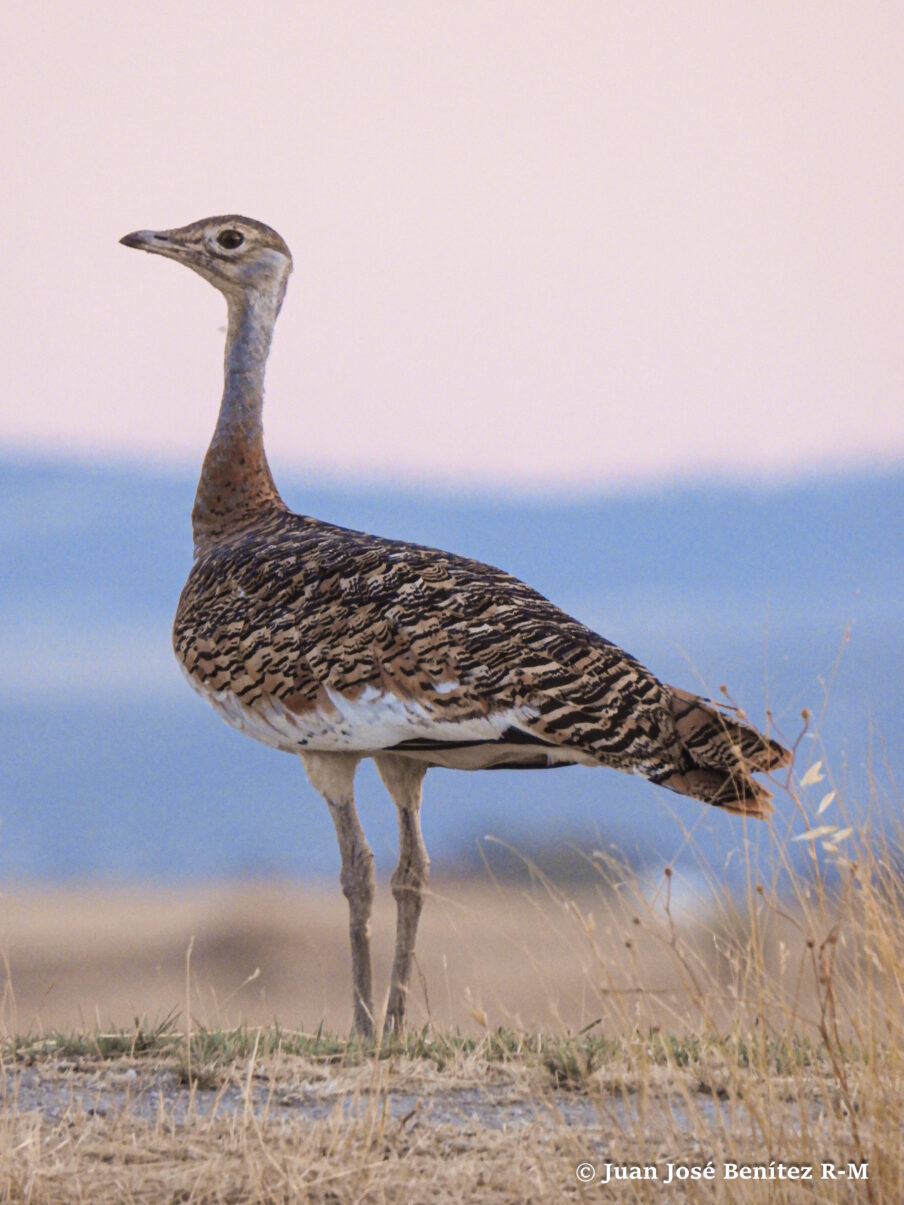
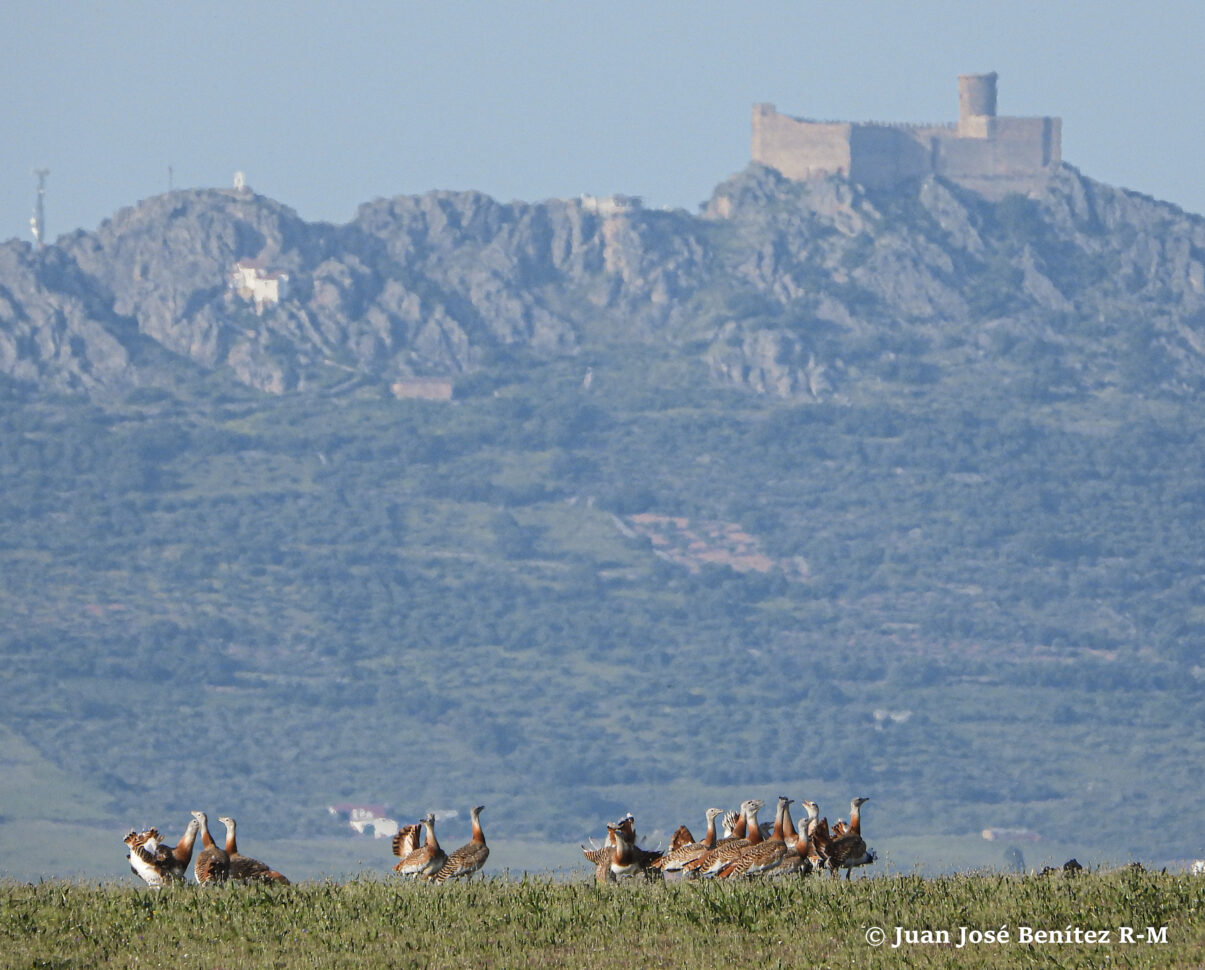
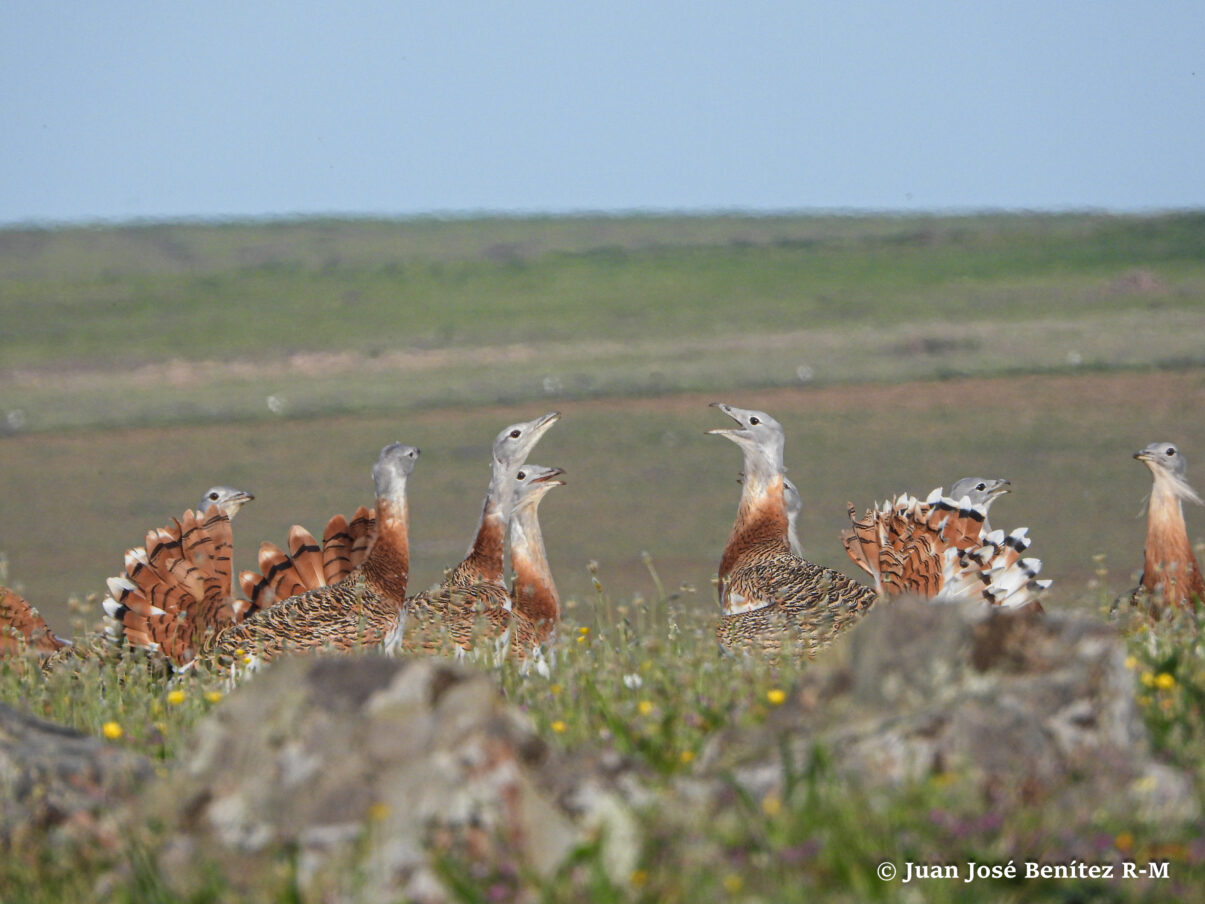
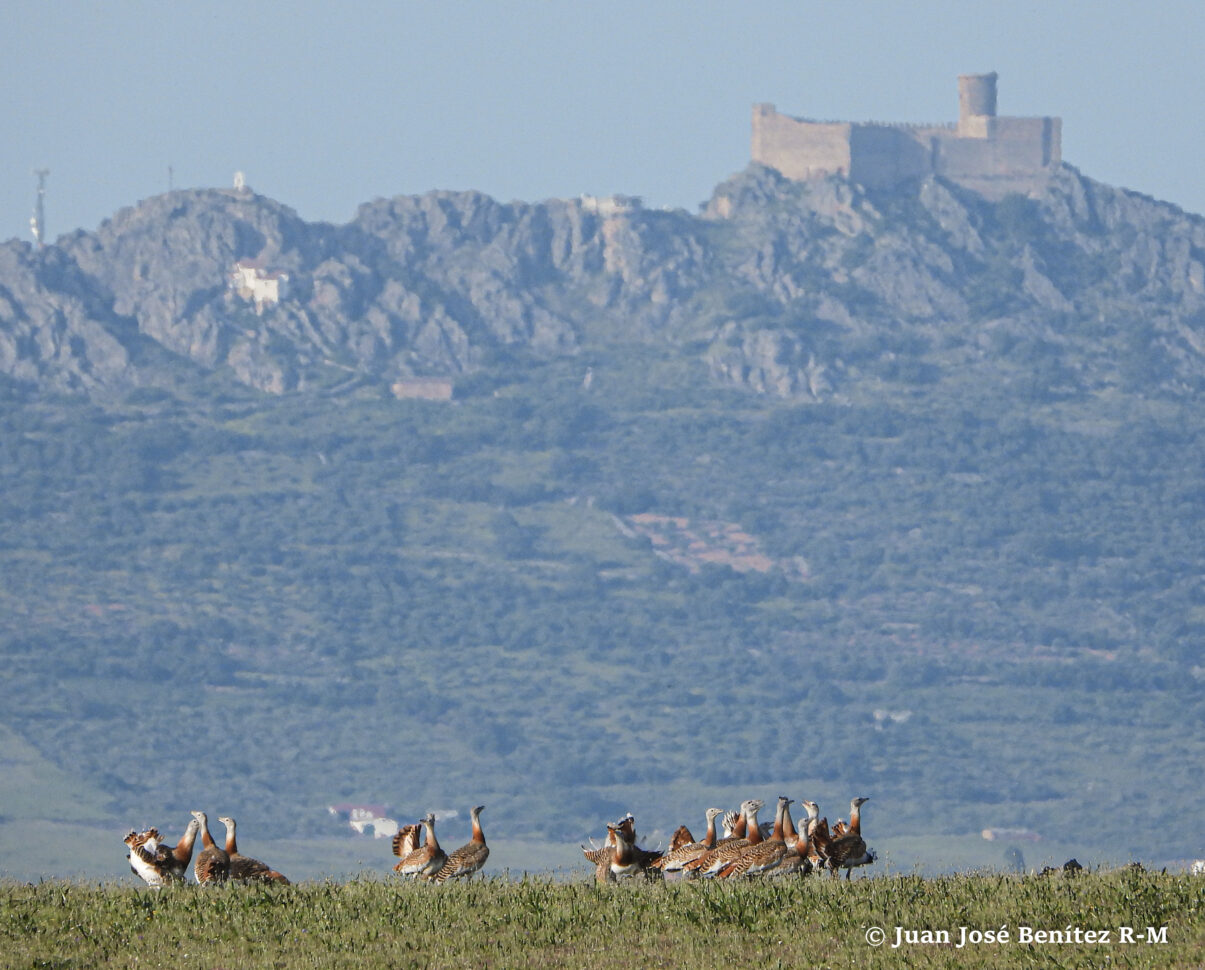
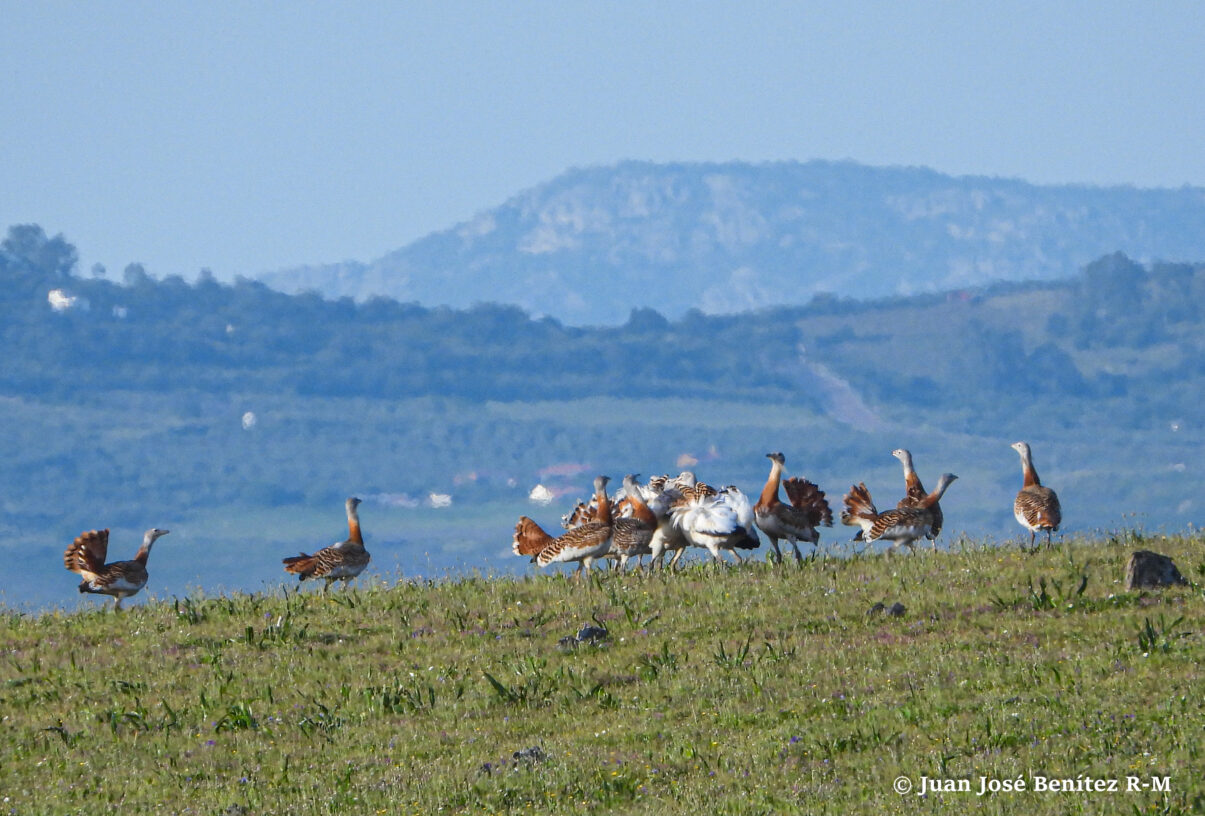
Undoubtedly, one of the symbols of the Serena region are the Great Bustards. Bustards are the heaviest flying birds in the world, and in the extensive agricultural plains of the municipality of Cabeza del Buey they find an ideal place to live and reproduce. The mosaic landscape made up of posío areas, permanent pastures, cereal crops and fallow land in which the extensive agricultural and livestock farms are located, many of them in ecological regime, make it possible to observe a notable population of these birds, although a decrease has also been observed in the last two decades. Other important factors are the absence of power lines and the proliferation of livestock ponds that are a relief for the populations in summer. Cabeza del Buey is one of the best places to observe these birds. One of the reasons for this is the population that resides in this area, with around 120 birds having been counted in recent years. Another reason that makes it relatively easy to observe bustards in this town is the extensive network of public roads that the town has, being the BA-035 road, known as “Las Golondrinas” road, an axis that crosses from north to south the steppe of La Serena. From this transverse axis, a network of roads leads off into the plain to the east and west. Birdwatching is already easy from the road itself, but for road safety reasons, visitors are advised to use the surrounding roads, which are in an excellent state of conservation. Finally, many birders decide to come to Cabeza del Buey to observe bustards because of the landscape that surrounds them, since, in other areas of Extremadura and Spain, bustards are forced to live due to the reduction of their habitat in extensive agricultural areas, being seen only among cereal or near intensive plantations of vines or olive trees among others. In Cabeza del Buey, the bustards can be observed in a unique landscape, in which an extensive tapestry of flowers stands out in spring, from which emerge outcrops of slate known as “dog’s teeth”. To this must be added the presence of sheep, other endangered steppe bird species such as little bustards, Iberian sandpipers, ortegas, Montagu’s harriers or stone curlews, and with elements highly appreciated by photographers such as castles or mountain ranges that provide spectacular backgrounds for bird lovers and photographers. The Great Bustard is present at all times of the year in Cabeza del Buey, highlighting the spring, where males and females gather in the courtship territories called leks. In autumn and winter flocks of 15-30 individuals can be observed widely dispersed, always separated into males and females, although there may be some young male chicks among the females in autumn. In summer the males tend to disperse and even make small migrations to other adjacent areas, while the females stay in the territory where they have reproduced with the chicks of the year. As we have said before, the best time to observe “Las reinas de la Serena” is spring. Between the months of March and April you can easily observe “the wheel” that is the courtship of the Great Bustards. The groups of females and males, separated months before, gather in territories called leks, which are the same sites used every year.
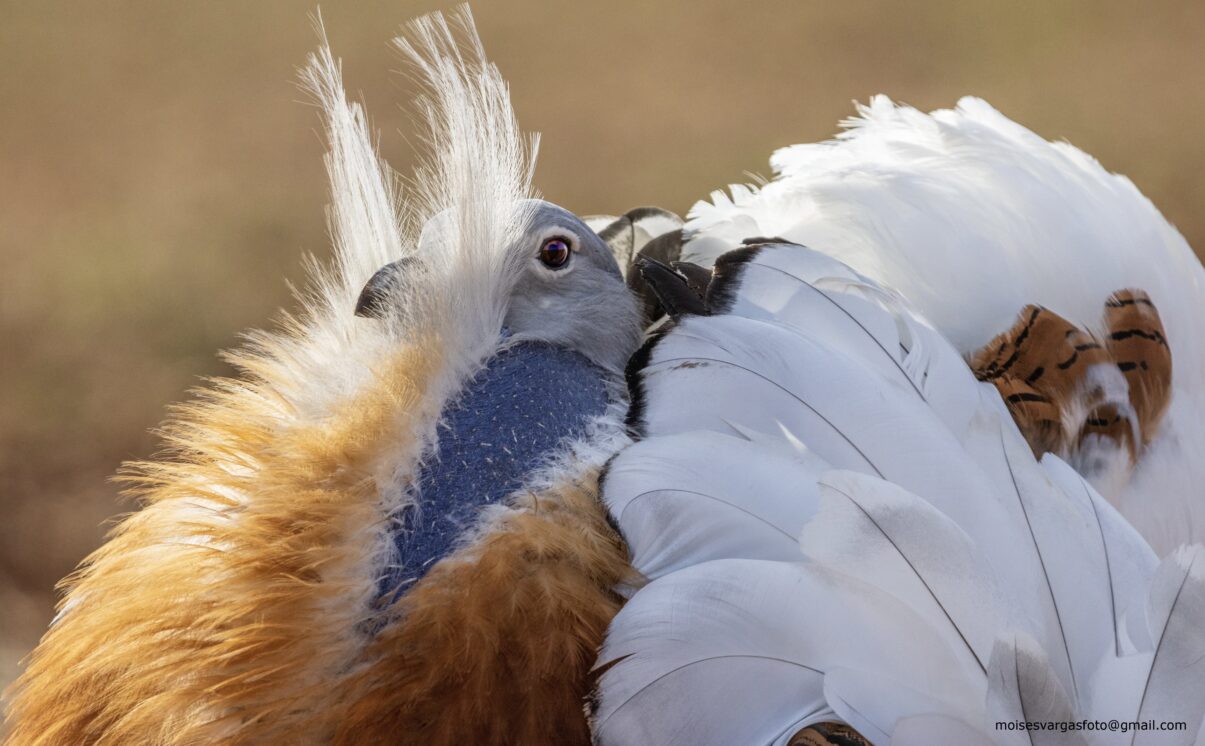
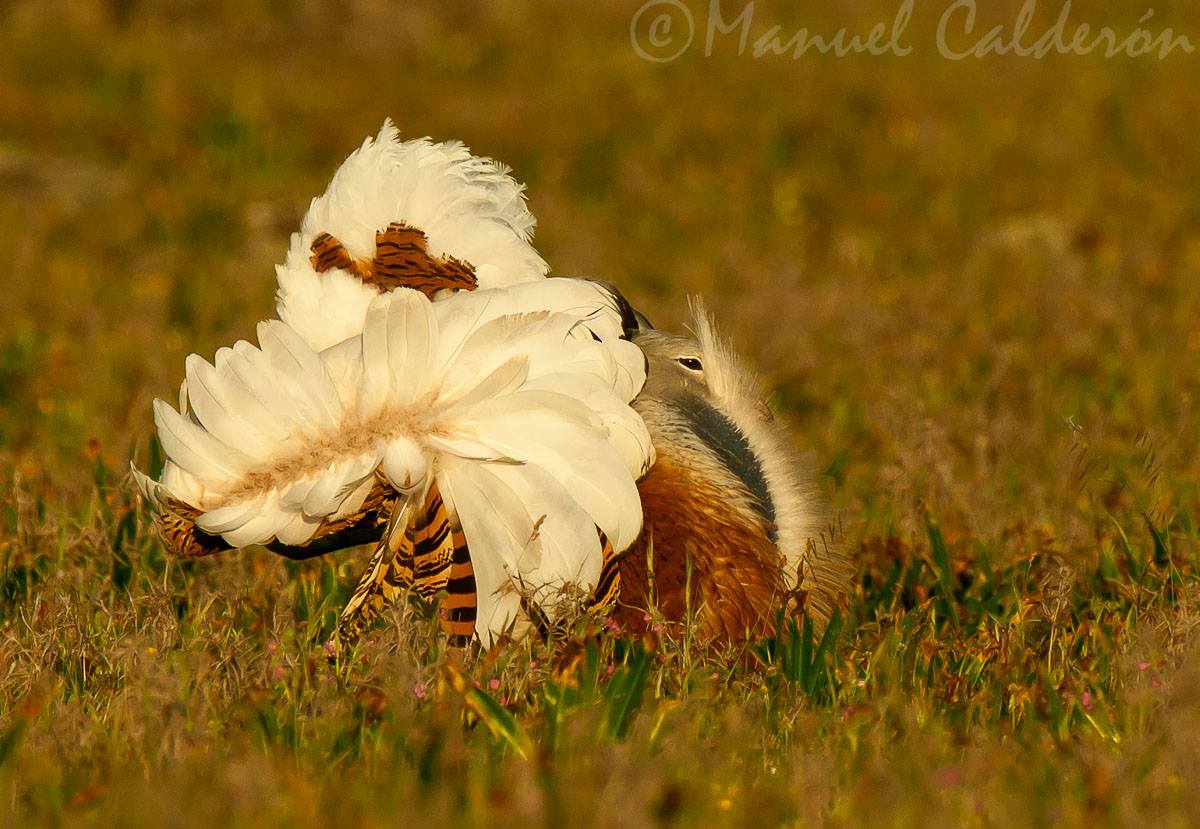
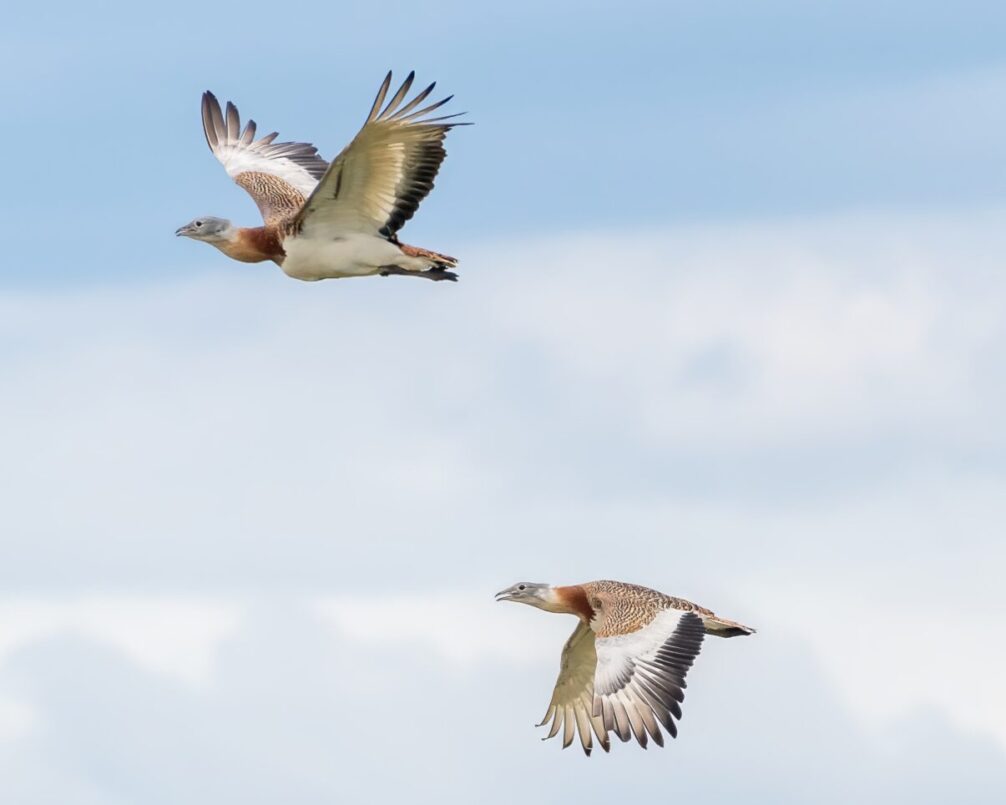
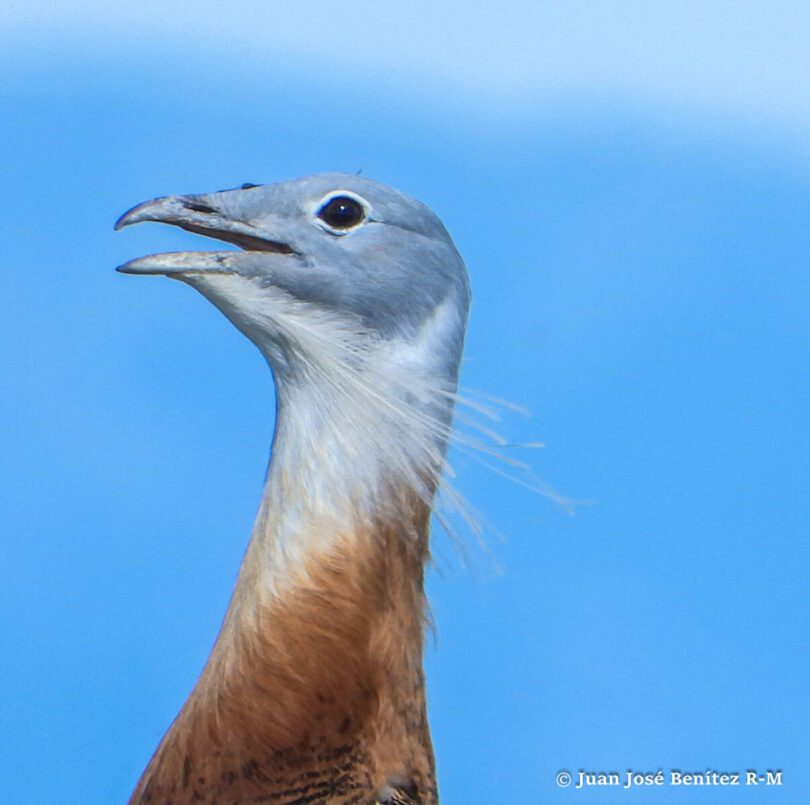
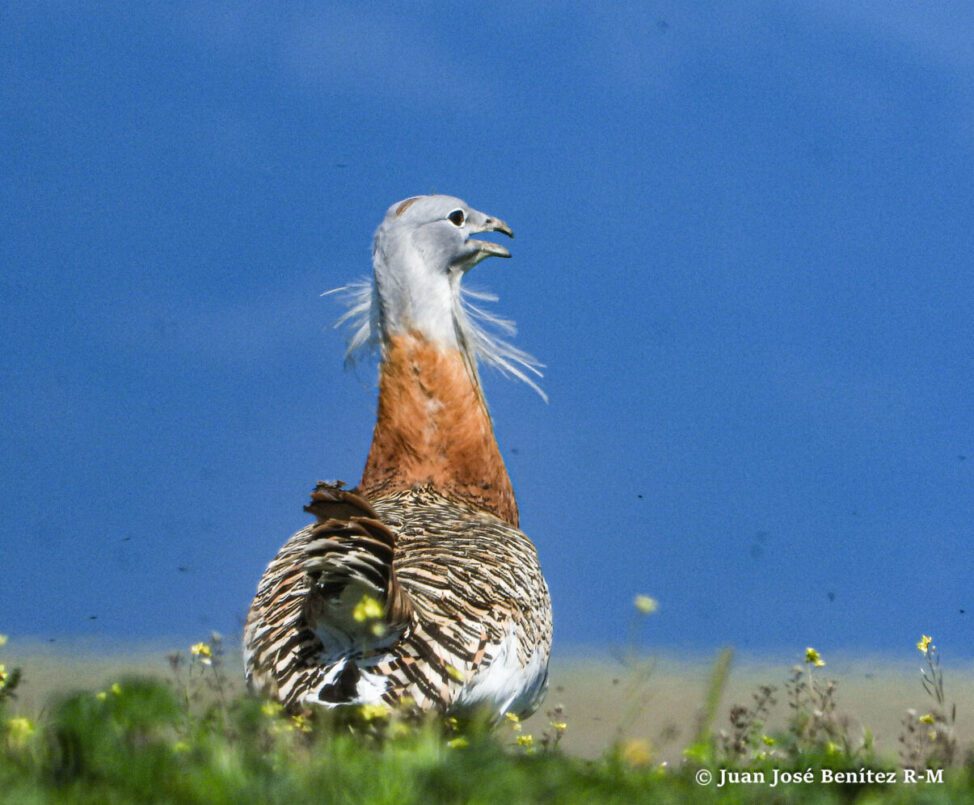
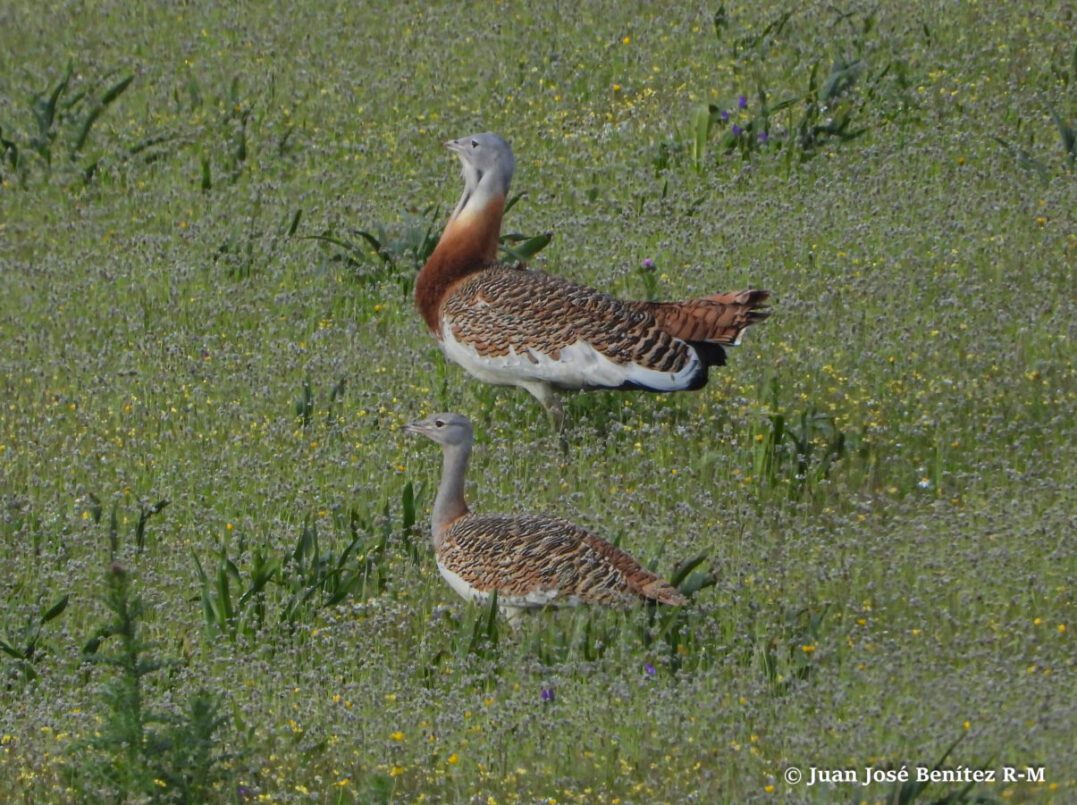
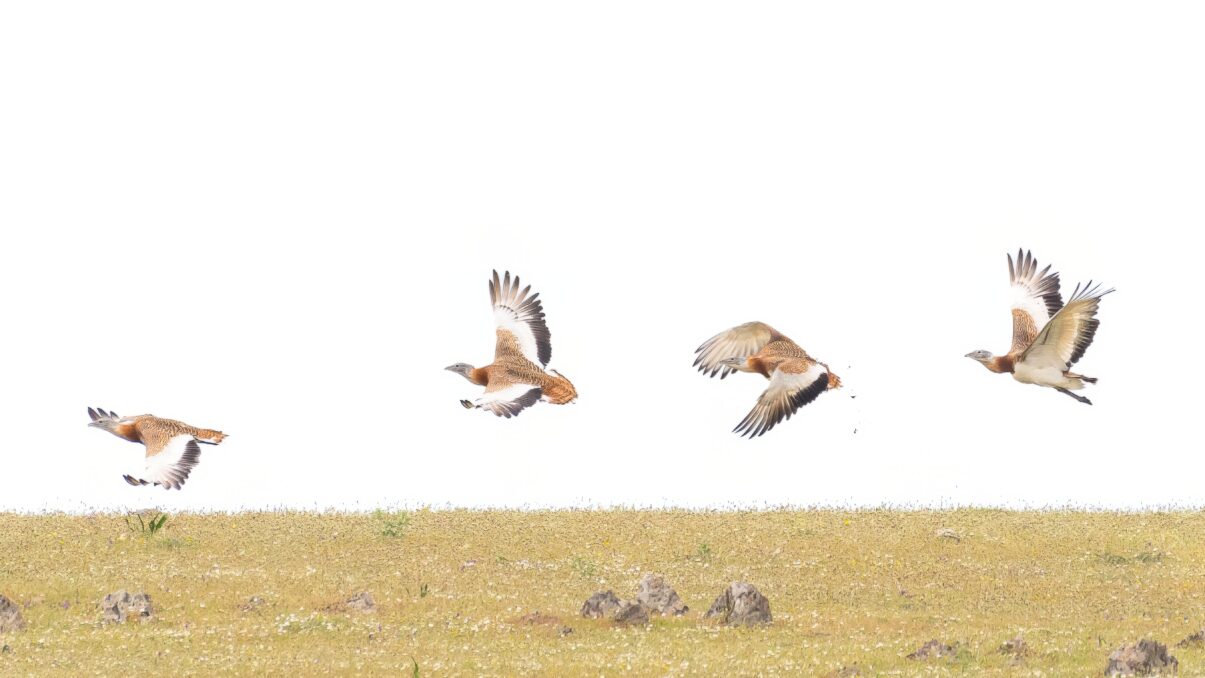
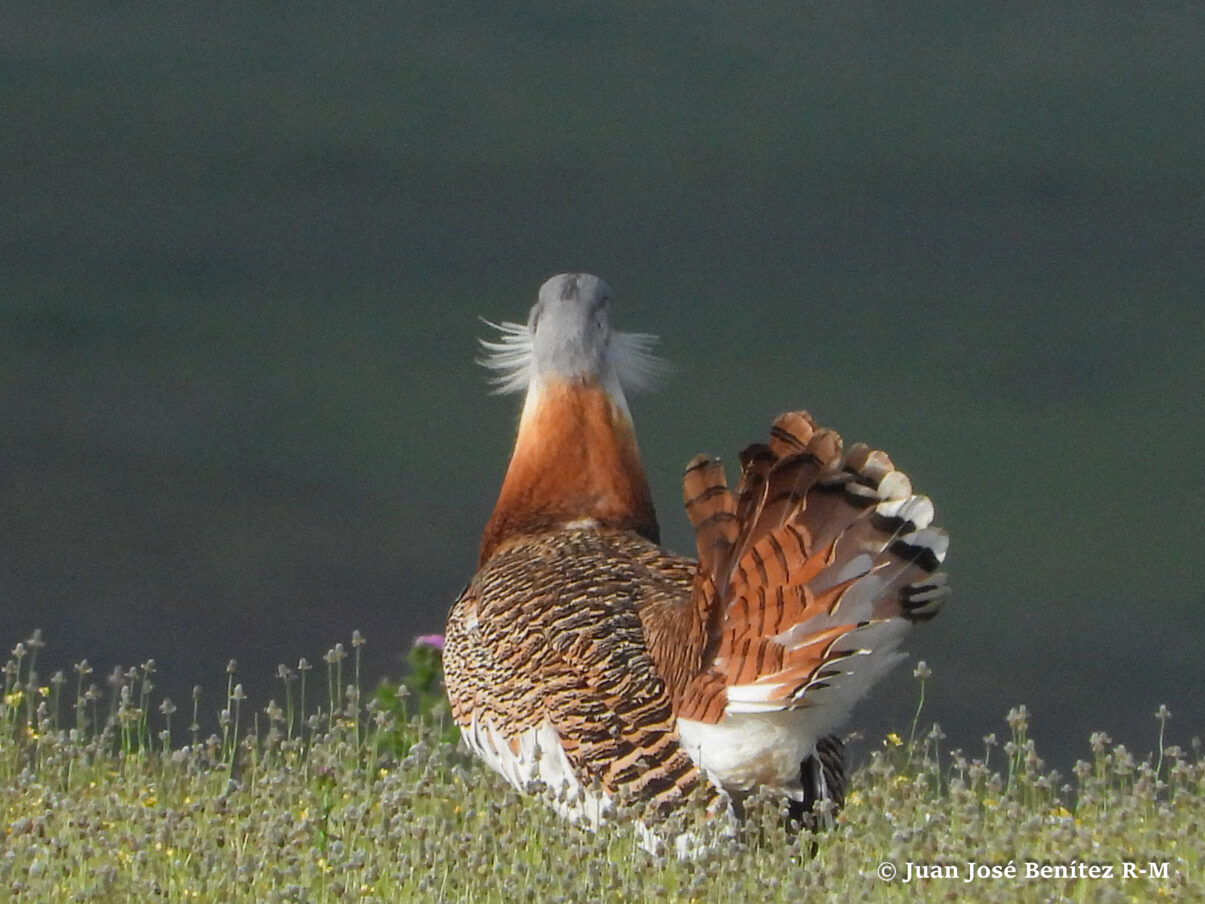
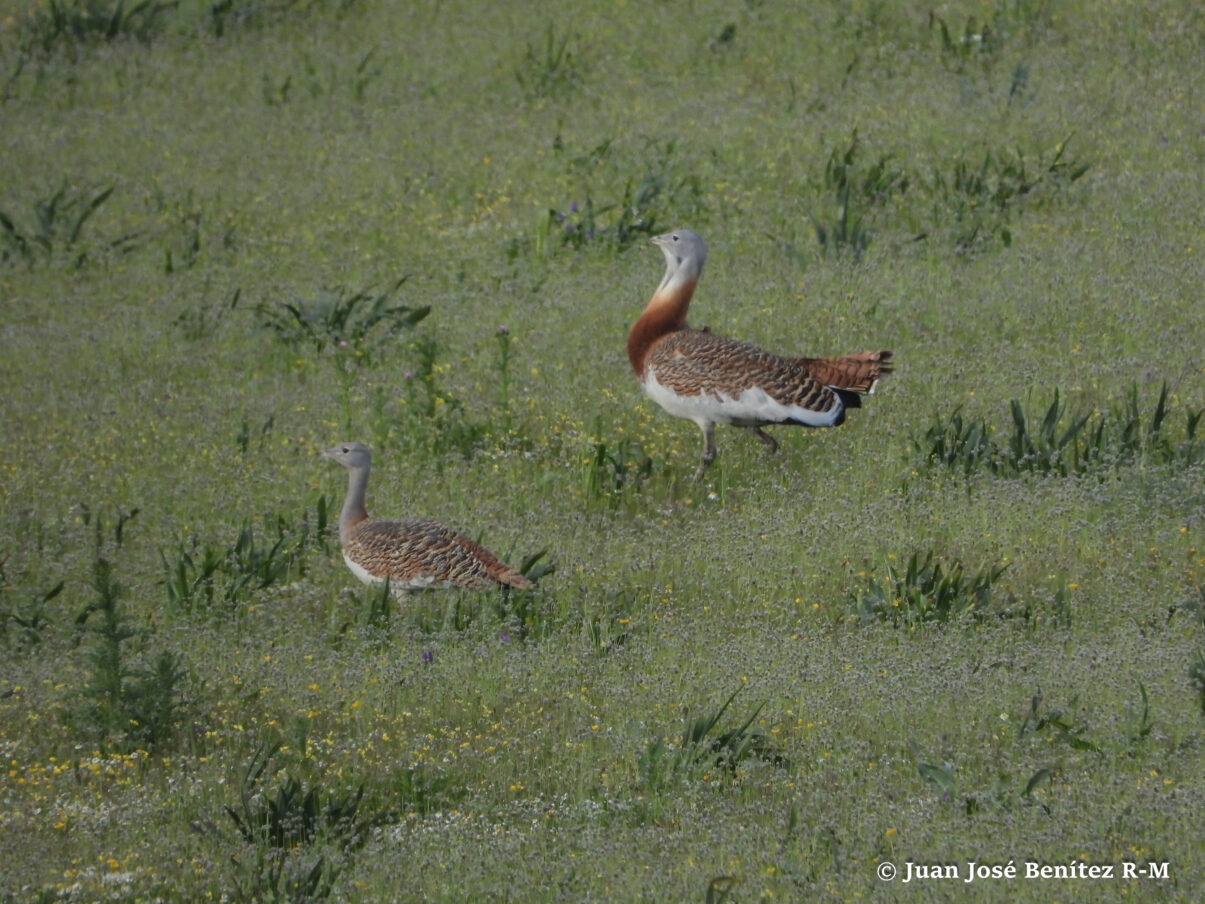
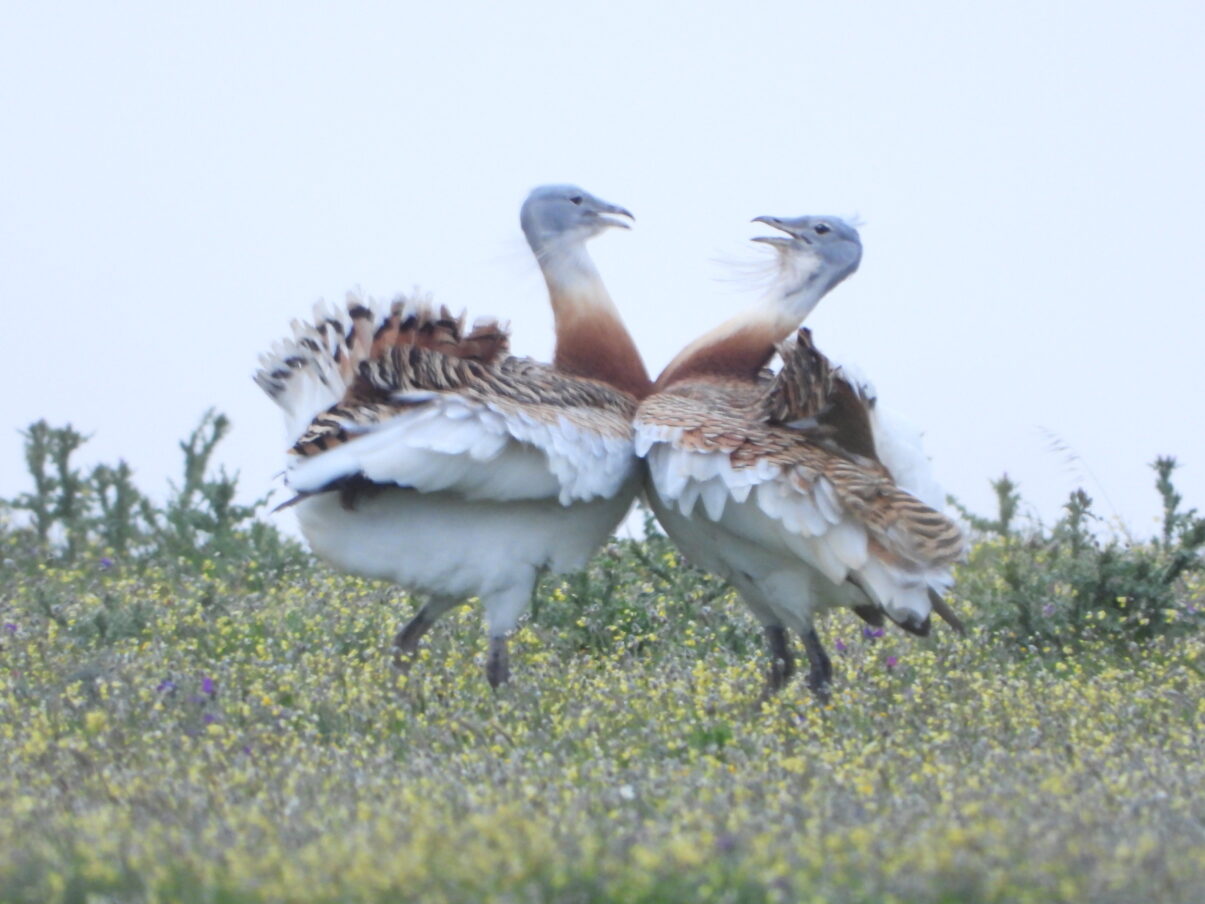
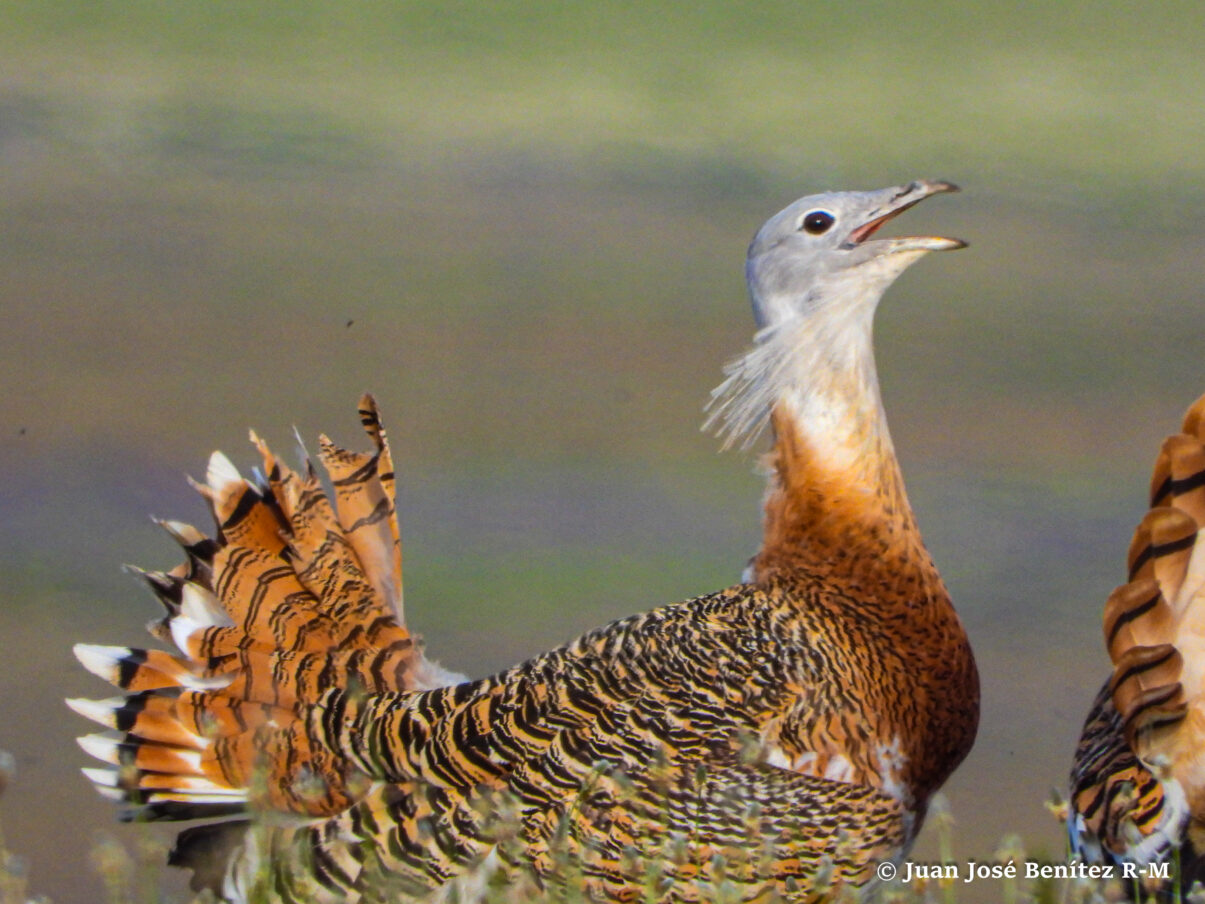
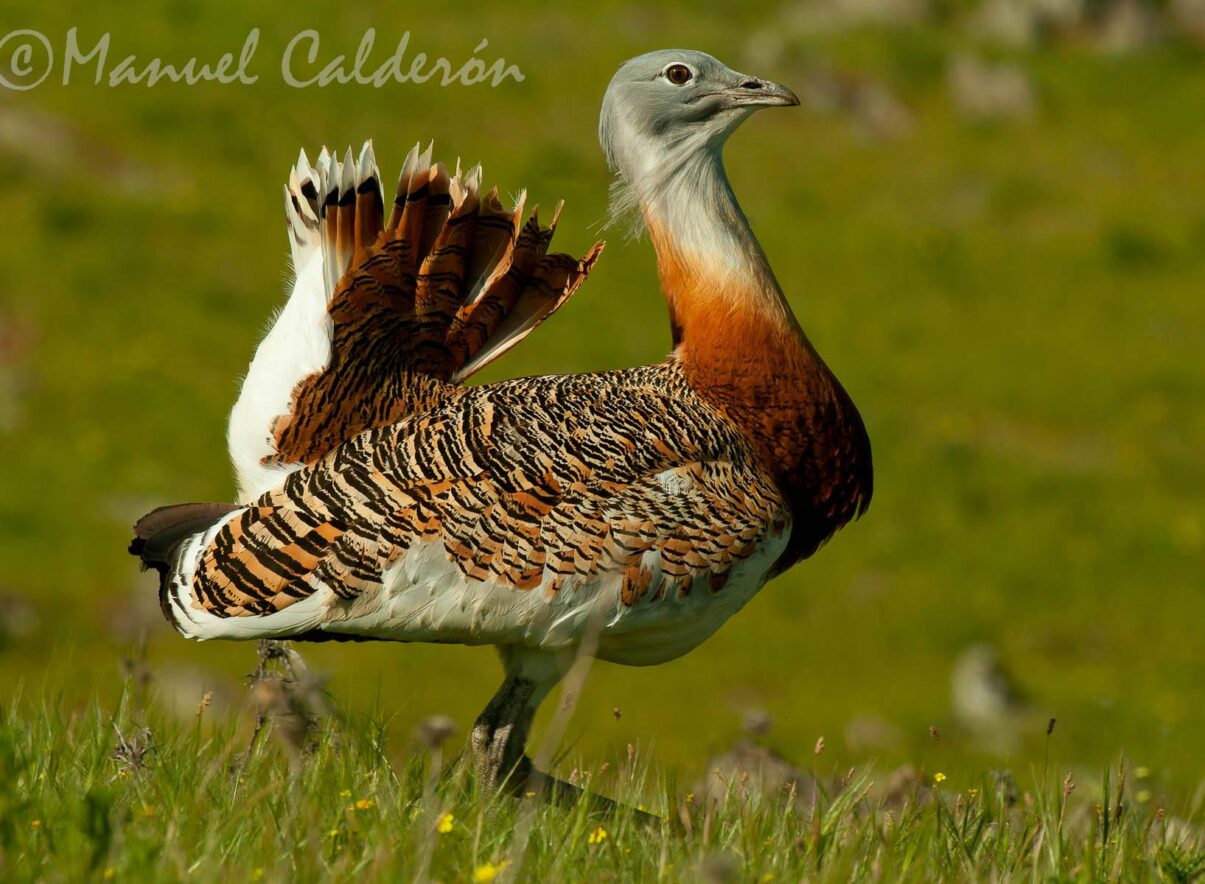
In these places, the males open up and swell to display their nuptial plumage, performing a sort of courtship dance in order to attract females. The difference between males and females is more noticeable, since in addition to size and weight, adult males develop long, pointed, rigid and erectile feathers, which start from the lower jaw, which is why their owners are called “bearded”. When two large males confront each other in the same space, real battles take place that can last for hours. In these fights, the males face each other and attack each other with their beaks while trying to push each other like heavy sumo wrestlers. It is the females that choose the male to reproduce. Once copulation has taken place, in which the male, about four times heavier than the female, climbs on top and the female, often bruised, retreats to pastures or crop areas where she will make the nest. The bustards prepare a shallow nest (little more than a slight depression covered by some stems), in which they lay two or three bluish, greenish, gray or brownish eggs, which will be incubated for 21-28 days. The chicks, which have a mimetic down, show a great capacity for movement as soon as they hatch and move with their mother in search of food. The male is not involved in the rearing of the offspring, and this task falls solely to the female. There is a high mortality of females, as in many steppe birds, during the breeding season. Males are “easy targets” during the mating season, but females are in a critical situation during the breeding season. Among the different factors are nest predation or death by green mowing. It should be noted that, if human pressure is repeated, female Great Bustards tend to abandon the nests, as they are a very sensitive and elusive species. The young develop in about 30-35 days, although the period of maternal dependence ranges from six months to more than a year. They reach sexual maturity at three or four years in the case of females and at five or six years in the case of males. Juvenile dispersal is more pronounced in males, which settle in territories other than their natal ones, while females remain in the vicinity of the place where they were born. The diet of these enormous birds is based on vegetables and invertebrates, whose consumption varies depending on the season. Thus, in spring and summer they eat large quantities of grasshoppers, crickets and other invertebrates, which they supplement with sprouts and seeds. In winter, legumes and other plant foods are of great importance. Occasionally they may capture some small vertebrates, such as rodents and lizards. Curiosities. It is a bird quite admired in the region. Although consumption was not uncommon. In the Orientalizing site of Cancho Roano, in Zalamea de la Serena, there is archaeological evidence of the consumption of these birds between the VI-IV century BC. In the Spanish Civil War, the shepherds called the planes that dropped the bombs as “pavas or avetardas”, because of the similarity in flight due to their powerful and thick wings.
It is a bird with such a spectacular courtship that it does not go unnoticed among those who can observe it. There are also reports of male attacks on children and females protecting chicks.
Este sitio web utiliza cookies para mejorar su experiencia mientras navega por el sitio web. De estas, las cookies que se clasifican como necesarias se almacenan en su navegador, ya que son esenciales para el funcionamiento de las funcionalidades básicas del sitio web. También utilizamos cookies de terceros que nos ayudan a analizar y comprender cómo utiliza este sitio web. Estas cookies se almacenarán en su navegador solo con su consentimiento. También tiene la opción de rechazar estas cookies. Pero la exclusión voluntaria de algunas de estas cookies puede afectar su experiencia de navegación.| Cookie | Duration | Description |
|---|---|---|
| cookielawinfo-checkbox-analytics | 11 months | This cookie is set by GDPR Cookie Consent plugin. The cookie is used to store the user consent for the cookies in the category "Analytics". |
| cookielawinfo-checkbox-functional | 11 months | The cookie is set by GDPR cookie consent to record the user consent for the cookies in the category "Functional". |
| cookielawinfo-checkbox-necessary | 11 months | This cookie is set by GDPR Cookie Consent plugin. The cookies is used to store the user consent for the cookies in the category "Necessary". |
| cookielawinfo-checkbox-others | 11 months | This cookie is set by GDPR Cookie Consent plugin. The cookie is used to store the user consent for the cookies in the category "Other. |
| cookielawinfo-checkbox-performance | 11 months | This cookie is set by GDPR Cookie Consent plugin. The cookie is used to store the user consent for the cookies in the category "Performance". |
| viewed_cookie_policy | 11 months | The cookie is set by the GDPR Cookie Consent plugin and is used to store whether or not user has consented to the use of cookies. It does not store any personal data. |